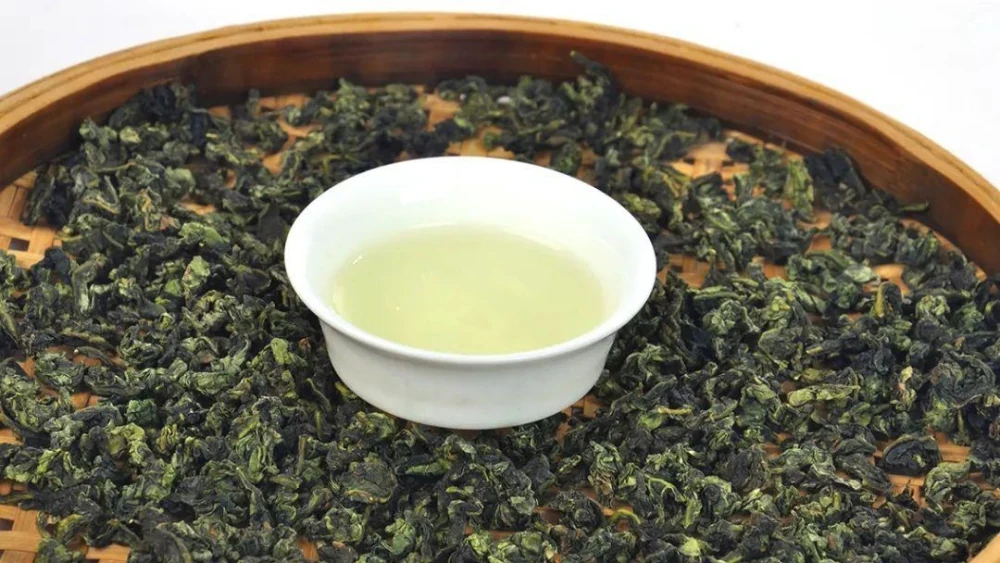
A compact piece of Tieguanyin tea changes shape as it opens in water. The small dry form gives way to a larger leaf, and a familiar cup becomes a clue to the work that preceded it. The useful question is not only how the tea tastes, but how a living leaf became this particular dry product.
Anxi, a county within Quanzhou, is closely associated with Tieguanyin. The name can refer to a tea-plant cultivar and to the tea made through an oolong-processing tradition. Plant, place and process are related, but they are not interchangeable. A hillside alone does not finish the tea, and a skilled maker begins with leaves whose condition varies. Looking back from the cup brings these separate parts into one view without collapsing them into a single label.