From the journal

The stream behind the screen

Discover Yunshuiyao through Changjiao Stream, banyan-shaded paths and the people and water-management work behind its cinematic village image.

In the same city · Zhangzhou ↗

A landscape acquires a screen name

Yunshuiyao is a name many visitors meet before they meet the place. Reporting in China Water Resources News connects it with the film of the same name, known in English as The Knot, and with the earlier place-name Changjiao. The film helped turn a village landscape into a widely recognized image.

A screen image can be a useful invitation, but it gives only one angle of approach. Once there, the most persistent organizing feature is the stream. Paths, trees and buildings relate to its course, and the landscape continues beyond any remembered camera position. Treat the cinematic association as a beginning. The village’s present-day rhythms, work and environmental needs deserve as much attention as the image that brought it new audiences.
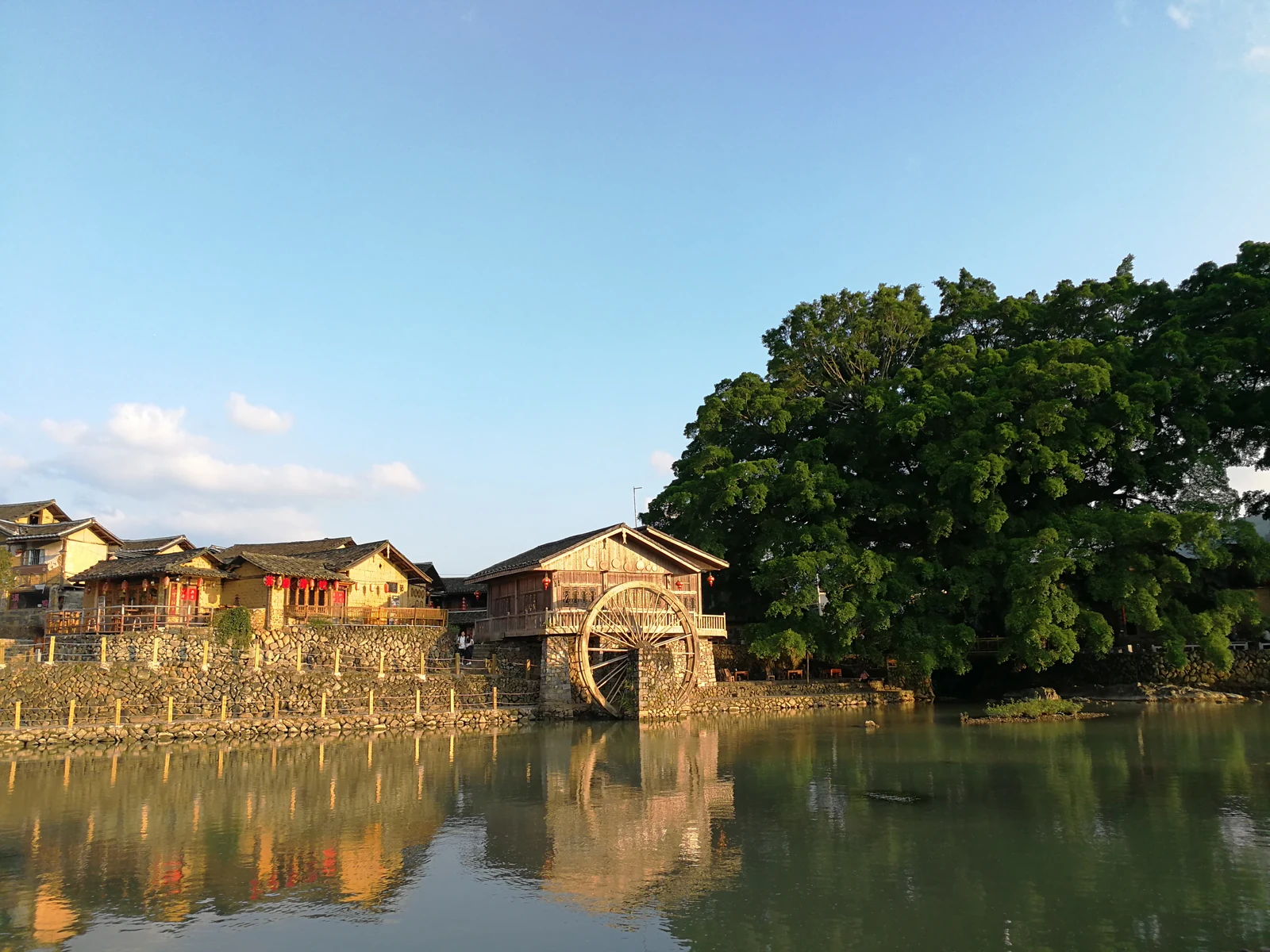
A wooden waterwheel stands beside a calm river and large riverside trees in warm evening light.
A waterwheel beside the river in Yunshuiyao, pictured in a feature published in 2020.

Read the riverbank in layers

The provincial tourism description places banyan trees, riverside paths, a waterwheel and stepping stones among Yunshuiyao’s recognizable features. Rather than assuming that everything visible belongs to one historical moment, examine how those elements work together now. A tree canopy changes the scale of the space underneath it; a path makes the water’s edge accessible; a crossing draws the eye toward the opposite bank.

The resulting scene is layered. Living trees, built structures and moving water behave on different timescales. That is part of its appeal, and also a reason to resist treating it as a frozen old village. Water levels and surfaces change. The stone crossings make a striking visual rhythm, but appreciating that rhythm does not require stepping onto a wet or unsafe route.

Visitors cross a line of stepping stones beside a broad-canopied riverside tree.
Stepping stones across the river at Yunshuiyao, shown in a 2020 village feature.

Let the river connect different buildings

The wider visitor area includes Hegui and Huaiyuan, two separately named tulou. They should not be folded into a vague idea of “the Yunshuiyao building.” Each is an architectural subject in its own right, while the riverside landscape provides the larger setting in which a visit unfolds.

This gives a walk two complementary scales. A particular tulou invites close attention to its walls, entrance and internal organization. The route between places brings trees, water and settlement back into view. Allow that connecting landscape to count as part of the experience rather than as empty distance between monuments. The stream helps explain why the place can be understood as a village area, even when publicity concentrates on one building or one picturesque view.

Concentric timber galleries rise around the open courtyard of a circular earthen building.
Inside Huaiyuan Lou, one of the tulou buildings associated with the Yunshuiyao area.

A clear stream requires work

A June 2026 report described cooperation among river, building and village managers in caring for this environment. It also included Wang Fengzhi, who returned with her husband to run accommodation and later other hospitality businesses. These details connect the appealing river scene with both public maintenance and household decisions.

A guesthouse, restaurant or tea room is part of the village’s contemporary economy. Its presence need not erase the value of older buildings, though tourism inevitably changes how space is used. The useful question is how livelihoods and care for the setting can support one another. Yunshuiyao’s stream is therefore more than a beautiful line through a photograph. It is a shared resource whose condition matters to people who live and work beside it.

Continue exploring · Yunshuiyao ↗
Photo credits and rights
  1. A waterwheel beside the river in Yunshuiyao, pictured in a feature published in 2020.福建省农业农村厅 · Rights status unspecified Photo source ↗ Original aspect ratio retained. Display copies resized only when needed; no enlargement, crop or retouching.
  2. Stepping stones across the river at Yunshuiyao, shown in a 2020 village feature.福建省农业农村厅 · Rights status unspecified Photo source ↗ Original aspect ratio retained. Display copies resized only when needed; no enlargement, crop or retouching.
  3. Inside Huaiyuan Lou, one of the tulou buildings associated with the Yunshuiyao area.福建省农业农村厅 · Rights status unspecified Photo source ↗ Original aspect ratio retained. Display copies resized only when needed; no enlargement, crop or retouching.