Tsaparang is the best-known image of Guge, a ridge-top city where palaces and temples remain visible among the ruins. Yet a kingdom is not only its capital. The wider Zhada landscape includes places such as Piyang, Dingdong, and Jiweng, which a 2024 archaeological study groups within the Piyang-Dongga complex. The researchers describe settlements, cemeteries, and Buddhist monuments along a tributary of the upper Sutlej. These sites broaden the map of historical life beyond the royal center and make it possible to ask how people lived across the basin, not only how kings built on a ridge.
From the journal
Settlements Around Guge
The Guge capital was one part of a wider western Tibetan world. Archaeological research at Piyang-Donggar identifies settlements, cemeteries and Buddhist monuments alongside evidence for barley cultivation and herding, while historical sources place trade and translation within Guge’s regional life.
In the same city · Ngari ↗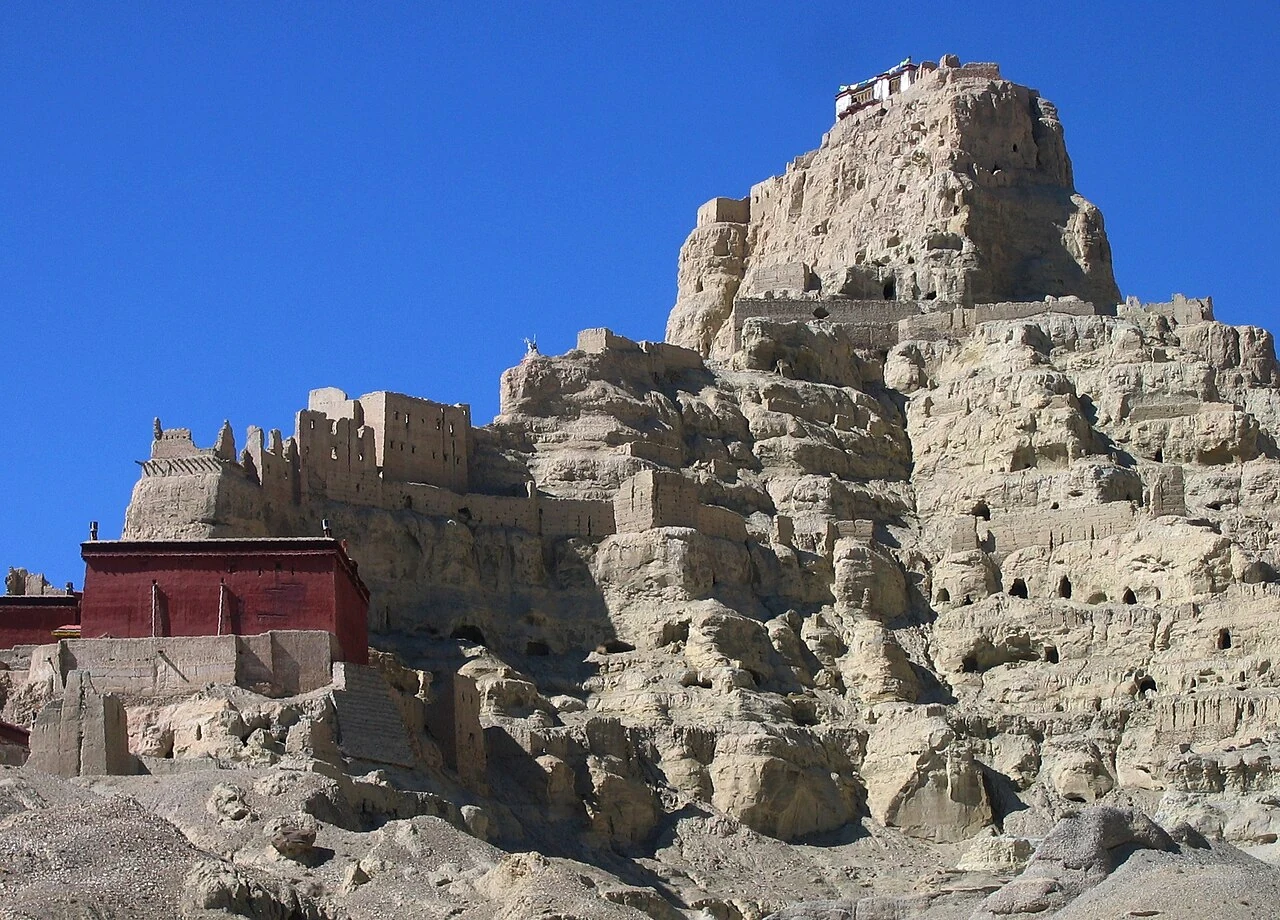
A kingdom wider than its capital
Farming in the archaeological record
At Piyang-Dongga, archaeobotanical remains add crops to that wider picture. Excavations in 2019 uncovered evidence of agropastoral activity associated with a system focused on six-row barley. Grains, rachises, and culm nodes—fragments left by harvesting and processing—support the interpretation that crops were cultivated locally. The researchers do not claim that the evidence tells us exactly what every resident ate or how much land was farmed. It does show that food production belongs in the story of this high-altitude archaeological landscape, alongside the religious buildings and burial places that first draw attention.
Herding and settlement together
Animal remains from the complex include sheep or goats, yaks or cattle, and horses. The study interprets them as evidence of long-term pastoral activity. Combined with traces of barley processing, they suggest a mixed economy in which settled places and livestock keeping were not opposites. The archaeological record does not draw a complete household portrait; it preserves fragments that researchers interpret together. Still, those fragments make the landscape more human. A settlement here was not simply a cluster of structures isolated from the surrounding grassland. It was part of a network of work, food, worship, burial, and movement across the basin.
Trade and translation
A Zhada County cultural overview describes Guge as a place of Buddhist translation and an important center of external trade in historical Tibet. That regional account sits alongside the excavated evidence from Piyang-Dongga, but the two sources answer different questions: one summarizes the kingdom’s historical role, while the other examines plant and animal remains at archaeological sites. Together they resist a story centered only on a dramatic capital. Guge’s history also involved exchanges of texts and goods, food production, livestock, and communities living across a broad terrain. The capital’s ridge is one node in that larger world.