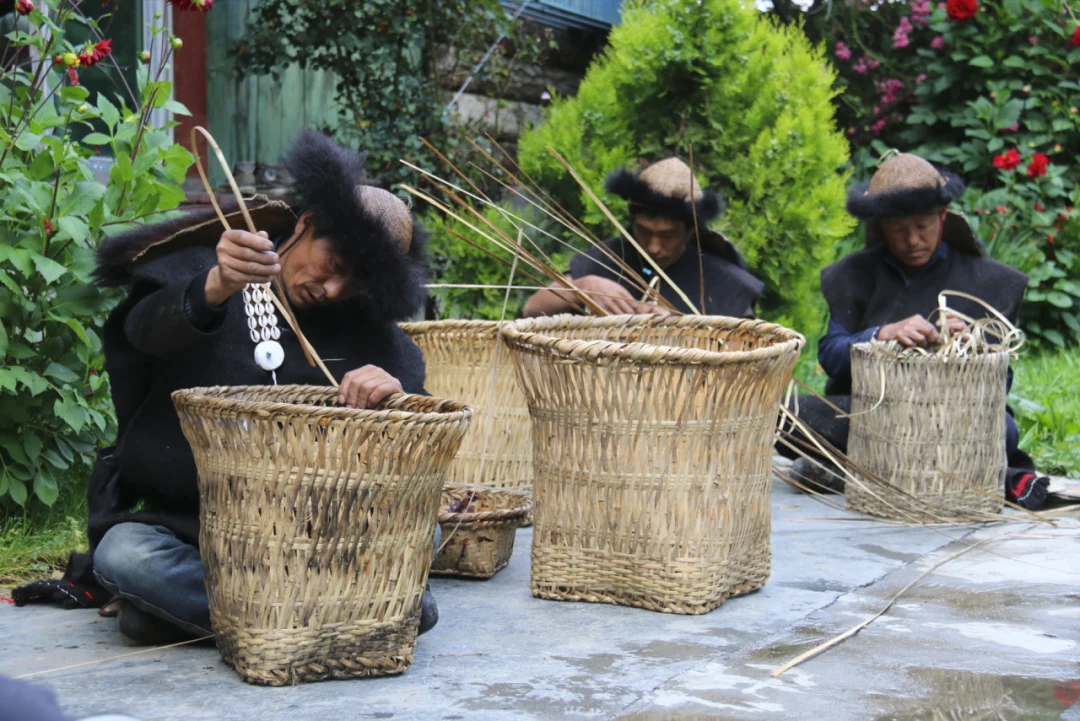
A 2019 report from the Tibet Autonomous Region government lists “Milin Lhoba bamboo weaving” among regional intangible cultural heritage items. The name places the craft in Milin’s public heritage record. A national ethnic-affairs account gives a sense of the wider material tradition: bamboo was made into baskets, mats, cages, cords, bowls, basins, trays and rain gear. It describes these objects as both practical and finely made.
The list and the overview do different work. The regional record anchors bamboo weaving to Milin; the national account shows how many forms bamboo objects could take in Lhoba life. Together they move the subject beyond an abstract craft label and toward the things made, carried and used.