From the journal

Mangkang Xianzi: A Circle Led by a Bowed Fiddle

A short-bodied fiddle, long sleeves and answering voices give Mangkang Xianzi a shared rhythm that can gather people in many kinds of space.

In the same city · Chamdo ↗
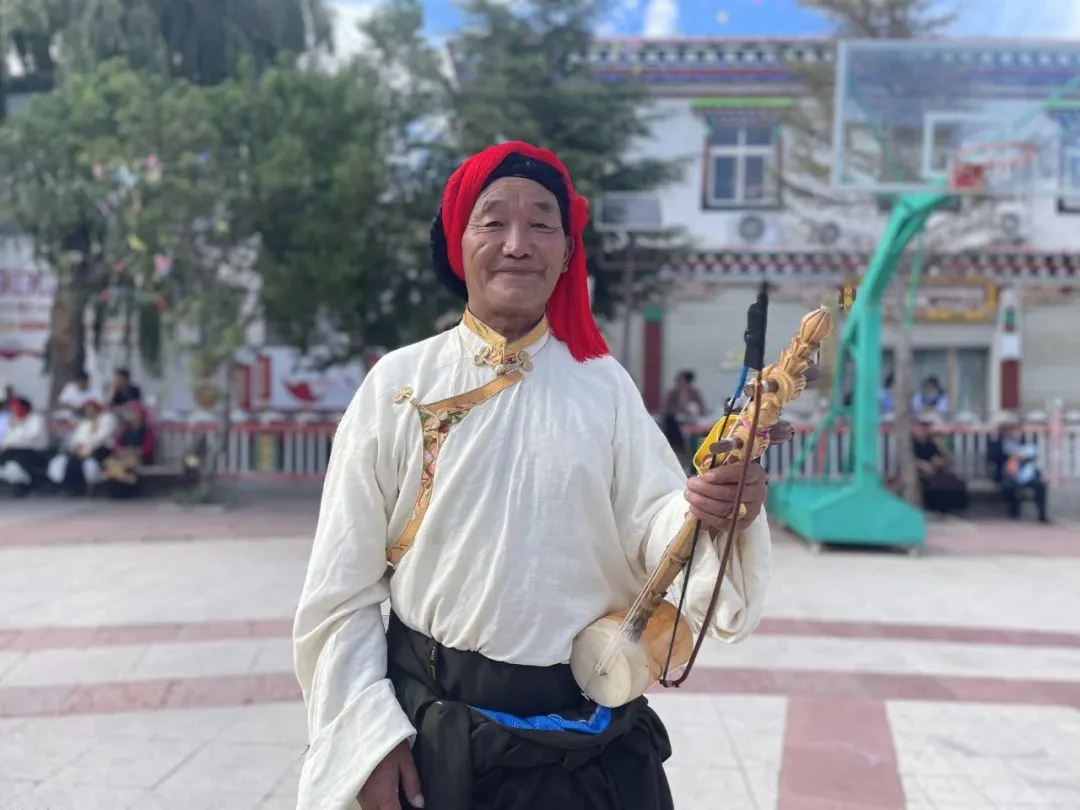
Tsering Wangdu holding the bowed instrument used for Xianzi
Xianzi practitioner Tsering Wangdu with his instrument, in the September 2024 report. Photograph: Zhang Jianlin, Beijing News.

Music has a place in the circle

In Mangkang Xianzi, a musician can be part of the moving group. A 2024 report describes men playing the local bowed fiddle called baiyang while leading a circle of dancers. The instrument is compared with an erhu but described as shorter and thicker. Music is carried within the dance rather than supplied only from outside it.

The same report records a performance in Naxi Township by local farming and herding residents. Tsering Wangdu, their teacher, led a practice whose participants also belonged to the surrounding community. A public performance and an ordinary social circle draw on related knowledge of rhythm and movement.

Gathering, opening and answering

Tsering Wangdu describes dancers moving together, separating and circling, with men and women arranged in portions of the group. The leading fiddle player sets a direction, while sleeves extend the visible movement of the arms. The circle remains recognisable as it changes shape.

Voices also answer one another. Singing and dancing develop together, so a participant follows sound as well as the person nearby. The shared form is made through repeated small adjustments. A circle is an arrangement of bodies, but it is also a way of keeping an exchange audible and visible.

A family skill enters communal life

The report traces Tsering Wangdu’s learning to his father, Gesong, and records his work with the county ensemble from 1984. Family learning and organised performance therefore meet in one career. Teaching gives others access to movements and musical relationships that have to be practised with people.

Housewarmings, weddings and New Year gatherings provide occasions for Xianzi in the same account. A group does not need one fixed stage or size to dance. The form can adapt to an available place while retaining its leading fiddle, moving circle and answering voices. Its recognisable character is carried by the participants.

Continue exploring · Mangkang Xianzi ↗
Photo credits and rights
  1. Tsering Wangdu illustrates the instrumental setting of Mangkang Xianzi in the 2024 report. He is a different practitioner from Jiangcuo, discussed in the text. Photograph: Zhang Jianlin, Beijing News.张建林/新京报 · No independent image licence established; private editorial research only Photo source ↗ Rights information ↗