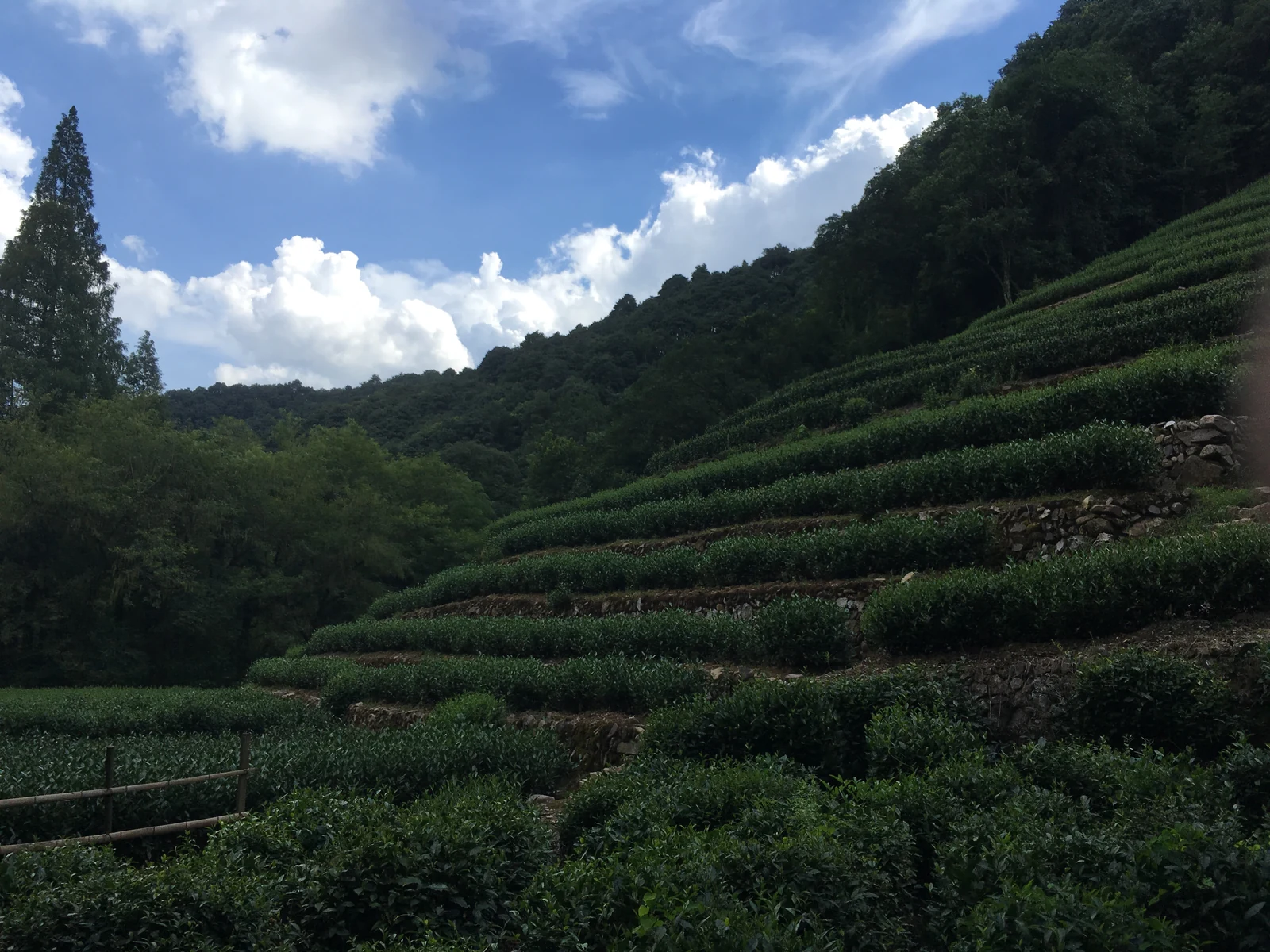
A hillside is not an abstract green backdrop here. Tea bushes run in measured lines up the slopes, while houses, narrow lanes and small shops gather in the lower ground. From the village, the fields are close enough to shape the view and the day: a path may pass a wall of clipped tea, then bend towards a home or a place where leaves are handled. The settlement and the gardens share the same valley, but they do different work. One is where people live; the other is cultivated land that asks for attention through the seasons. That distinction keeps the landscape from becoming a postcard. Longjing is a village with ordinary routines inside a famous tea-growing area.
Longjing Village
A valley read from the path
Walk through Longjing Village in Hangzhou, where tea rows climb the slopes and homes, lanes and small businesses occupy the valley below.
In the same city · Hangzhou ↗The village between the rows
A season measured in leaves
In spring, picking gives the hills a particular rhythm. Official accounts describe Longjing harvests around the Qingming and Grain Rain periods, when new growth is collected and processed. The season is short enough to make timing matter, yet the village does not stop being a village once the first flush has passed. Tea bushes remain part of the year-round terrain; homes and paths continue their daily use. Looking across a slope, rows can appear uniform, but the work behind them depends on weather, plant growth and careful hands. The tea landscape is maintained, not wild, and its beauty comes partly from this repeated labour. A single view therefore holds both the quiet of a green hillside and the human calendar that keeps it in shape.
Tea fields in daily village life
The protected West Lake Longjing area spans a wider geography, and Longjing Village is one part of that landscape. Within the village, the tea gardens meet daily life along clear edges: a row ends beside a lane, a home faces cultivated ground, and footpaths connect houses with the slopes. Tea plots follow the growing season, while homes, lanes and small businesses give the settlement its everyday rhythm. The name Longjing travels across Hangzhou and beyond; here, it can be read in the planted hillsides and the work that returns each spring. At village scale, agriculture and ordinary routines share the same valley.