Ninety years of cutting
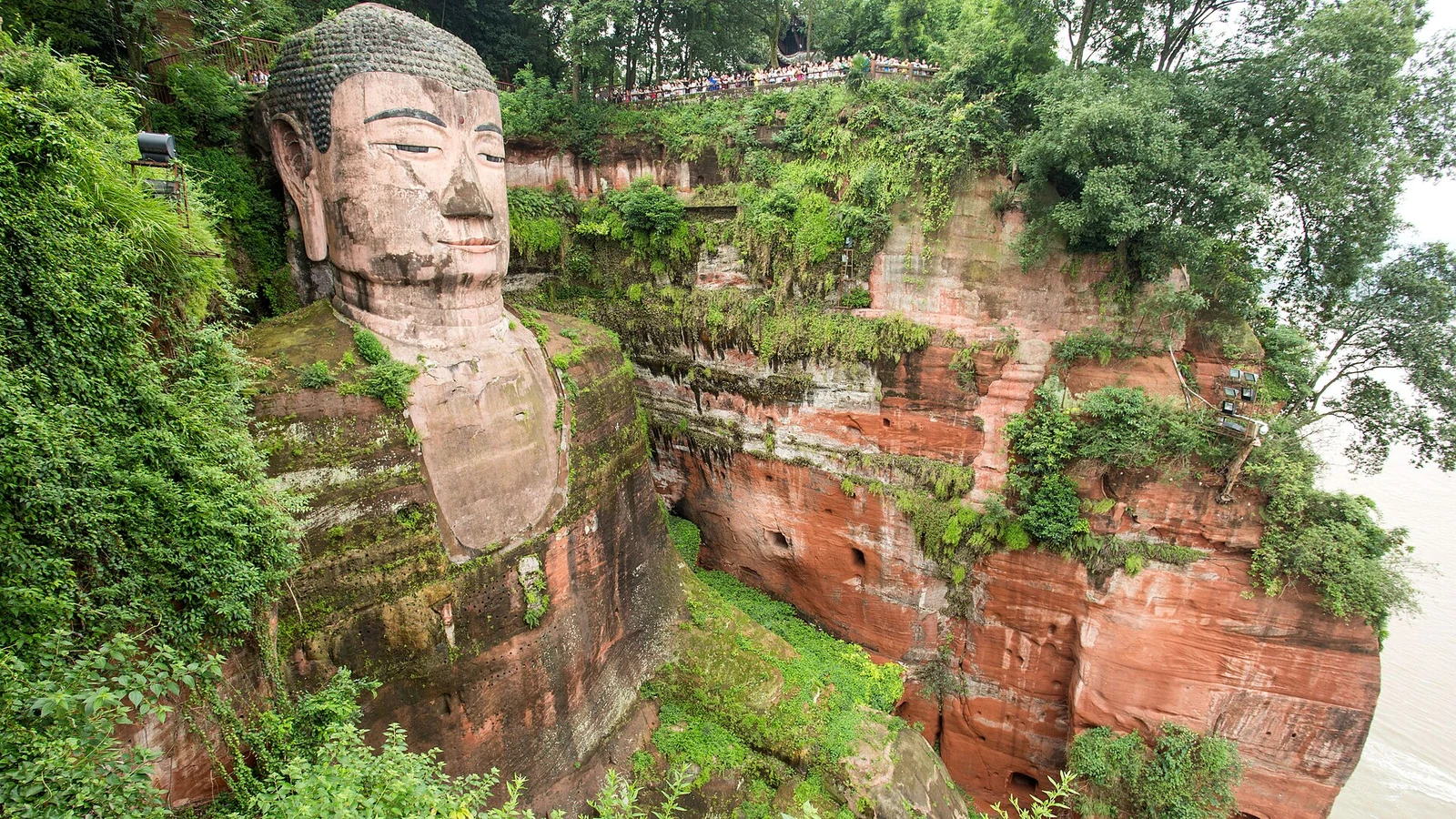
The monk Haitong began the work in 713, at the meeting of three rivers where boats were often lost. The first phase stopped when he died. A local governor resumed it in the 740s, and a later governor completed the figure in 803. The result is a seated Maitreya, 71 metres high, with 1,051 hair coils, a head ten metres wide and shoulders twenty-eight metres across. It is cut into the cliff rather than built against it, so the rock is both material and support.
The sculpture is also a drain
The rock is soft red sandstone, and water is its enemy. The builders cut three channels at the fourth, ninth and eighteenth rows of hair coils, and continued others along the folds of the robe. Vents behind the ears and shoulders let air into the rock and reduce seepage. A wooden pavilion covered the figure for about four hundred years before it was lost between the Song and Yuan. Since then the Buddha has stood in the open, and the drains have been maintained rather than replaced.
Look from the water
From the cliff path the Buddha is a wall of detail. From a boat it becomes a proportion: the head against the cliff, the hands on the knees, the river moving past. The Min, Dadu and Qingyi meet here, and the current is the reason the carving exists. Emei rises behind the city, a different kind of sacred landscape. The two are one World Heritage property, but they ask for different days and different attention.