Three works in a row
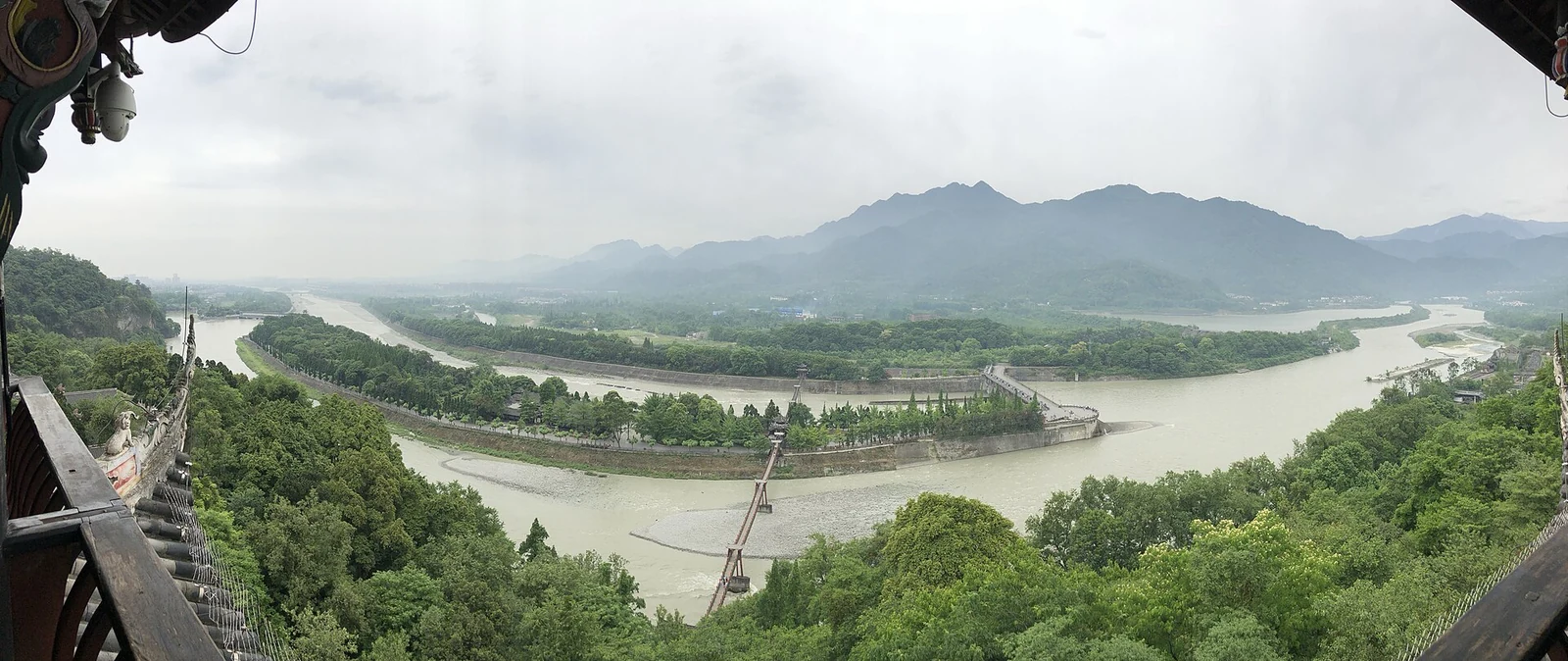
Li Bing, the Qin administrator of Shu, began the works in 256 BCE. They are usually described as three parts. The fish mouth is a pointed levee that divides the Min River into an inner and an outer stream. The flying sand weir is a low spillway that lets floodwater and sediment escape. The bottle-neck channel is a narrow cut through rock that controls how much water enters the Chengdu plain. The order matters: divide, spill, then measure.
The problem is what the water carries
A river that only carried water would be easy. The Min carries sand and gravel, and the works are designed to move them rather than hold them. Traditional repairs used bamboo cages filled with stones, tripods of timber and woven mats. The maintenance rules were passed down as short sayings, including the instruction to dredge deeply and keep the weir low. The system survives because it is cleaned and adjusted, not because it was built once and left alone.
A plain made by a channel
The irrigated area has grown from 2.86 million mu to 10.76 million mu and now serves seven cities and 38 counties. That scale is the point. Dujiangyan did not just protect a city from floods; it made the Chengdu plain reliable enough to become a dense agricultural and urban region. The same water reaches the tea bowls of Chengdu. Follow it downstream and it meets the Jinsha at Yibin, where the Yangtze proper begins.