From the journal

Jianyang’s Jian Ware: A Dark Bowl Made for Looking at Tea

Hare’s-fur glaze, a dark exposed foot and a wide mouth connect Jianyang’s tea bowls to Song drinking practices and a continuing craft.

In the same city · Nanping ↗

A dark surface that keeps changing

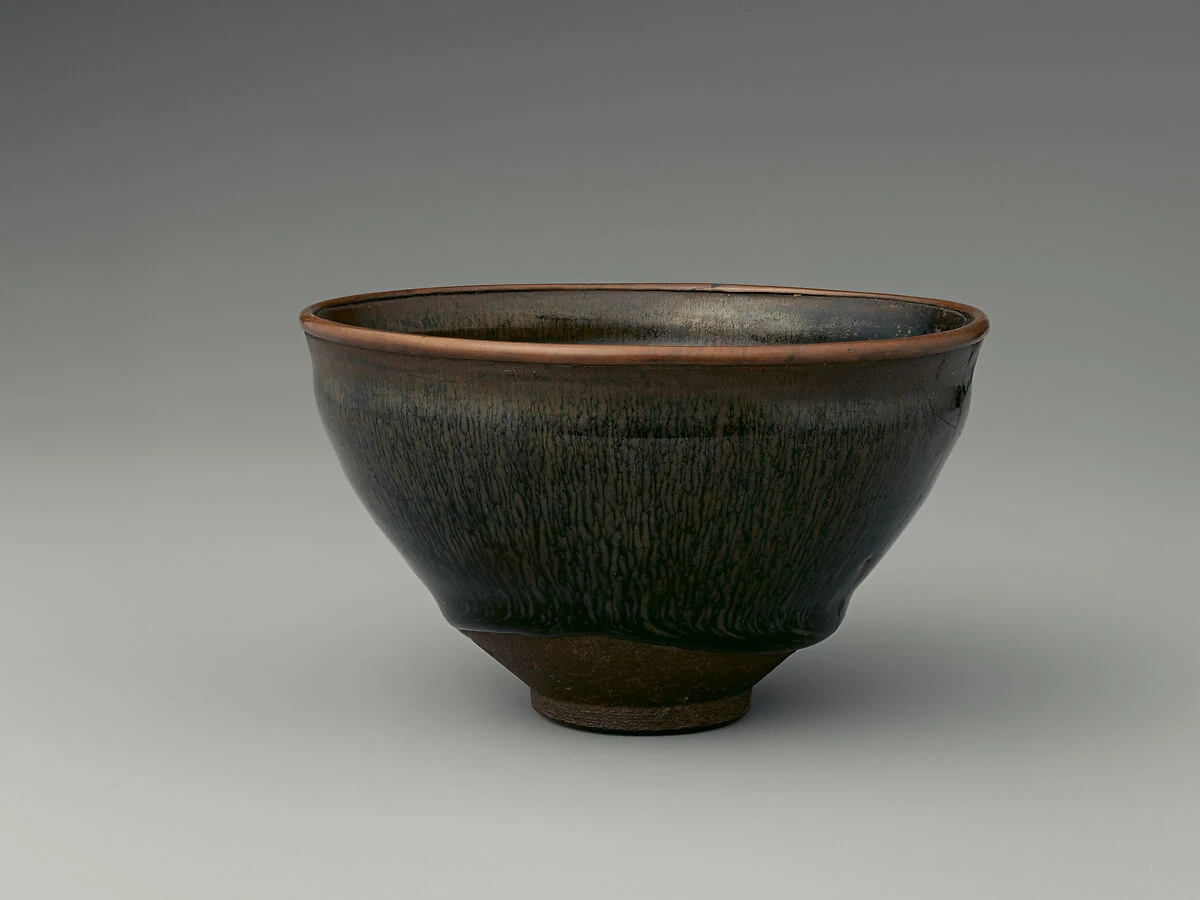
A Jian tea bowl can look almost black until light catches its glaze. Fine streaks then emerge, descending towards the interior like the fur that gives the “hare’s-fur” pattern its name. The effect belongs to the glaze itself. It rewards turning the bowl in the light and looking at the relationship between its surface and form.

The historic Jian kilns were active around Shuiji, near Jianyang in northern Fujian. Today Jianyang is a district of Nanping. This specific place matters: Jian ware is a production tradition with a geographical history, even though related dark-glazed bowls were also made elsewhere and became influential abroad.
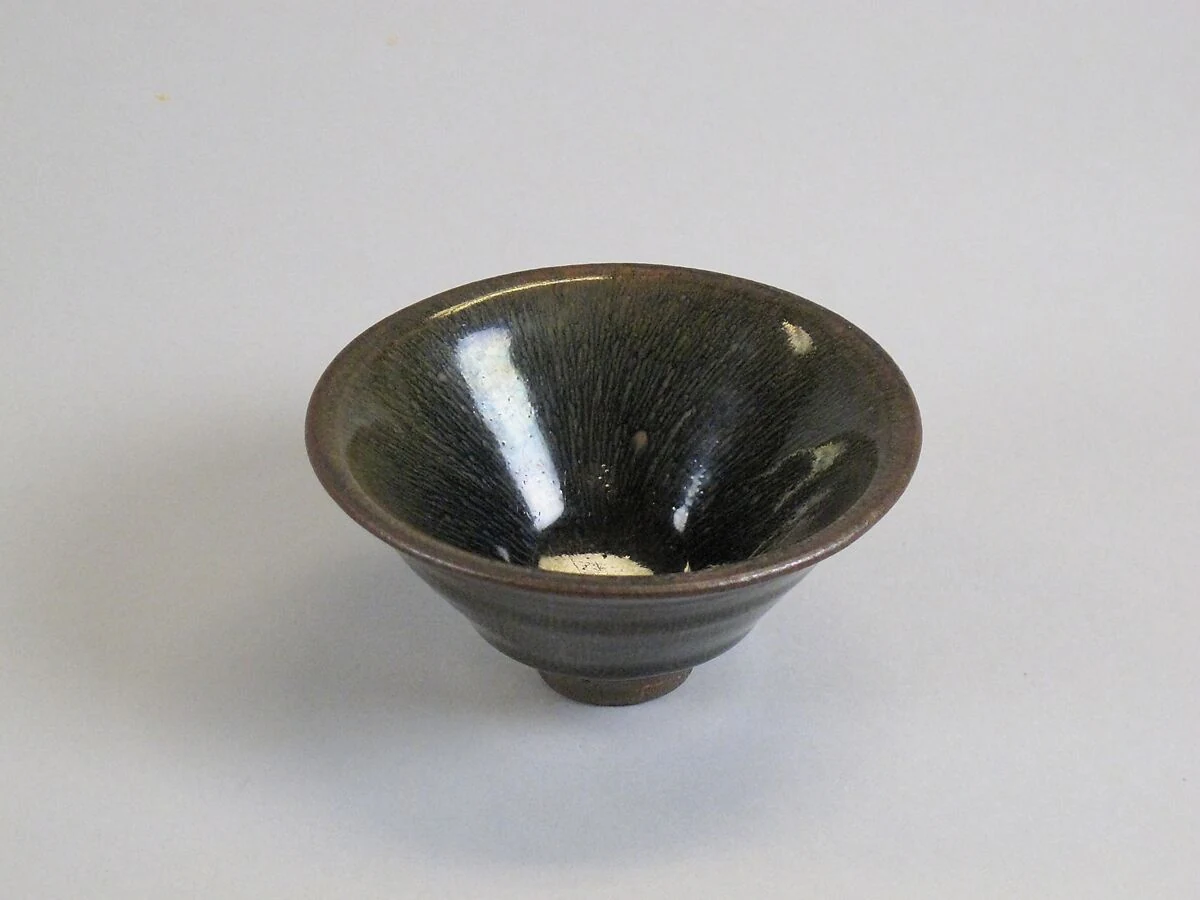
A dark glazed tea bowl viewed from above, showing fine streaks in the interior glaze.
Jian-ware tea bowl, China, 11th–12th century. The Metropolitan Museum of Art, 29.100.226.

One surviving bowl makes the details clear

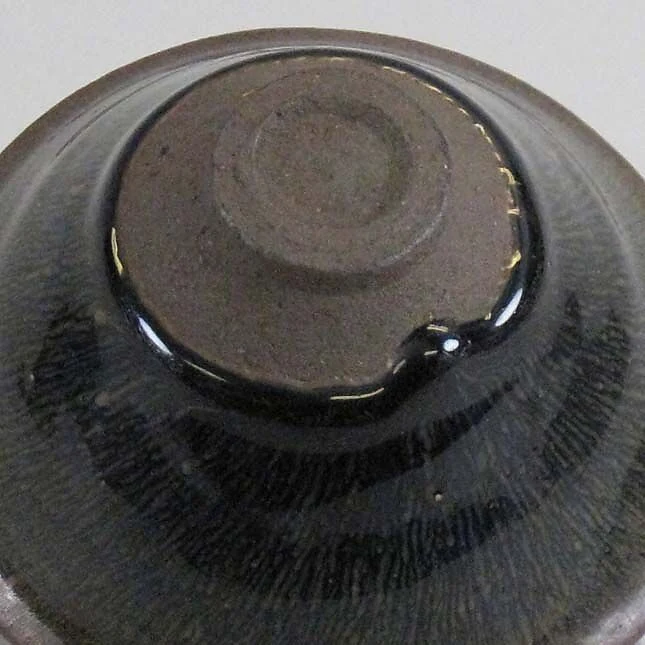
The Palace Museum’s Song-period bowl, registered as 故00143126, offers a particularly useful example. It has a flared mouth, sloping sides and a small ring foot. Glaze covers the interior but stops above the bottom outside, leaving dark body material exposed. Near the rim, the colour is browner; lower down, the glaze produces streaks and a darker field.

Those changes help explain how the object was made. The body supplied the shape, while an applied glaze behaved under heat and gravity. Its thicker downward flow remains visible on the exterior. The foot exposes another part of the craft, allowing the fired body and the surface coating to be considered separately.

A small bowl contains several distinct kinds of evidence: forming, trimming, glazing and the results of firing.

The underside of a Jian bowl with an exposed circular clay foot and glossy dark glaze.
The unglazed foot and streaked glaze of the same Jian bowl, The Met, 29.100.226.

The drink explains the dark interior

Song-period tea preparation often involved whisking powdered tea with hot water directly in the bowl. The contrast between a dark vessel and pale froth made the drink especially visible. Thick walls also suited the preparation and serving of warm tea. Form and surface worked together, rather than decoration being added independently to a neutral container.

The Metropolitan Museum’s Jian bowl 91.1.241, dated to the eleventh or twelfth century, has a metal rim and a striking hare’s-fur glaze. Museum accounts connect the reception of such bowls in Japan with Buddhist monks and tea drinking. The vessel’s later appreciation thus carried a Fujian kiln tradition into another cultural setting.

These museum objects are comparisons from collections, not evidence that the same historical pieces are displayed in Jianyang today.

A dark tea bowl with a metal rim and fine brown streaks running down its glaze.
Jian-ware tea bowl with hare’s-fur glaze and metal rim, China, 11th–12th century. The Met, 91.1.241.

A kiln effect becomes a field of practice

The patterns make each firing consequential. Preparing a body, forming a bowl, applying glaze and managing heat are linked choices; the finished surface records their interaction. Contemporary Jian-ware practice continues to explore those relationships. The China Arts and Crafts Society documents research and teaching associated with Sun Jianxing and his ceramic institute, placing the modern craft within a working community of makers.

For a reader encountering Jian ware for the first time, the most useful distinctions are visible ones. Look at the silhouette, the thickness of the rim, the exposed foot and the direction of the glaze markings. A compelling bowl need not be understood through a catalogue of grand names before its workmanship becomes apparent.

Jianyang’s contribution to tea culture is an object designed to be held close. Where the tea landscape opens across hills, the bowl gathers attention into a small dark interior. It changes how the drink is seen, and makes that act of looking part of the pleasure.

Continue exploring · Jianyang ↗
Photo credits and rights
  1. Jian-ware tea bowl, China, 11th–12th century. The Metropolitan Museum of Art, 29.100.226.The Metropolitan Museum of Art · CC0-1.0 Photo source ↗ Rights information ↗ Original aspect ratio retained. Display copies resized only when needed; no enlargement, crop or retouching.
  2. The unglazed foot and streaked glaze of the same Jian bowl, The Met, 29.100.226.The Metropolitan Museum of Art · CC0-1.0 Photo source ↗ Rights information ↗ Original aspect ratio retained. Display copies resized only when needed; no enlargement, crop or retouching.
  3. Jian-ware tea bowl with hare’s-fur glaze and metal rim, China, 11th–12th century. The Met, 91.1.241.The Metropolitan Museum of Art · CC0-1.0 Photo source ↗ Rights information ↗ Original aspect ratio retained. Display copies resized only when needed; no enlargement, crop or retouching.