From the journal

Wuyi Rock Tea: What the Landscape Leaves to the Maker

From bamboo trays to slow roasting, Wuyi rock tea joins growing conditions, leaf variety and skilled judgment in a distinctive oolong tradition.

In the same city · Nanping ↗

A landscape name with several ingredients

“Rock tea” is a compelling name. It places a cup beside the cliffs of Wuyishan before the first sip. The tea is an oolong: its character develops through controlled handling and oxidation of the leaf, followed by heating, rolling and drying. Place matters, but so do plant material, harvest conditions and the maker’s decisions.

The Chinese term yanyun, often rendered as “rock resonance” or “rock character,” belongs to the language of appreciation. It can guide attention towards texture, aroma and the way flavour develops. It is not a simple chemical claim that a cliff’s taste passes directly into the cup. The rewarding question is how growing conditions and craft work together.
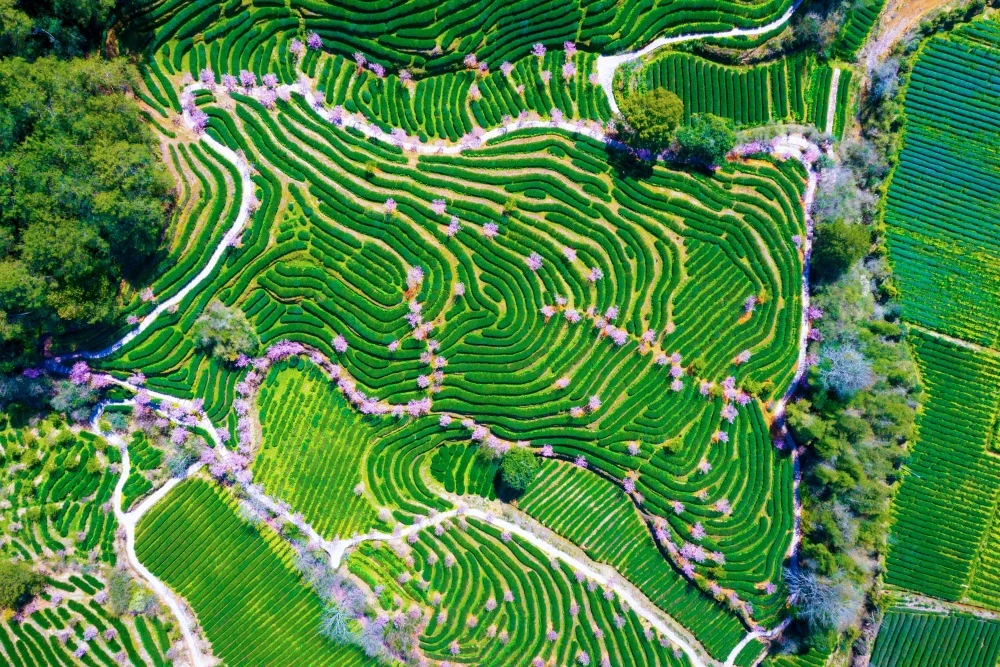
Curving green tea rows and pale paths seen from above, with pink-blossoming trees.
The terraced tea fields of Yanzike, Xingcun, Wuyishan.

The green leaf becomes a moving target

The national intangible-heritage record describes a demanding sequence that includes repeated withering, making green, repeated heating and rolling, and prolonged low-temperature drying. During making green, leaves are handled in trays and allowed to rest. Their changing condition matters more than a rigid timetable. The familiar reddish edge and greener centre make the transformation visible.

This is an agricultural material responding to touch, time and air. A maker has to recognize where the leaf is in that process and decide what it needs next. A motion that appears repetitive can therefore contain close judgment. The tray is a tool for changing the leaf and for learning what has already changed.

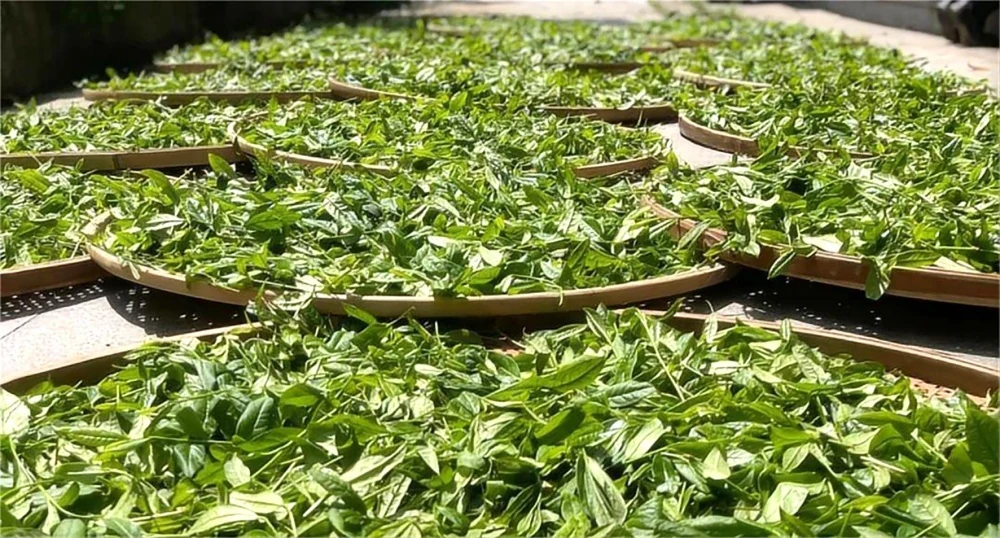
Green tea leaves cover shallow round bamboo trays in sunlight.
Fresh leaves spread on bamboo trays for sun-withering in Wuyi rock-tea production.

Roasting creates another layer

Heat gives the maker another set of choices. Slow drying and roasting affect the finished tea’s aromatic profile and its presentation over repeated infusions. A stronger roasted impression, a floral note and the feel of the liquor are different observations; separating them makes a tasting more informative than reaching immediately for a single prestigious label.

The people sustaining this craft also work with new tools. A 2025 report followed You Yuqiong, who entered a tea factory in 1985, and described her son Fang Zhou’s work on models for predicting roasting temperatures. Their example places inherited skill beside contemporary experimentation. Knowledge acquired through repeated batches remains important even when new instruments help describe the process.

Dahongpao opens the door; it does not fill the room

Dahongpao is one celebrated name within the wider world of Wuyi rock tea. The protected mother bushes have not been picked since 2006; commercial tea carrying the familiar name belongs to a much broader production story. Recognizing that distinction allows attention to move towards the actual tea being served: its stated origin, plant material, processing and roasting.

At a tasting, a useful comparison changes one question at a time. Notice the dry leaf, then the warm aroma, then the liquor’s texture and the finish after swallowing. These are observations anyone can make without adopting somebody else’s vocabulary. Different cups may reveal different balances.

The mountain landscape gives rock tea a powerful setting. The craft makes that setting drinkable through a long chain of human decisions. A bamboo tray and a carefully managed fire are as much part of the story as the cliff that first caught the eye.

Continue exploring · Wuyishan ↗
Photo credits and rights
  1. The terraced tea fields of Yanzike, Xingcun, Wuyishan.福建省农业农村厅 / 福建绿色食品发展中心 · Rights status unspecified Photo source ↗ Original aspect ratio retained. Display copies resized only when needed; no enlargement, crop or retouching.
  2. Fresh leaves spread on bamboo trays for sun-withering in Wuyi rock-tea production.福建省农业农村厅 / 福建绿色食品发展中心 · Rights status unspecified Photo source ↗ Original aspect ratio retained. Display copies resized only when needed; no enlargement, crop or retouching.