From the journal

Xiamei: Tea Wealth beside a Village Stream

Carved gateways, waterside buildings and the Zou family’s residences reveal how Xiamei joined Wuyi tea to long-distance trade.

In the same city · Nanping ↗

A small stream, a large commercial world

The scale of Xiamei’s waterway makes its trading history especially intriguing. Along the Dangxi, waterside buildings and passages form a close-grained village scene. Carved gateways give individual houses a presence within it. The view is intimate, yet its history reaches towards distant markets.

Xiamei lies in Wuyishan, within Nanping. During the Qing period it became an important collection and trading centre for tea from the surrounding region. The village is remembered as an early node in the long tea routes towards northern markets and Russia. That broad network depended on many local acts of handling, storage, negotiation and onward transport. A small place could perform an important connecting role.
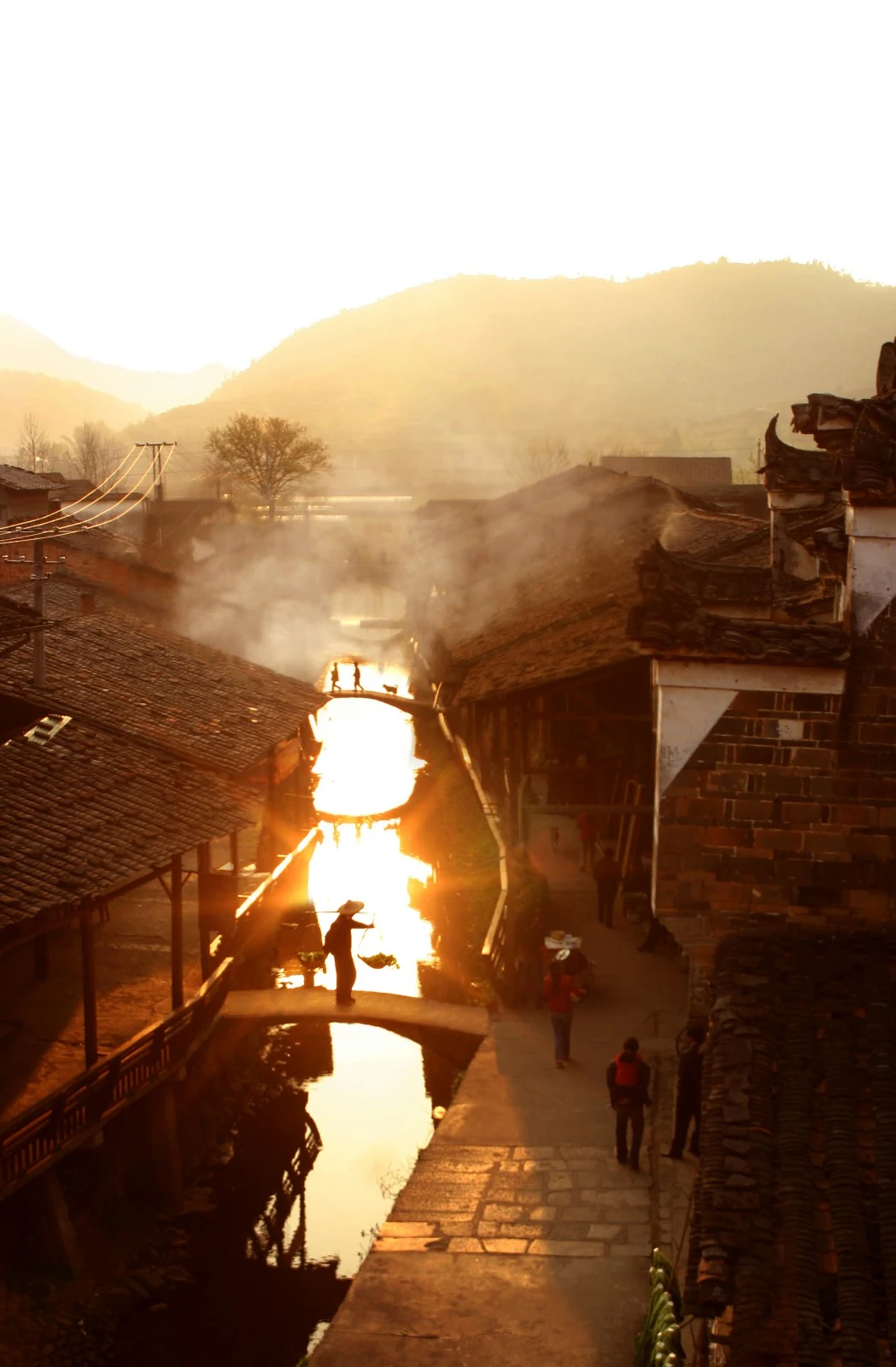
Low sunlight reflects along a narrow stream crossed by stone footbridges between tiled buildings.
Small bridges cross the stream through Xiamei village.

Wealth becomes a doorway

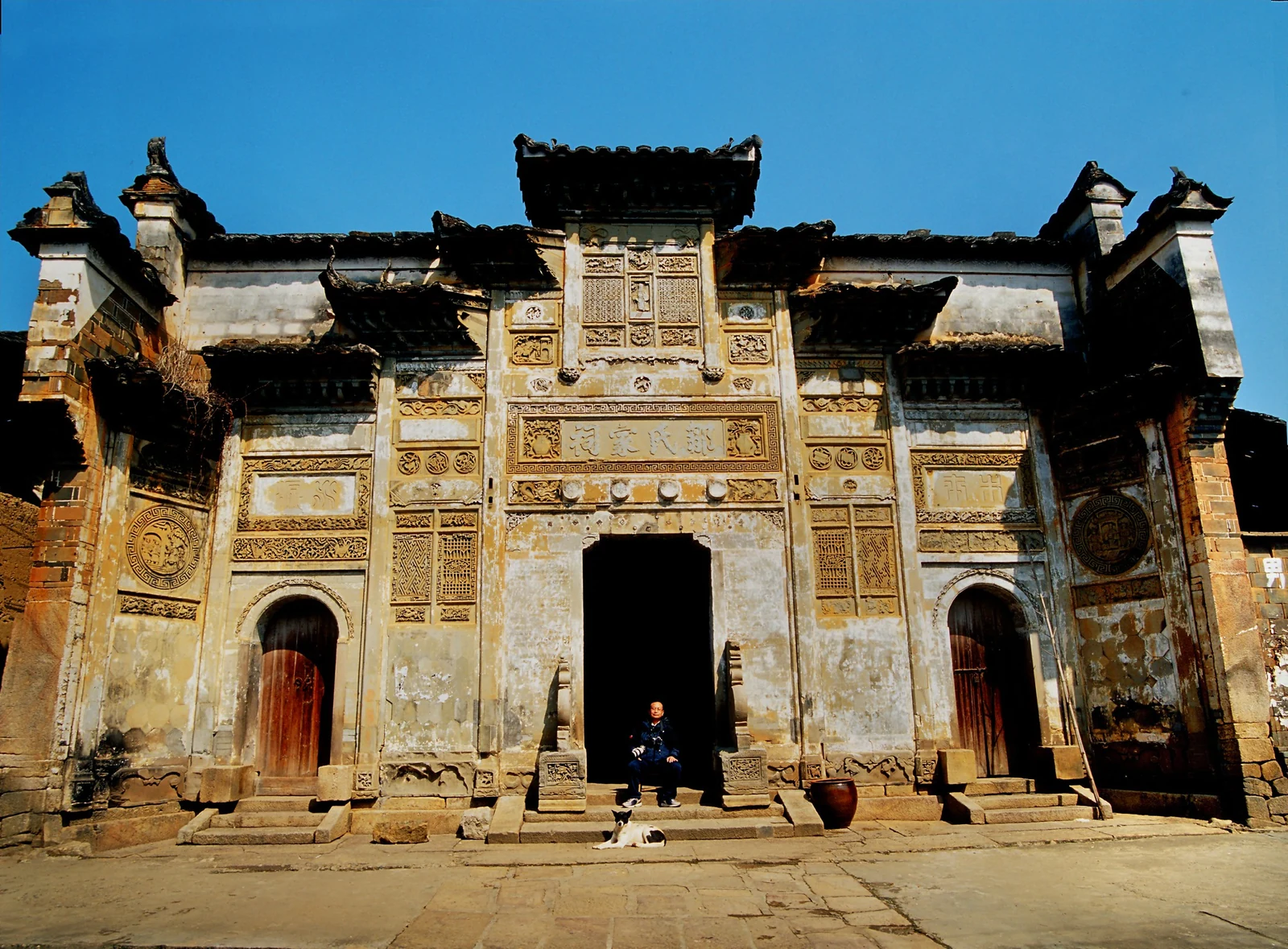
The Zou family’s Dafudi residence gives the commercial story a recognizable architectural focus. Its name is associated with the official title awarded to Zou Yingzhang. The carved entrance and sequence of domestic spaces express more than the ability to build a large house: they turn family standing into something visible in the village.

A gateway works at the boundary between public recognition and private life. People passing along a lane see its workmanship; those admitted beyond it encounter a different arrangement of courts and rooms. Decoration therefore has a social setting. It announces, frames and distinguishes.

The finest details deserve the same attention as the overall façade. A carved surface changes with the angle of light, while the depth of a doorway draws the eye into the house. Merchant history becomes tangible through these small architectural decisions.

An ornate stone and brick facade with three doorways and carved panels beneath upturned eaves.
The carved facade of the Zou ancestral hall in Xiamei.

Tea required trust as well as a route

A provincial account of the tea road links Xiamei’s Zou merchants with the Chang merchant family of Shanxi and their Jinglong trading enterprise. Such connections help explain how a mountain product entered a long commercial chain. A route alone could not move tea successfully: merchants also needed arrangements for quality, payment and reliable partners.

The geography of that trade changed. The same account describes the movement of the regional tea-market centre towards Chishi after Fuzhou’s port opened in 1844. Xiamei’s surviving houses therefore speak to a particular period of commercial importance, rather than an unchanging monopoly over Wuyi tea.

Reading the village through that shift makes it more interesting. Prosperity leaves material traces that can outlast the trading arrangements that produced them.

A broad panorama of dark tiled village roofs beside a river and green fields.
Xiamei village and its surrounding fields.

Old rooms enter another economy

Contemporary reuse adds a further chapter. A December 2025 report described Zou Zhiqiang turning a side room of the family residence into a tea space earlier that year. The example is a dated account of adaptation, rather than a promise about what will be open on any particular day. It shows how a house associated with historical trade can find another role in presenting local culture.

The wider challenge is to retain the village’s connective fabric: water, lanes, ordinary houses and the relationships between them. A richly carved doorway gains meaning from that setting. Isolated from it, the same doorway would become primarily an object of decoration.

Xiamei’s charm lies in the coexistence of scales. The stream remains small enough to organize a neighbourhood, while the story carried by its houses reaches far beyond Fujian. Tea made that connection; architecture gave it a lasting local form.

Continue exploring · Xiamei Village ↗
Photo credits and rights
  1. Small bridges cross the stream through Xiamei village.福建省农业农村厅 · Rights status unspecified Photo source ↗ Original aspect ratio retained. Display copies resized only when needed; no enlargement, crop or retouching.
  2. The carved facade of the Zou ancestral hall in Xiamei.福建省农业农村厅 · Rights status unspecified Photo source ↗ Original aspect ratio retained. Display copies resized only when needed; no enlargement, crop or retouching.
  3. Xiamei village and its surrounding fields.福建省农业农村厅 · Rights status unspecified Photo source ↗ Original aspect ratio retained. Display copies resized only when needed; no enlargement, crop or retouching.