A mahjong tile fits into the hand, yet its face has to be recognised across a table. The marks need a clear shape and a colour that holds the eye. At Biu Kee Mahjong in Jordan, hand carving turns a plain plastic blank into an object that people can read, handle and play with. The small scale concentrates attention: a curve or stroke has little room to go wrong.
From the journal
The Small Marks on a Mahjong Tile
At Biu Kee in Jordan, carving and colour turn blank tiles into familiar symbols and personal designs.
In this district · Yau Tsim Mong ↗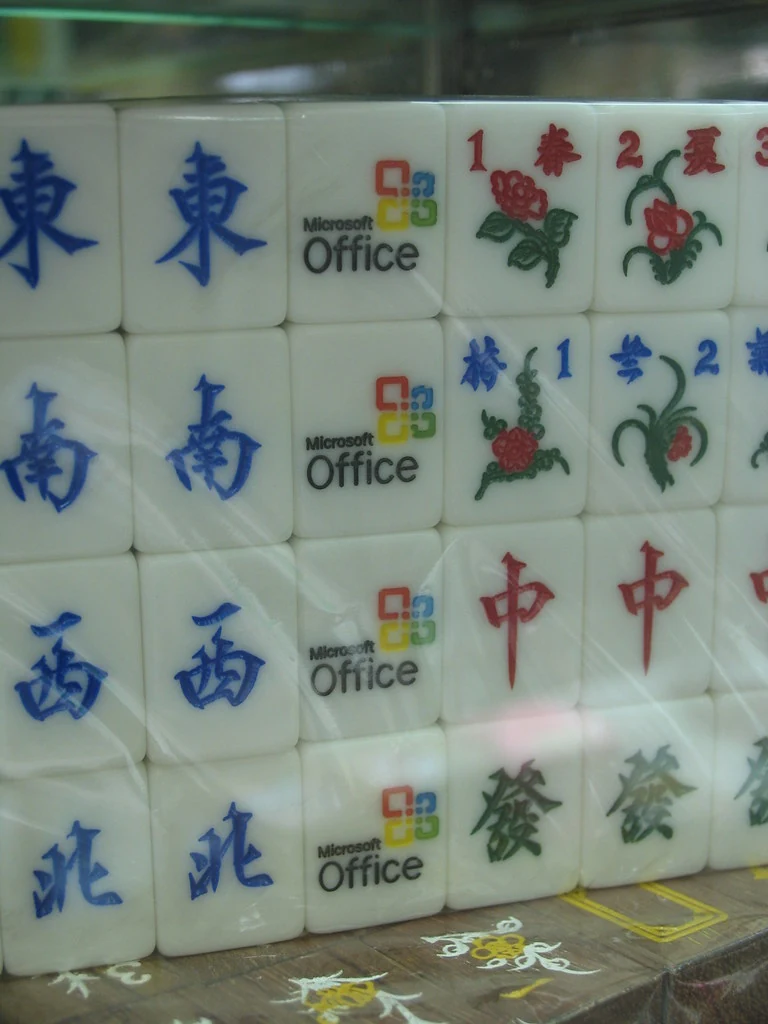
A blank tile waits for its mark
Carving before colour
The Hong Kong Tourism Board describes maker Uncle King carving the face of a tile before painting its design. He inherited the business from his father, placing the work within a family trade. The shop’s Jordan Road setting gives that lineage an address in a busy urban neighbourhood.
Familiar gaming symbols form one part of the work. Personal names and drawings can also be carved, shifting the tile from a standard piece in a set towards an individual keepsake. The same relationship between cut mark and painted colour allows both uses.
A game object carries a maker’s hand
A finished set is often seen all at once, ordered into rows or mixed across a table. Looking at one tile slows that view down. Its face records the work needed to make a repeated symbol, while a customised piece shows how the format can accommodate something unique. The craft joins a shared visual language to a maker’s control of the tool. A close photograph can make those incised marks visible; the shop setting places them back within the trade that produces them.