Color high on the ridge
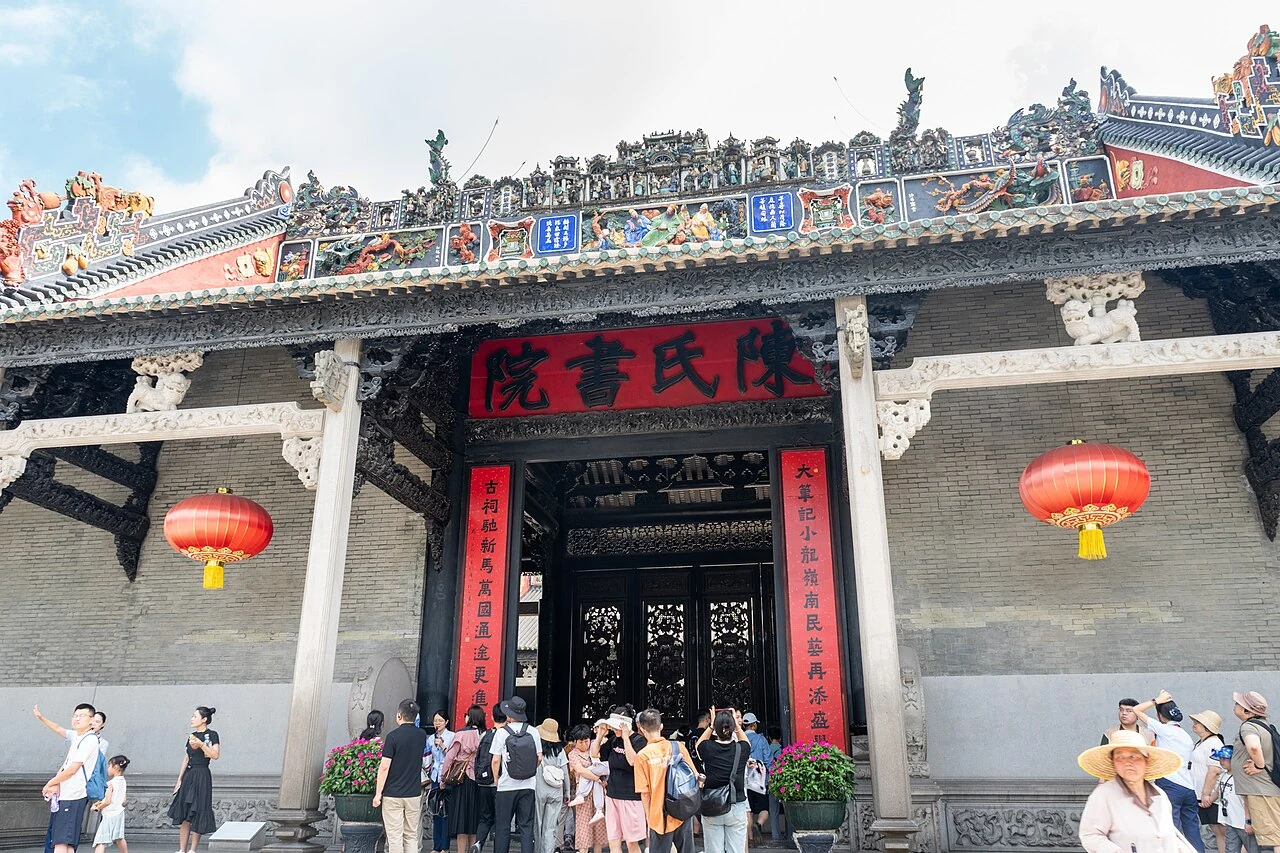
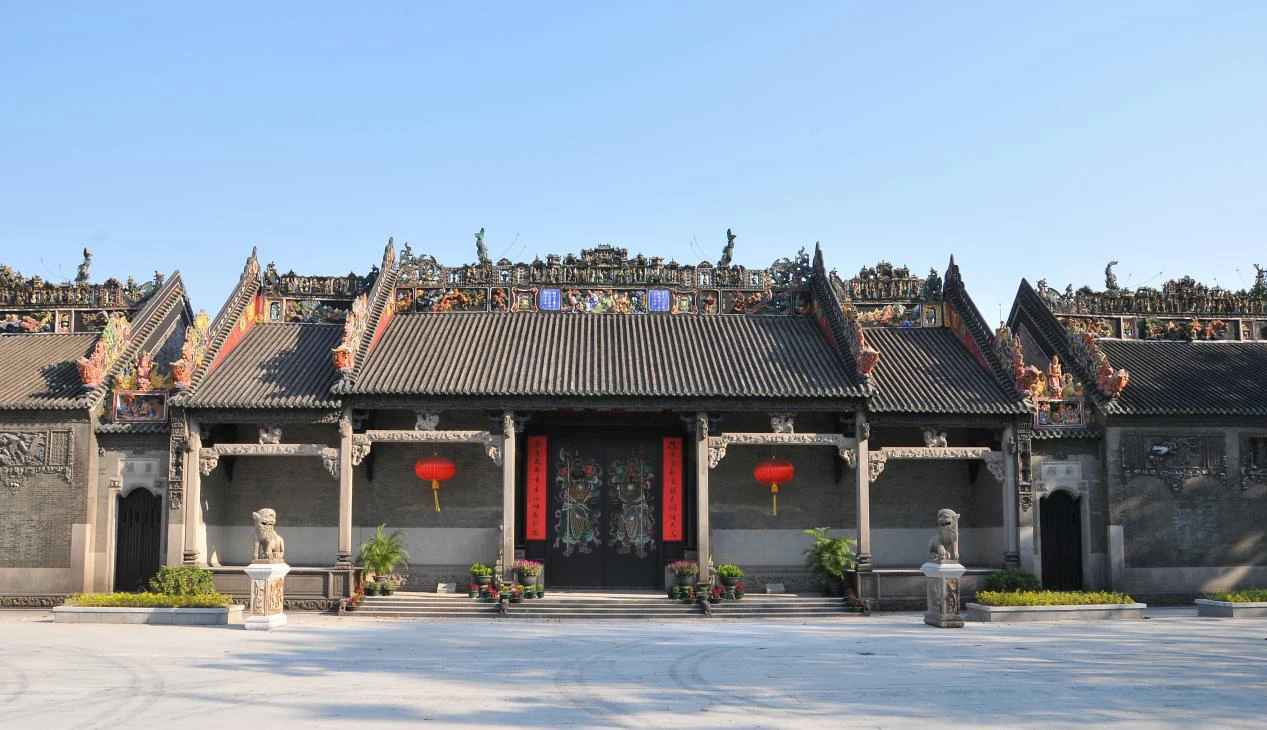
At Chen Clan Academy, ceramic figures rise above the roofline. Their modeled forms give the silhouette color and movement, visible across a courtyard. Grey-plaster decoration also occupies architectural surfaces, but it follows a different making process: material is built up on site around a support, then painted.
These two kinds of modeling belong to a larger combination of ceramic sculpture, grey plaster, carved brick, wood, stone and metalwork. A colorful surface alone does not identify its material. Position, texture and the way an element meets the building each help explain the work.
A scene becomes part of a wall
Grey plaster is formed where it will remain on the architecture. Its supporting structure and layers of modeled material allow a scene to grow out from a surface before it receives color. Brick relief works within a different material, bringing figures or patterns into the face of a wall.
The building therefore carries several kinds of depth. A raised form projects toward the courtyard, while a carved surface stays within the edge of a wall or opening. Decoration becomes part of the architecture's physical layers.
Craft at the scale of a doorway
Near a hall, the scale changes. Carved wood at a screen or doorway meets the eye much closer than the figures on the ridge. Stone, brick and metal details also belong to thresholds and structural parts of the compound.
Roof, wall and doorway give the crafts different settings. The roof figures meet the sky; a relief belongs to a wall; a screen stands where someone passes between rooms. Together they make the academy a place where material work can be encountered through movement from one space to another.