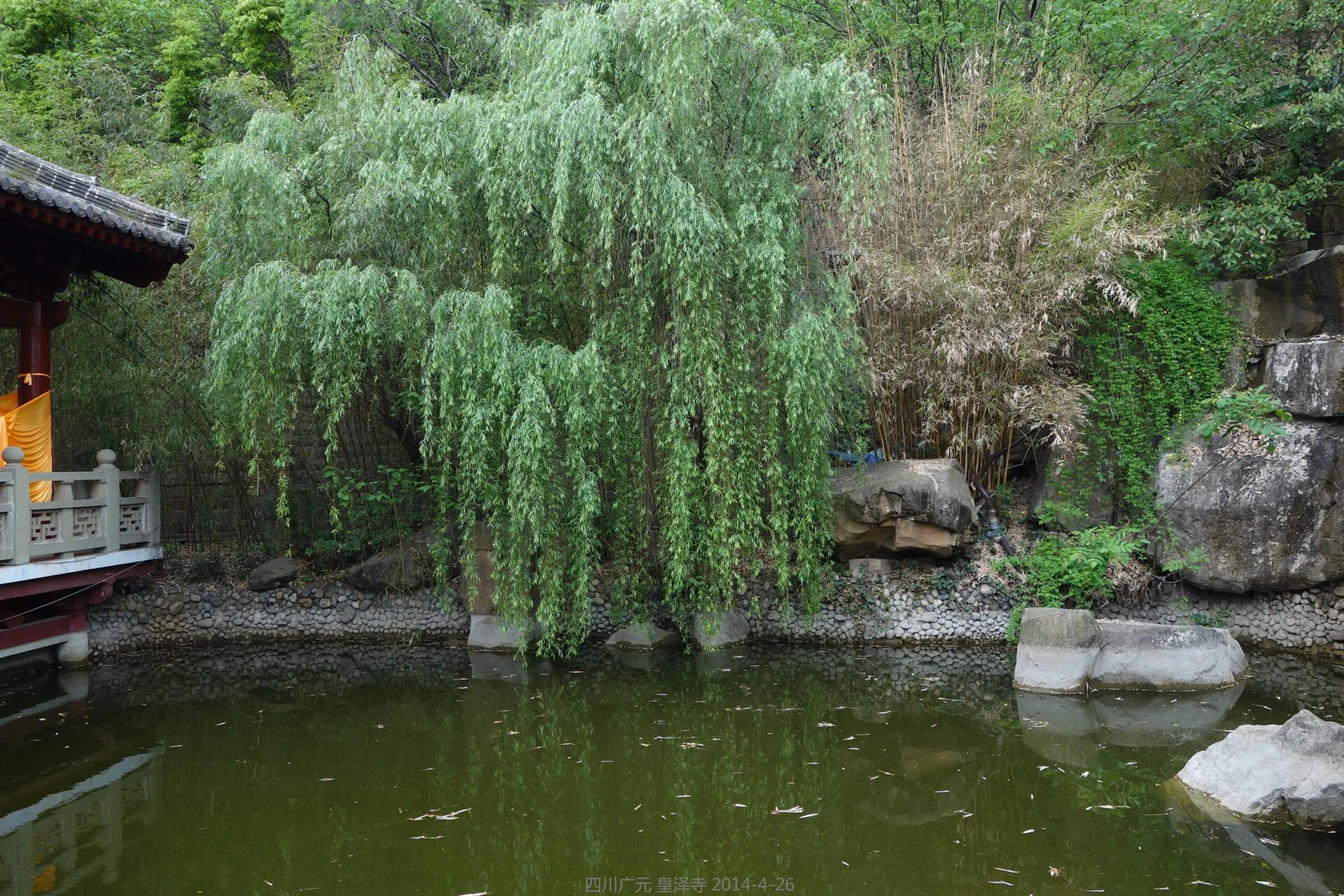
Huangze Temple is the only temple in China dedicated to Wu Zetian. Its image, cliff carvings and river make a place where imperial memory and Buddhism overlap.
Words by IFreeing Editors3 min readHuangze Temple · Guangyuan
The image in the hall
Inside the hall the image of Wu Zetian sits in the dim light of a temple interior. She is the Tang woman who became emperor, and this is the only temple in China dedicated to her. The building stands by the Jialing River in Guangyuan. The temple was renamed and associated with her after her rise, and that sequence matters: the place did not begin as her monument, it became one, and the becoming is what you are looking at. A memorial that arrives late is still a memorial, but it records a decision as much as a life. The temple is a document with a chronology problem: building, name and story arrived at different times.
A face that is a position
A hall with a ruler's image is a difficult object. It is a portrait, a relic and a political statement at once, and the three cannot be separated cleanly. The image is not a photograph and does not claim to be; it is a later construction of a face. Visitors read it as a person. The room asks them to read it as a position. That double reading is the temple's method. It does not tell you what Wu Zetian was like. It shows you what a place does with a woman who took power and kept it. A likeness made after a death is still evidence, but of the makers rather than the sitter.
The cliff behind
Behind and around the temple the cliff carries carvings, and they are national key cultural relics. They include a large Buddha and a central-pillar cave, a form in which the worshipper walks around a pillar left in the rock rather than around a free-standing image. The carvings belong to a different logic from the hall: patronage, merit, the cutting of a cliff into rooms. That is why the site is more interesting than a single memorial. Two systems of meaning share one stretch of riverbank, and neither explains the other. The hall gives the eyes a target and the cave gives the feet a circuit, which is a difference in how a body is expected to behave.
The river keeps it honest
The river is the third element and the one that keeps the site honest. Water does not commemorate. It moves past the temple, past the carvings, past the town, and it has done so through every version of the story. Standing between the hall and the cliff, the difficulty is separating legend from the object: the image is a later likeness, the carvings are devotional work, and the connection to an emperor is a claim the place makes about itself. None of that makes the temple false. It makes it a document of how power is remembered locally. You leave with a question rather than an answer, which is the right result for a place like this.