From the journal

The island facing its working sea

Explore Dongshan Island through fisheries, Tongling’s old streets and the ceramic roof sculpture and continuing devotion of its Guandi Temple.

In the same city · Zhangzhou ↗

Begin with a working coast

Dongshan’s bays can be approached as scenery, but the island’s cultural history becomes clearer when the sea is understood as a workplace. Fujian’s marine authority describes fishing and aquaculture as part of its island economy. Boats and water are therefore more than visual companions to a beach: they belong to systems of skill, labour and livelihood.

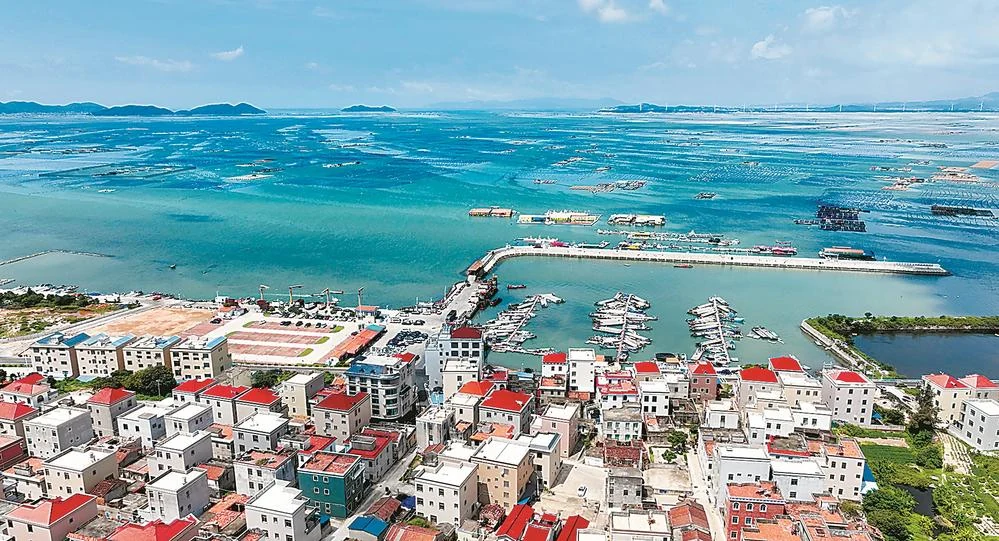
Keep that distinction in mind when looking toward a harbour. A vessel’s working space and a visitor’s viewing place have different purposes. The interest lies in observing how settlement meets the water from an appropriate public route, not in entering restricted quays for a closer photograph. Dongshan’s shore is most informative when the activity it supports remains in view.
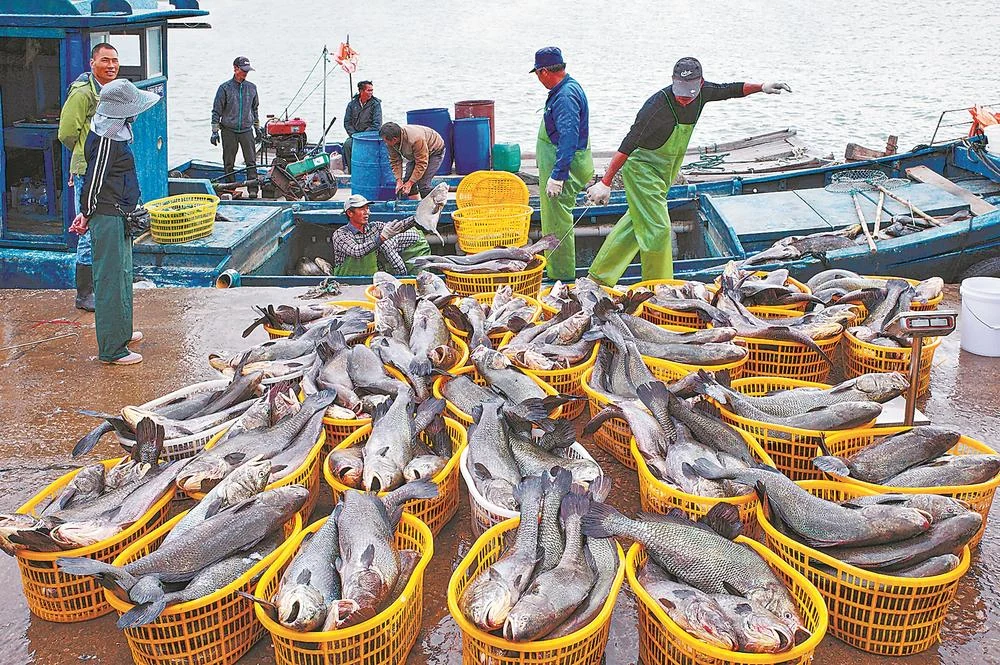
Workers stand among baskets filled with fish on a waterfront landing area.
Baskets of landed fish in Dongshan.
An aerial view of red-roofed waterfront houses and aquaculture structures in blue-green coastal waters.
Xiaxikeng village and its sheltered waters in Dongshan County.

A maritime town turns inward

Tongling, on the island’s northeastern side, adds a dense built scale to the open coast. Official accounts connect the historic Tongshan area with old streets and religious buildings, including Guandi Temple. Dingjie, an old street in Tongling, offers a way to think about this relation between shoreline and town.

Turn attention from the horizon to entrances, roof edges and the space between buildings. A maritime community also needs inland-facing places: homes, shared institutions and routes where people meet away from the immediate work of the water. The temple belongs to that settlement fabric. Its presence helps explain why an island visit can move naturally from a coast to an enclosed courtyard without leaving the maritime story behind.

A roof assembled from fragments

The Guandi Temple’s foundation is dated to 1387, but its long life includes repair and rebuilding. Its ceramic decoration offers a particularly tangible route into local craftsmanship. In the cut-ceramic technique, coloured glazed bowls and plates are cut, shaped and assembled into figures and other forms on the building.

Look closely enough to distinguish the fragments, then step back to see the image they create together. Material once associated with a vessel becomes surface, colour and outline. The roofline can carry a scene at a scale readable from below. This is a different kind of storytelling from a painted page: the figures occupy an exposed architectural edge, and their composition must work with the building’s silhouette.

Continuity includes repair and return

Guandi is the deified general Guan Yu, revered as an embodiment of loyalty and trust and also as a patron of merchants. That helps explain why devotion belongs within a story of maritime lives and exchanges. Guandi devotion connects the temple with communities beyond Dongshan. A February 2026 Fujian Daily report described a restoration celebration attended by worshippers including visitors from Taiwan. It also set out the building’s sequence of entrance pavilion, halls and courtyard spaces, together with several decorative crafts. The account shows continuity as something actively renewed through both repair and participation.

The temple is therefore more than an elaborate survivor beside the sea. Its meaning is sustained by people who return, maintain relationships and attach moral and religious significance to the place. Dongshan’s cultural landscape holds these movements together: work on the water, daily life in town, skilled labour on a roof and journeys made for devotion. The shoreline opens onto all of them.

Continue exploring · Dongshan Island ↗
Photo credits and rights
  1. Baskets of landed fish in Dongshan.福建省农业农村厅 / 福建日报; 欧东茵 / Ou Dongyin · Rights status unspecified Photo source ↗ Original aspect ratio retained. Display copies resized only when needed; no enlargement, crop or retouching.
  2. Xiaxikeng village and its sheltered waters in Dongshan County.福建省农业农村厅 / 福建日报 · Rights status unspecified Photo source ↗ Original aspect ratio retained. Display copies resized only when needed; no enlargement, crop or retouching.