A length of fabric lies flat on the cutting bed. The eventual dress has to move around a neck, shoulder, waist and hip, yet none of those curves is present in the uncut cloth. A cheongsam tailor begins by choosing fabric with the customer, agreeing on a style and taking measurements. The garment’s close relation to one body gives its elegant outline a practical beginning: listening, measuring and deciding where a line should fall.
From the journal
The Shape of a Hong Kong Cheongsam
Chalk lines, an iron and repeated fitting show how Hong Kong’s cheongsam tailors turn flat cloth into a dress shaped for one person.
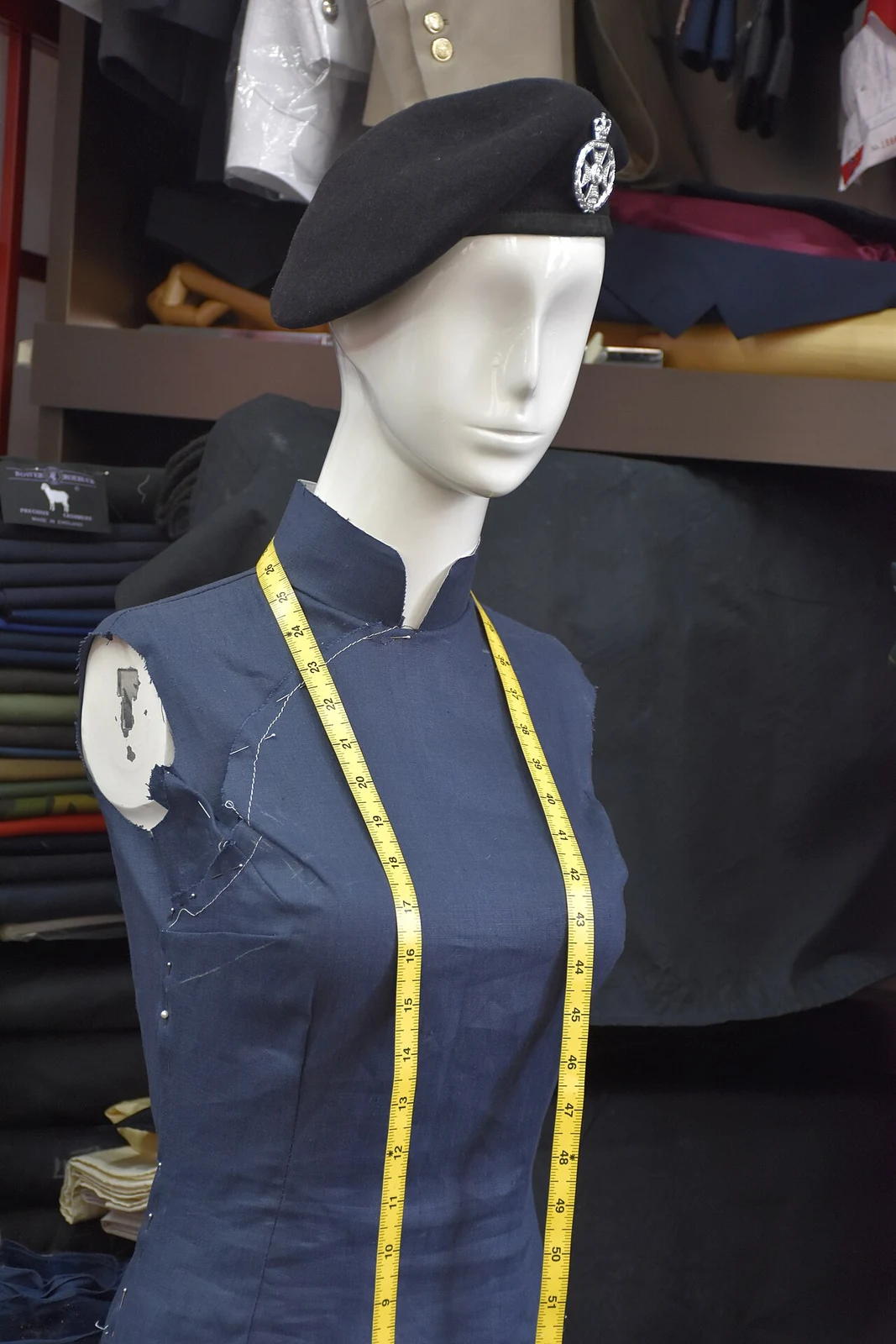
A dress begins with a person
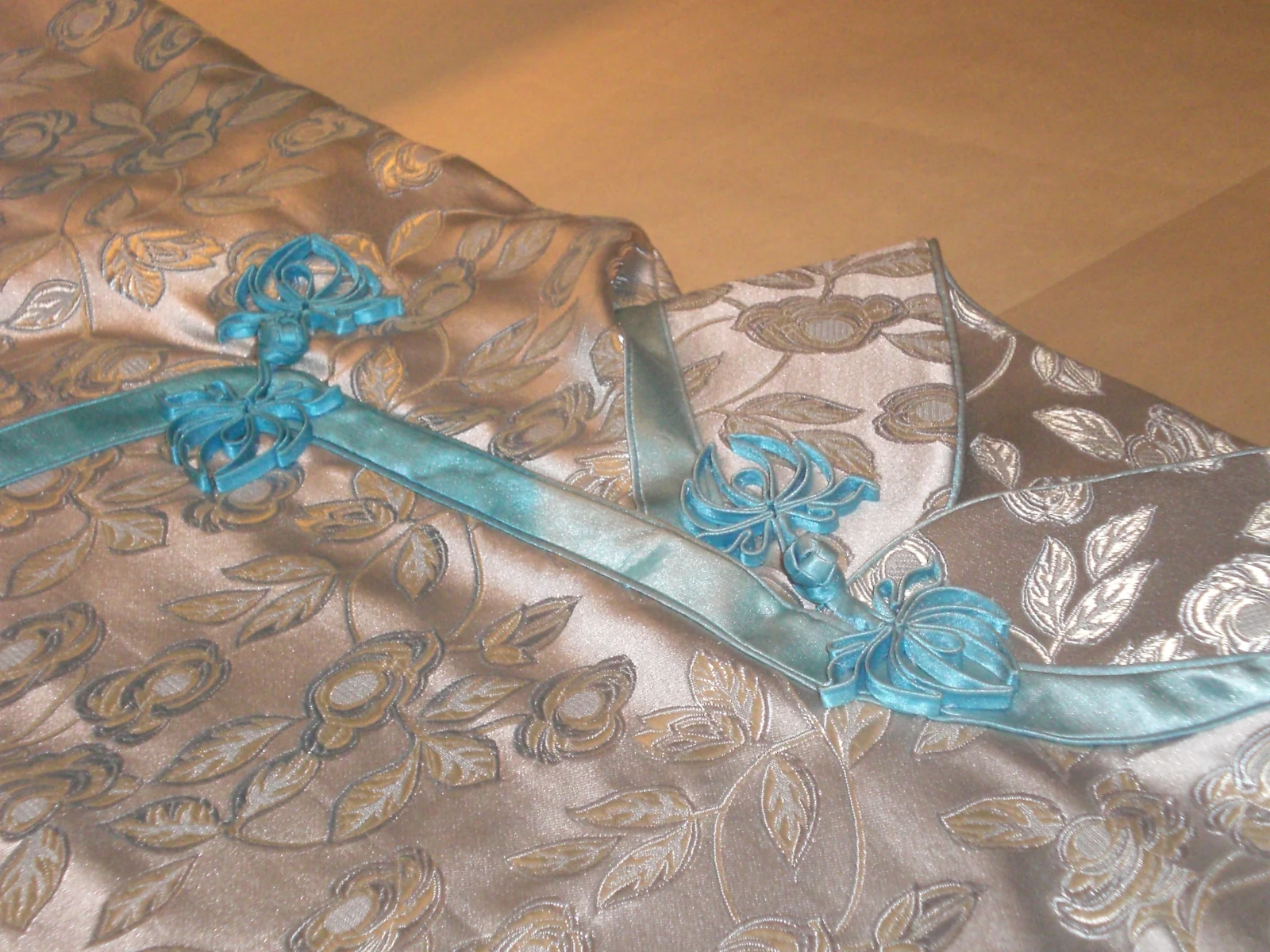
Drawing and reshaping the line
Hong Kong’s tailoring history includes the use of a chalk-powder bag to mark a pattern directly on fabric. The cutting bed gathers tools and materials into a compact workplace, doing several jobs at once. Cutting establishes the pieces, but it does not settle their final shape.
An important operation called guibo uses the iron to persuade the cloth into curves. By pushing and drawing a section, the tailor adjusts how an edge or panel will follow the body. Sewing may be done by hand or machine, with different techniques contributing to the finished fit. It is easy to focus on the dress’s fastenings or decorative fabric; the less conspicuous shaping beneath them is equally part of its construction.
A silhouette that changed with the city
Shanghai tailors who came to Hong Kong helped the trade expand in the middle of the twentieth century. Cheongsams of the 1950s and 1960s incorporated fitted waists, darts, separate sleeves and other approaches associated with Western tailoring. Simpler fastenings and matching jackets also suited an urban wardrobe. The dress could change without becoming unrecognisable.
Hong Kong’s women’s cheongsam therefore carries a history of adaptation alongside its distinctive form. The men’s long gown has its own social meanings, including seniority in New Territories clan settings. Keeping those uses distinct reveals more than treating every long Chinese garment as the same costume. In each case, the skill is carried by work that can be measured in fabric, seams and fit.