The White Temple at Tholing is part of the former Guge kingdom’s landscape in Zhada County. A 2017 regional report places its murals broadly in the fifteenth and sixteenth centuries. Art historian Christian Luczanits compares the Tholing murals with those at Gyantse and argues that both draw on Newar artistic heritage. His comparison makes the wall part of a wider Himalayan art history, while keeping attention on specific visual features rather than claiming a single foreign workshop made the paintings.
From the journal
Art Across the Himalaya at Tholing
Art historian Christian Luczanits traces Newar-derived floral motifs and Chinese textile patterns in the Tholing murals while emphasizing Tibetan local agency.
In the same city · Ngari ↗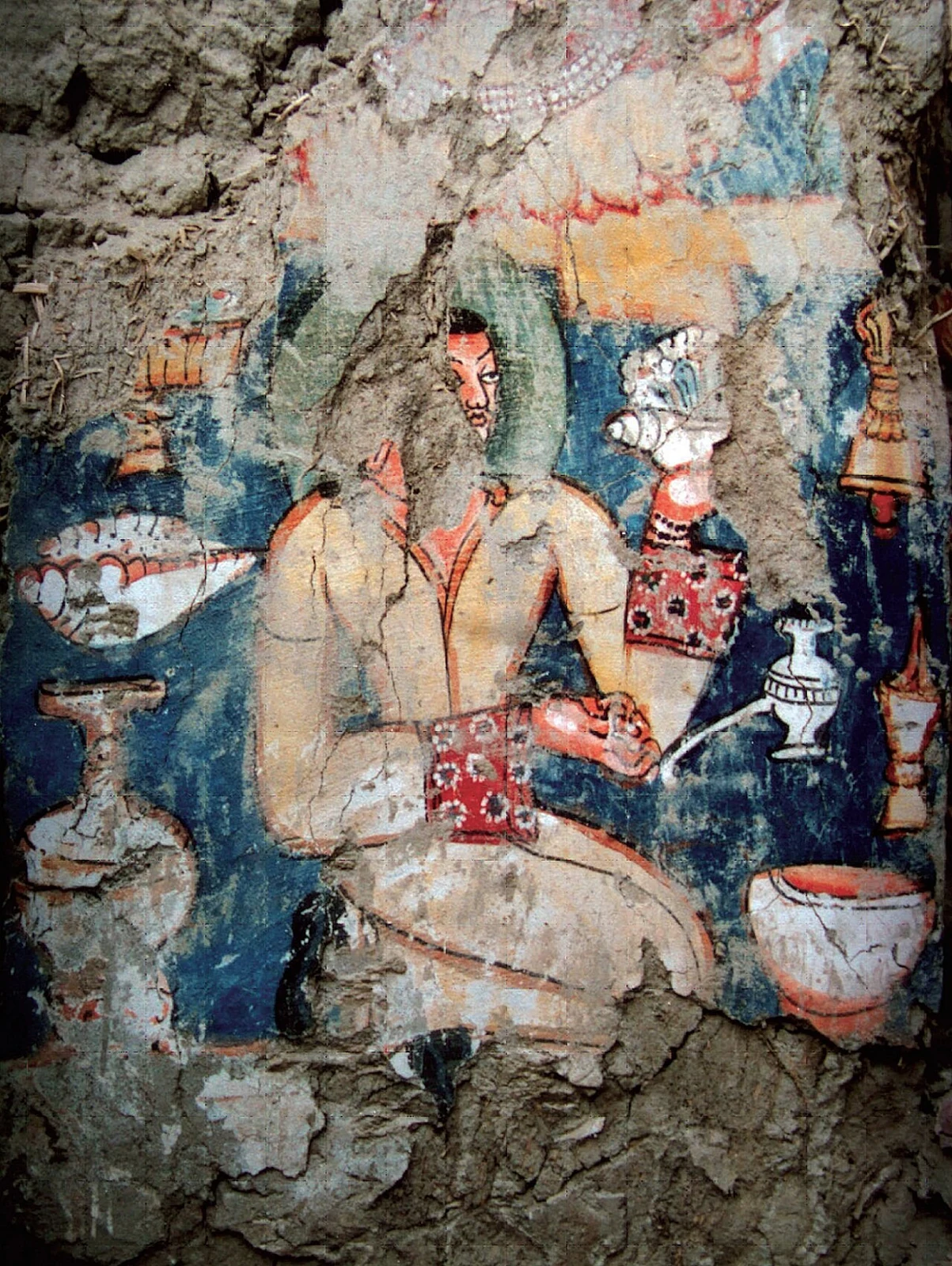
What an art historian sees in the murals
Flowers, pillars and textile patterns
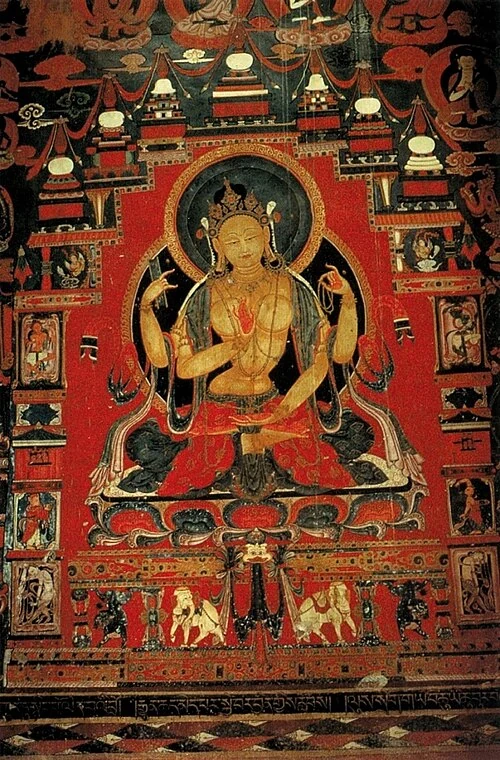
Luczanits describes red tones and more prominent greens in vegetal motifs and scrolls. He identifies Newar-derived flower scrolls filling background surfaces and lotus-blossom pillars framing figures. Chinese elements, in his account, appear mostly in cloth and textile patterns, including bird and cloud designs. These details show how visual references can be integrated within one painting program. They do not establish that each motif arrived through a direct journey from a named workshop. The article instead emphasizes careful comparison across motifs, sites, and periods.
Local choices shape the result
The same study warns against treating style as a simple label for an artist’s birthplace. It notes that a Tibetan patron’s requirements and local choices helped shape artworks, making the resulting works Tibetan even where visual elements came through exchange. That argument helps read the Tholing murals without flattening them into a list of outside influences. Flower scrolls, lotus pillars, and patterned cloth belong to a single sacred wall, whose composition was made for a particular building and community. Regional connection and local authorship can be considered together.
A wall in a wider, dated landscape
The paintings remain within the White Temple, where the department reports an interior of 555 square metres and 42 columns. Their visual relationships reach beyond Zhada, but their physical setting remains local. Luczanits’s comparison with Gyantse gives readers a way to think about shared artistic vocabularies across the Himalaya; it does not turn the two sites into interchangeable examples. Looking closely at the wall’s motifs and its architectural home keeps both scales in view: exchange across regions and the distinct religious place where these paintings were made and seen.