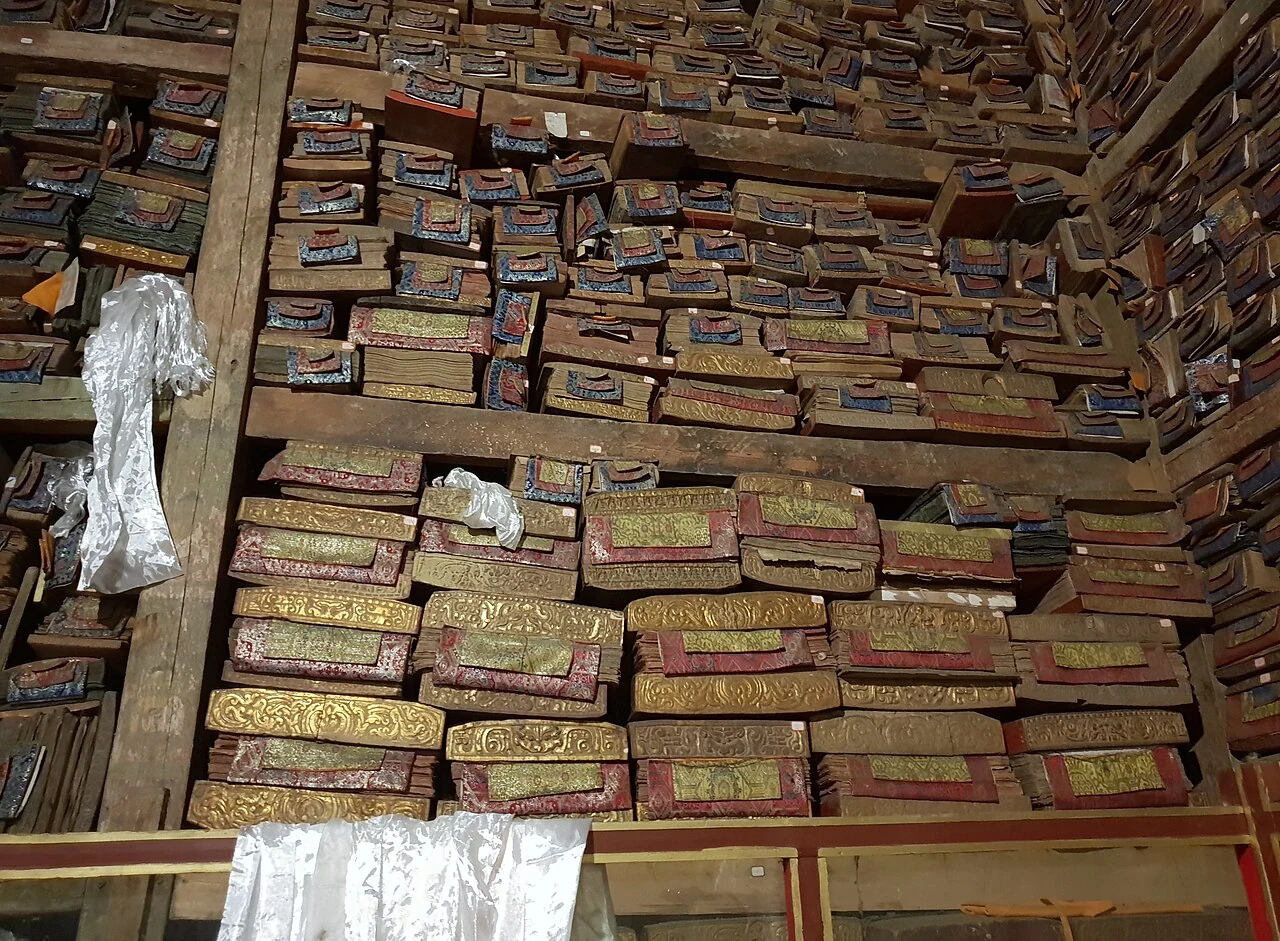
At Sakya Monastery, books belong to halls where learning, worship and the daily work of the monastery meet. A 2022 report carried by the Tibet regional culture and tourism department, citing the monastery’s management committee, counted more than 50,000 volumes and 21 palm-leaf manuscripts. The collection brings together many kinds of writing, from religious works to texts on history, law, medicine, astronomy and mathematics, giving the library a reach well beyond a single field of study.
From the journal
A Library Built into the Hall
At Sakya Monastery, books are part of the architecture’s history: collections were moved during repairs, while later conservation work turned page-by-page scanning into another way of caring for them.
In the same city · Shigatse ↗
A collection with a place in the monastery
When conservation required a move
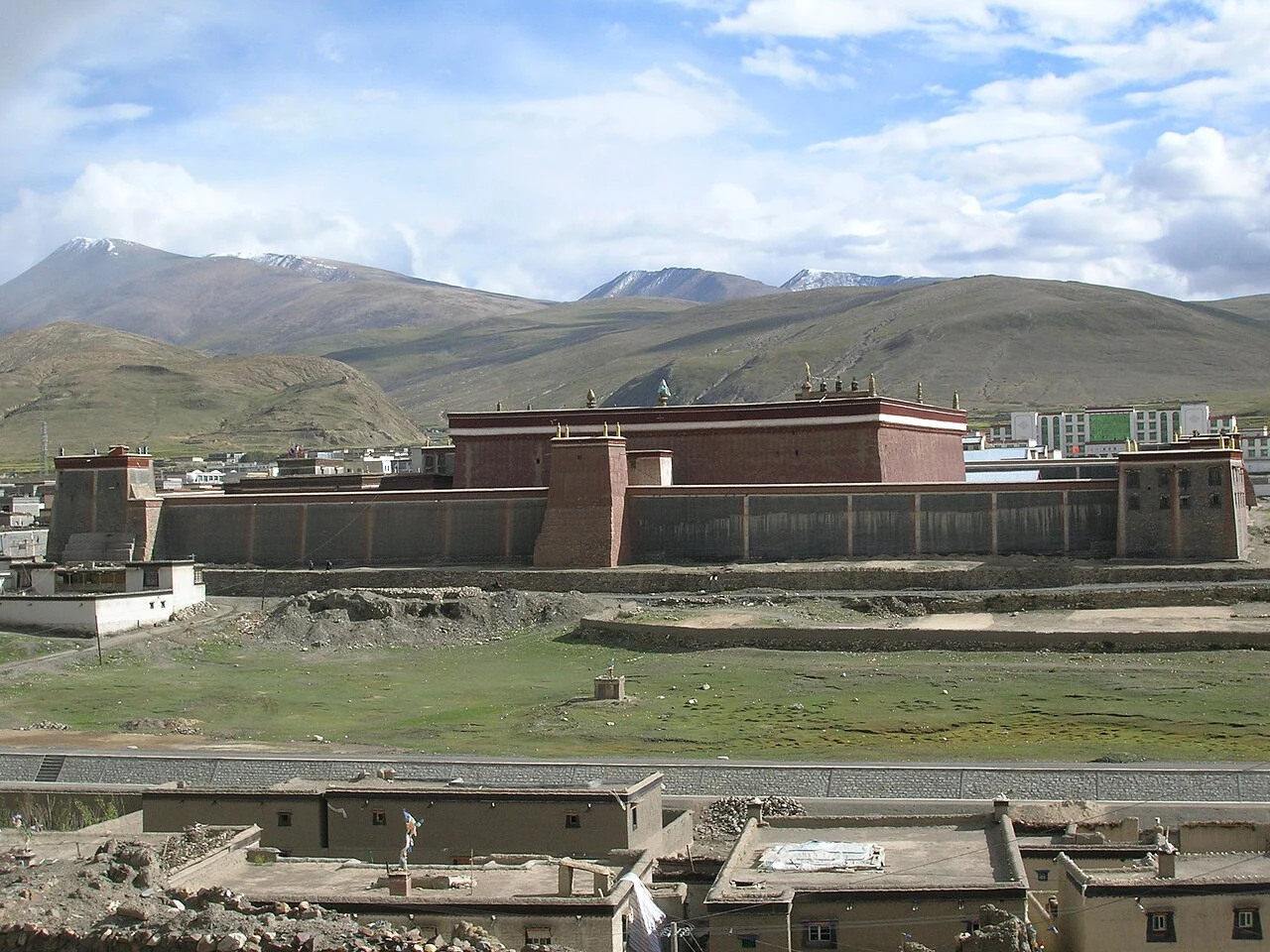
The books’ relationship to the building became especially clear during repairs. A government account of the long restoration campaign says work that began in 2002 included the monastery walls, corner towers, monks’ quarters and painted surfaces. In 2005, while the main hall was being repaired, most of the books inside it were moved to a newly built cultural-relic storehouse to protect them during the work. Moving the collection was therefore part of architectural conservation: protecting the books allowed repair crews to work on the hall and the surfaces around them.
From walls to individual pages
Specialist mural repairs took place alongside work on the buildings. A 2025 update describes another scale of care: Sakya completed scanning 100,000 pages of old books, including iron-ring-bound volumes. The digital images create a page-level record that can be consulted while the original remains in its collection. Physical conservation protects halls, roofs and painted surfaces; digitization makes the writing on each page easier to study.
A living archive, carefully counted
Three dated moments show how care for the collection has worked at different scales. A 2022 account counted more than 50,000 volumes and 21 palm-leaf manuscripts. During the repair campaign, most books were moved from the main hall into a new cultural-relic storehouse. In 2025, the monastery completed scans of 100,000 pages, including iron-ring-bound books. The sequence links collection care to the spaces that hold the books, the protection of the hall, and a detailed digital record of individual pages.