From the journal

Yumbulagang: A Tower above the Yarlung Fields

On Tashi Tsiri hill above the Yarlung fields, Yumbulagang’s tower-like main building, golden roof and murals tie its architecture to local memory.

In the same city · Shannan ↗
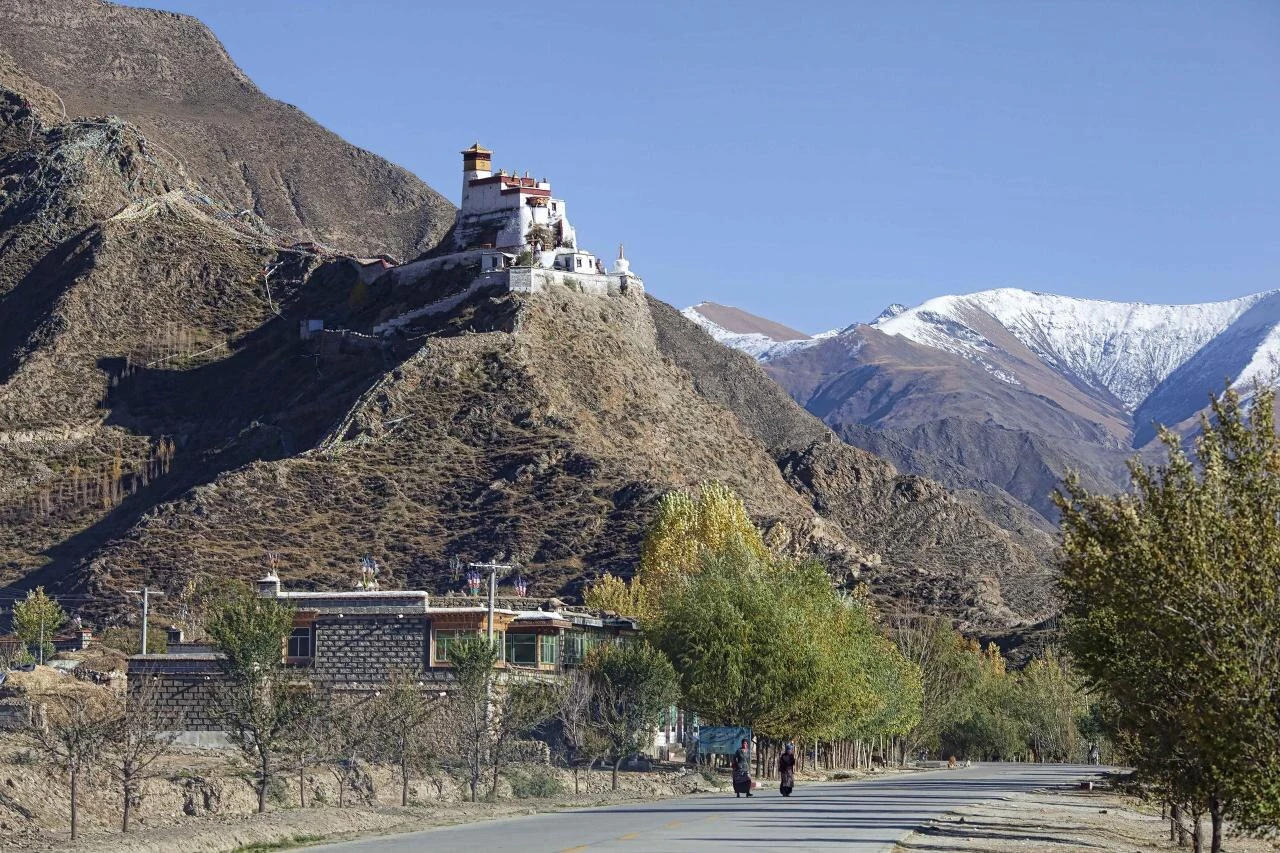
Yumbulagang’s tower and walls rise along a narrow hilltop.
The ridge concentrates Yumbulagang’s architectural silhouette.

The ridge gives the tower its outline

Yumbulagang stands on Tashi Tsiri hill in Nêdong, above the Yarlung Valley. Its tower-like form occupies a narrow height, with walls descending and stepping along the ridge. From below, the building and the landform combine into a single sharply defined profile.

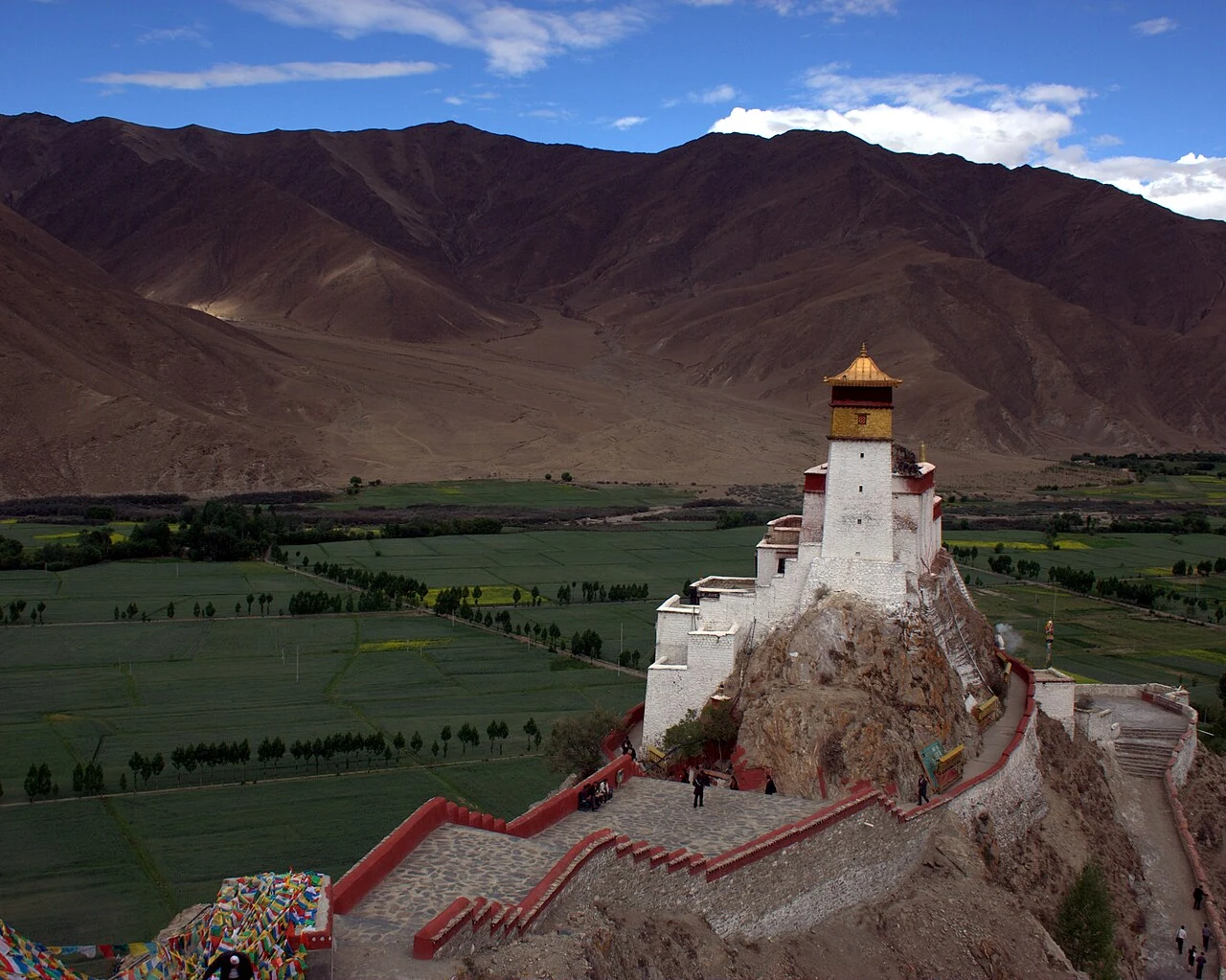
This setting makes the approach part of the architecture’s effect. A distant view emphasises the steep slope and concentrated mass. Nearer the top, smaller structures and changes in level become more apparent. The same building can appear like a compact tower from one position and a connected group of spaces from another.

The Shannan cultural account places Yumbulagang on Tashi Tsiri hill and translates its name as ‘Palace of Mother and Son’; it says the site takes its name from the hill’s resemblance to a reclining deer. The tower-like main building follows the summit, with a golden roof and murals of Tibetan imperial history. Naming, form and decoration all belong to this particular ridge.
Fields give the monument a setting

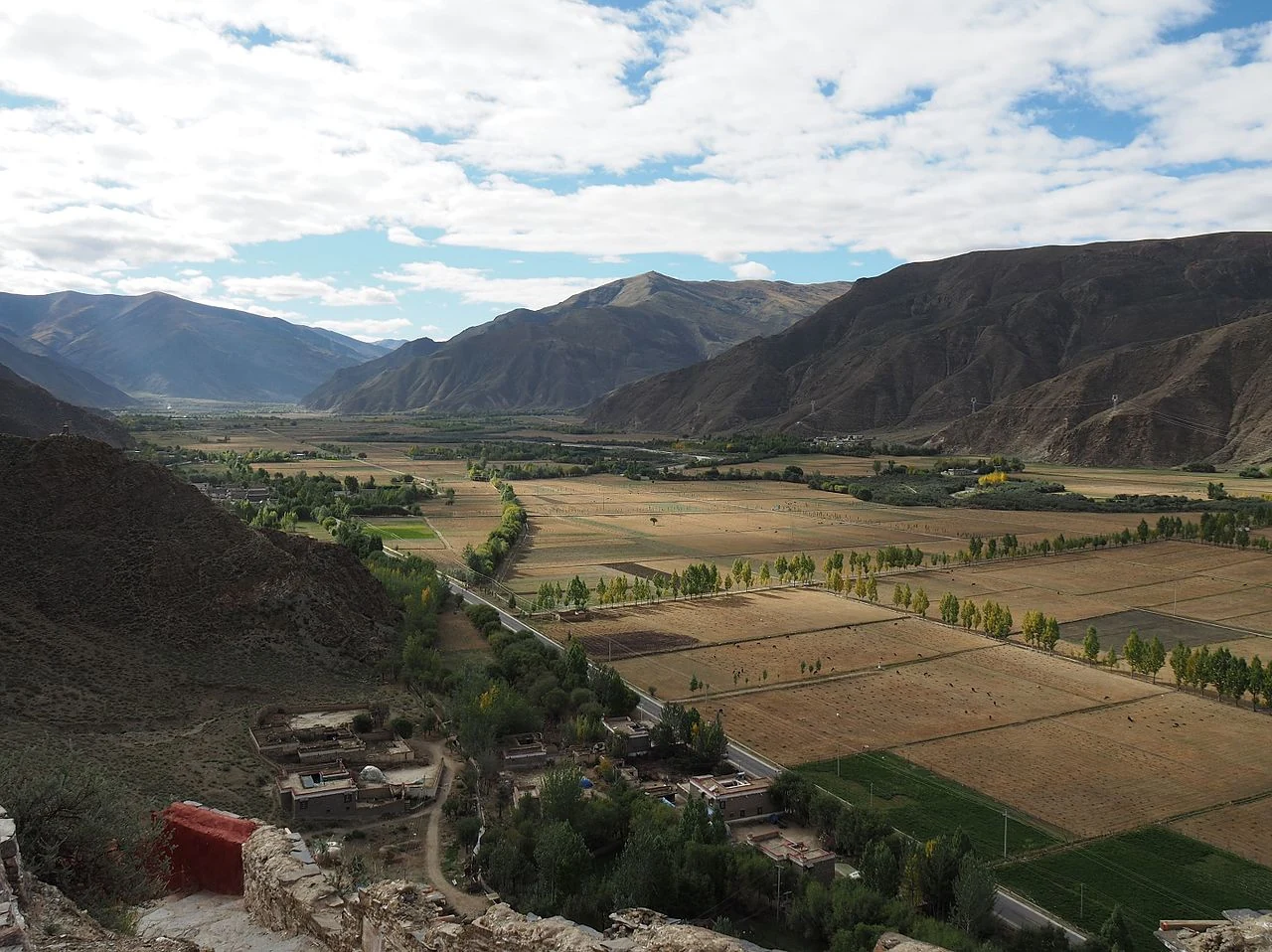
The surrounding valley introduces another scale. Local descriptions place barley fields and villages below the hill, connecting the monument with a cultivated landscape. A view outward from the ridge therefore includes places of work and residence as well as mountains.

The contrast between concentrated building and open farmland is central to Yumbulagang’s image. The hill lifts the architecture above the valley while the fields give the eye a way to understand its position. A palace or shrine on a height still belongs to the settlements and routes around it.

Cultivated valley ground spreads below the hill.
The Yarlung fields and settlements form the wider setting of the monument.

The place carries stories of origins

Yumbulagang holds a prominent place in Tibetan traditions about early kingship. Local accounts also connect it with stories of the beginnings of Tibetan writing, presenting the association with Thonmi Sambhota as legend. These narratives give the ridge a cultural significance beyond its commanding physical position.

The visible monument has also required continuing care. An official 2019 report recorded investigation of its conservation works. The building encountered today belongs to this long relationship between a remembered past and the practical work of maintaining a structure on a mountain. Tower, ridge and fields together give those histories a tangible setting.

A closer view of Yumbulagang’s buildings.
At a smaller scale, separate building masses emerge within the familiar profile.
Continue exploring · Yumbulagang ↗
Photo credits and rights
  1. The ridge concentrates Yumbulagang’s architectural silhouette.Christopher Michel · CC BY 2.0 Photo source ↗ Rights information ↗
  2. The Yarlung fields and settlements form the wider setting of the monument.Laika ac from UK · CC BY-SA 2.0 Photo source ↗ Rights information ↗
  3. At a smaller scale, separate building masses emerge within the familiar profile.Preston Rhea · CC BY-SA 2.0 Photo source ↗ Rights information ↗