Yangzhou

Fine Cuts: Tofu and Lacquer in Yangzhou

Understand Huaiyang knife work and Yangzhou lacquer through materials, trained hands, and the details worth noticing.

Start with the material

A bowl of tofu and a lacquer object seem an unlikely pair. In Yangzhou, comparing them offers a way to notice work that a polished result can conceal. This is an interpretive comparison, not a claim that the two crafts share a single origin. Each asks a maker to understand a material closely enough to transform it without losing control.

Yangzhou joined UNESCO’s Creative Cities Network in gastronomy in 2019. That recognition provides context, but the most instructive evidence can be much smaller: the separation of tofu strands in broth, or the meeting of two carved surfaces.
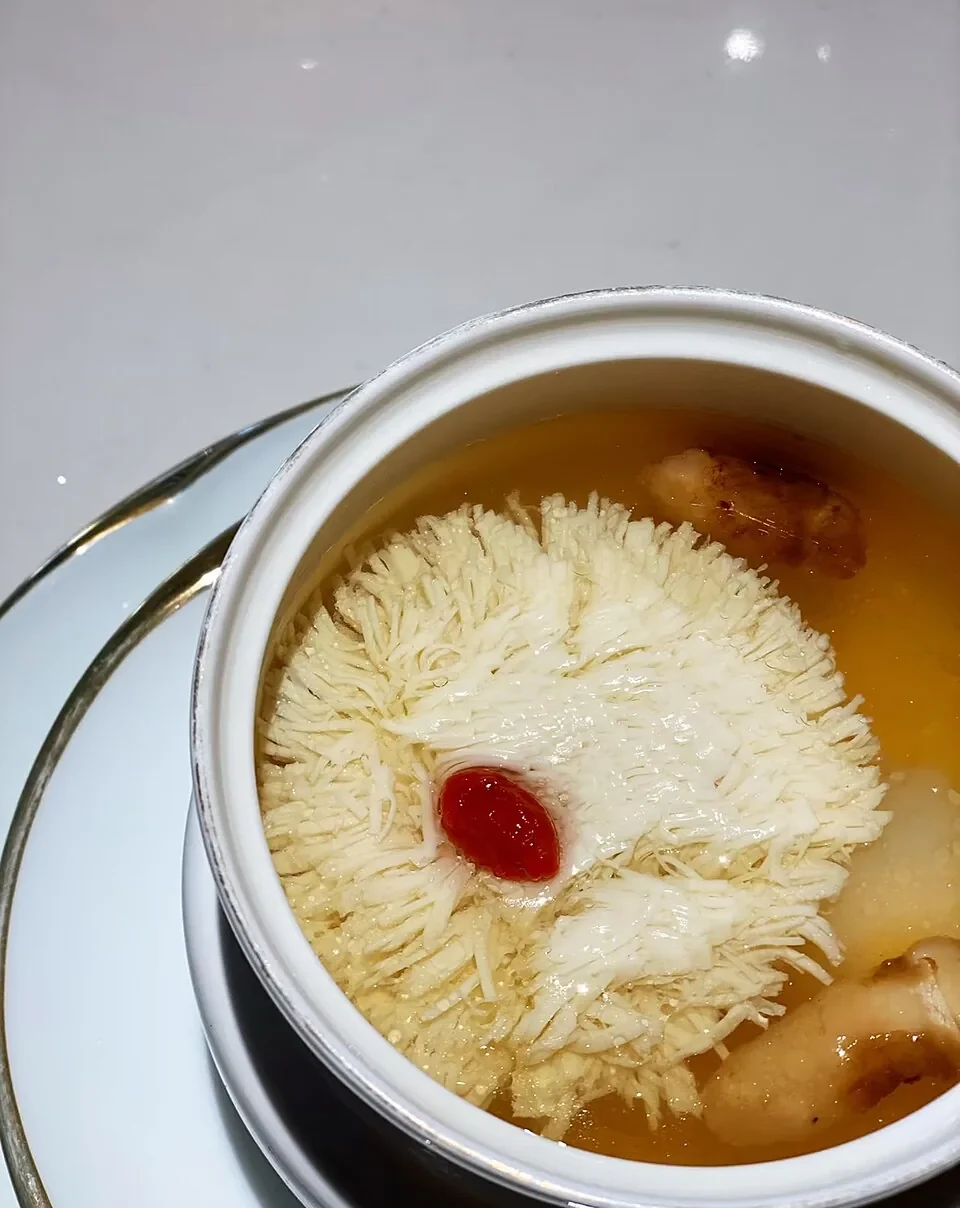
A served dish identified by its photographer as Wensi tofu, with finely cut tofu arranged like a flower in broth.

Two tofu dishes, two cutting problems

Wensi tofu begins with soft tofu, cut into fine threads that spread when placed in water and are then cooked in broth. The city’s English-language account associates the dish with a Qing-era monk named Wensi, but presents that origin as a story. The dish does not need an embellished imperial pedigree to be interesting. Its challenge is already visible in the contrast between a fragile block and distinct, slender strands.

Dazhu gansi is a different preparation. It uses firmer dried bean curd cut into strips and cooked with stock; additions may include bamboo shoots, shrimp, vegetables, or ham. One starts with a soft, easily disrupted material; the other turns a denser ingredient into an even cut that can combine with broth and accompaniments.

At the table, compare the thickness and separation of the strands before focusing on presentation. Then consider how the broth and tofu work together. The cutting is part of the eating experience, not simply a demonstration performed before cooking begins.

Lacquer is built as well as cut

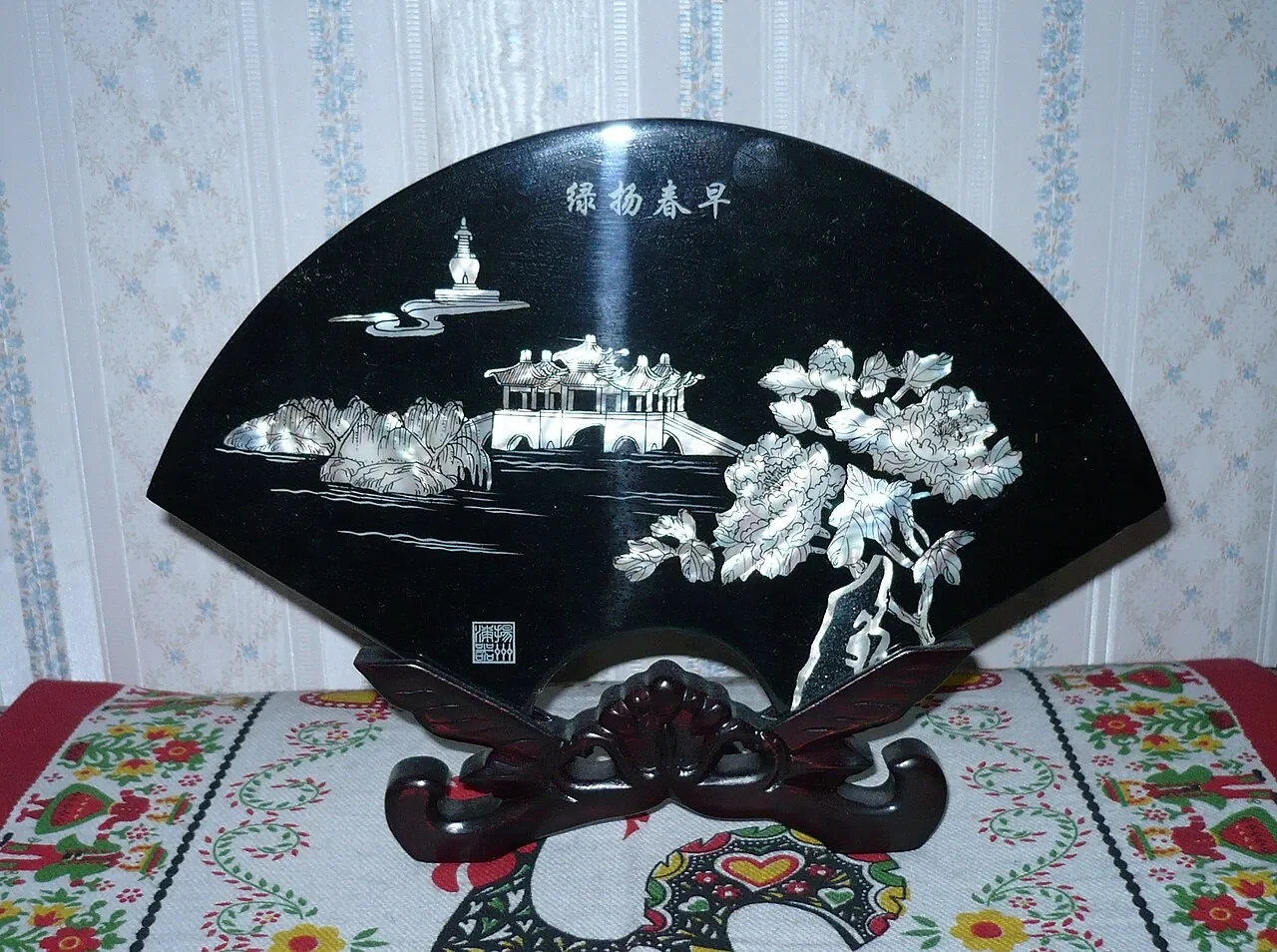
Yangzhou lacquer encompasses several techniques, rather than one decorative finish. A documented 2019 visit to local workshops distinguishes carving, inlay, and other processes. In carved lacquer with jade inlay, many layers create a surface that can be worked in relief. Dianluo, a fine shell-inlay technique, places very small, thin shell fragments into a prepared lacquer surface.

Look closely enough to distinguish a carved recess from an inserted piece. A colored line might be a material boundary rather than a painted stroke. A minute piece of shell can contribute to a larger image without drawing attention to its own edges. The viewing distance matters: from across a room you read a composition; nearby you begin to see how it was assembled.

A black fan-shaped Yangzhou lacquer ornament with mother-of-pearl landscape inlay.

A maker’s decisions

A 2012 profile of lacquer artist Zhao Rubai gives this precision a human history. He entered the Yangzhou lacquer cooperative in 1956 and studied with Liang Guohai. Zhao described the need to adapt designs when an attractive drawing did not translate successfully into carving. A maker was therefore interpreting an image through tools and material, not merely copying it.

His account also emphasizes collaboration and depth control. Different stages required different skills, and a tool taken too far could leave unwanted marks. This is a more useful understanding of craftsmanship than the vague idea of endless patience: decisions have consequences that cannot always be concealed by the next operation.

Look beyond the finished effect

The next time you encounter either kind of work, ask what the maker had to preserve while changing the material. In tofu, the strands must remain distinct despite fragility. In lacquer, a cut or inlay must serve the surrounding composition. The two results invite different senses, yet both become more interesting when you attend to the decisions inside them.

This attention also changes the meaning of a souvenir or a meal. You are not only identifying a local specialty. You are learning to recognize thickness, pressure, alignment, and proportion as part of the city’s culture.

Continue exploring · Yangzhou ↗
Photo credits and rights
  1. A served dish identified by its photographer as Wensi tofu, with finely cut tofu arranged like a flower in broth.Zixiao Xing · CC0 1.0 Photo source ↗ Rights information ↗ Resized and converted to WebP.
  2. A black fan-shaped Yangzhou lacquer ornament with mother-of-pearl landscape inlay.Gisling · CC BY-SA 3.0 Photo source ↗ Rights information ↗ Resized and converted to WebP.