Yangzhou

How Salt Became a City

Trace the connections between Yangzhou’s canal, merchant houses, book collecting, and performance.

In the same city · Yangzhou ↗

Read the water as infrastructure

A canal can look like empty space between buildings. In Yangzhou, it helps to reverse that picture: the water was a working connection around which people organized commerce. The Grand Canal and its linked salt waterways allowed goods to move across a wider region. Yangzhou became a center of salt administration and trade, with merchant households concentrated near streets such as Hexia and Dongguan. A waterside neighborhood was therefore more than a pleasant address. It placed a household within reach of the routes and institutions that sustained its business.

Look at the relationship between the old commercial streets and the water before looking for an individual grand house. That relationship makes the city’s prosperity easier to understand. The important object is the network, not a single boat or bridge.
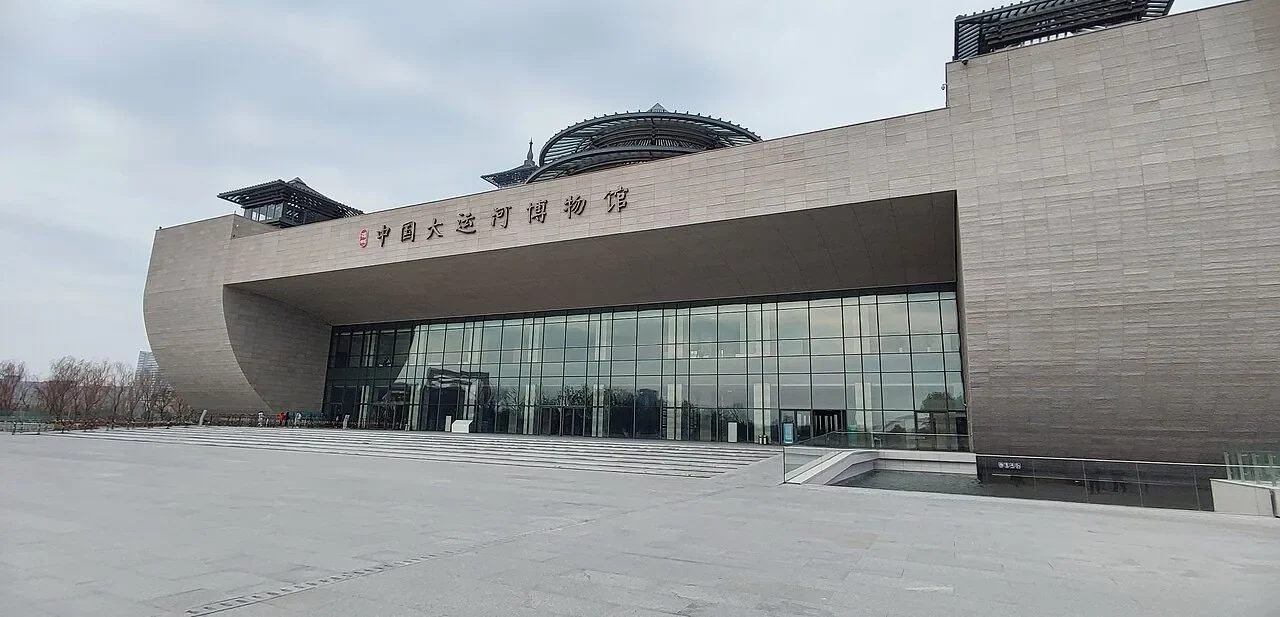
The wide stone and glass entrance facade of the China Grand Canal Museum in Yangzhou.
The entrance to Yangzhou's China Grand Canal Museum, photographed in January 2022.

Enter the merchant’s house

The Salt Merchant Culture Exhibition Hall occupies Wang Lumen’s residence in Nanhexia, a substantial house dating to the Guangxu reign in the late Qing. Its long sequence of spaces turns an economic subject into an architectural one. Rather than imagining all merchants as one indistinguishable wealthy group, follow how a household placed rooms, thresholds, and garden elements in succession.

The exhibition’s themes include the salt business, Jiang Chun’s reception of the emperor, cultural life, and decline. Together they complicate the idea that commerce simply produced leisure. Wealth also involved relationships with authority and obligations that could change. As you look through successive doorways, consider what the house makes visible and what it keeps behind another threshold. This is a question to bring to the building, rather than a claim that every room had a single fixed social meaning.

Follow the money into books and theater

Two merchant brothers, Ma Yueguan and Ma Yuelu, used their resources to assemble a major book collection and cultivate scholarly connections. Their family’s contribution to the imperial Siku Quanshu project included 776 titles submitted by Ma Zhenbo. Here, money helped gather texts that scholars could consult, compare, and preserve. Merchant patronage was part of the practical machinery of learning.

Wenhui Pavilion makes another part of that story concrete. Completed in 1780 with merchant support, it housed imperial collections. The original was lost in nineteenth-century warfare; the pavilion reconstructed in 2023 should be understood as a recovery of cultural memory, not an untouched eighteenth-century survivor.

Performance had patrons too. Jiang Chun supported the Deyin and Chuntai theatrical troupes and gathered literary figures around him. Books and theater were different pursuits, but both depended on people, space, and sustained expenditure. The city’s cultivated reputation was made through such specific relationships, not created by wealth automatically.

Keep the household and network in view

The China Grand Canal Museum offers a useful change of scale. Its collecting, research, and educational mission treats canal heritage as a subject larger than any one merchant’s biography. Architect Zhang Jinqiu led the design of the museum building. That modern institution is itself a reminder that the canal’s history continues to be selected, interpreted, and presented.

Carry two questions between the museum and the old city. What did this waterway allow people to move? What did people choose to build, collect, or perform with the opportunities it created? A deep house plan, a book collection, and a theatrical troupe give very different answers. Read together, they explain why Yangzhou’s history cannot be reduced either to picturesque water or to an abstract story of rich salt merchants.

Continue exploring · China Grand Canal Museum ↗
Photo credits and rights
  1. The entrance to Yangzhou's China Grand Canal Museum, photographed in January 2022.Fool Piasar · CC BY-SA 4.0 Photo source ↗ Rights information ↗ Resized and converted to WebP.