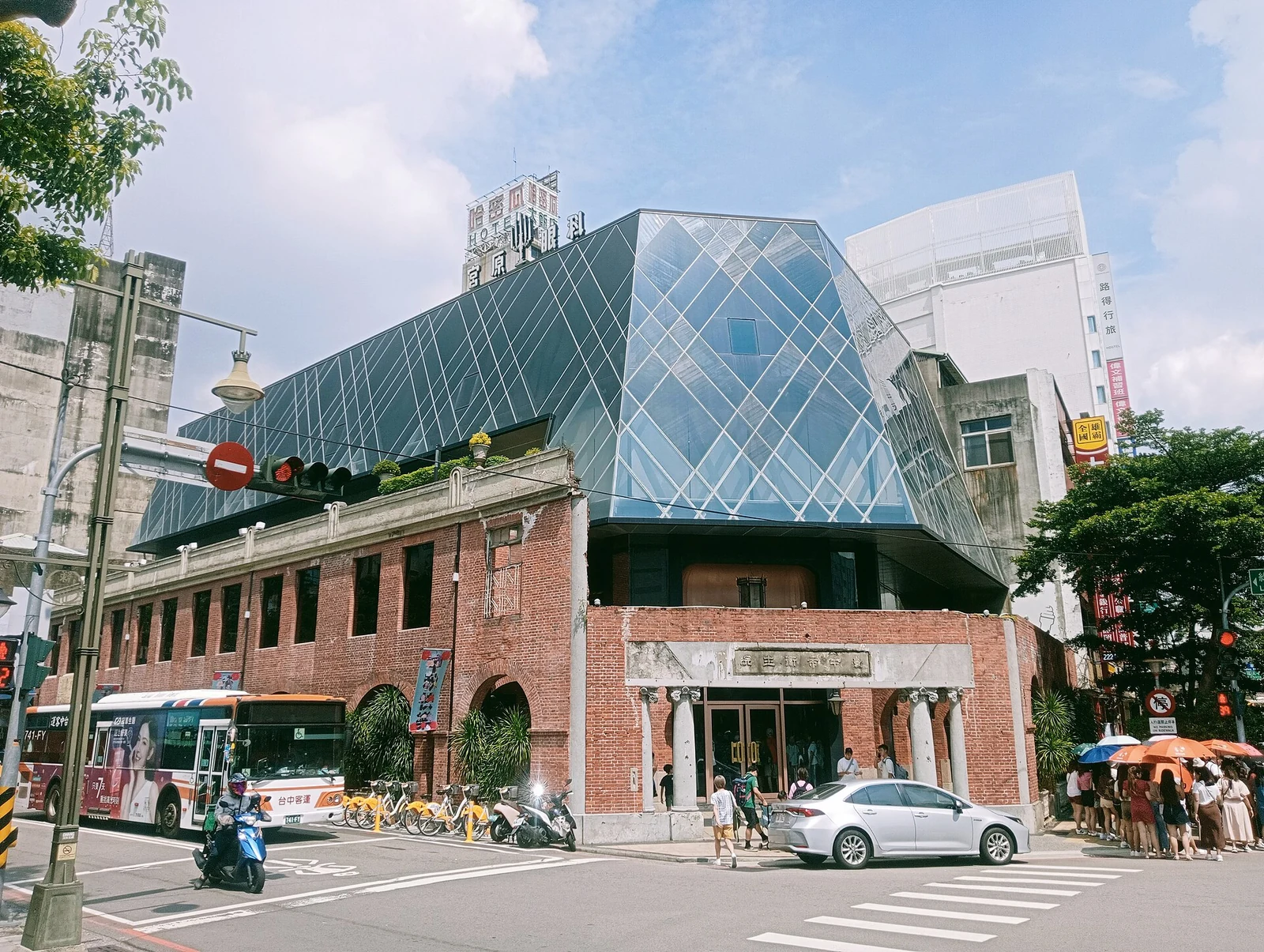
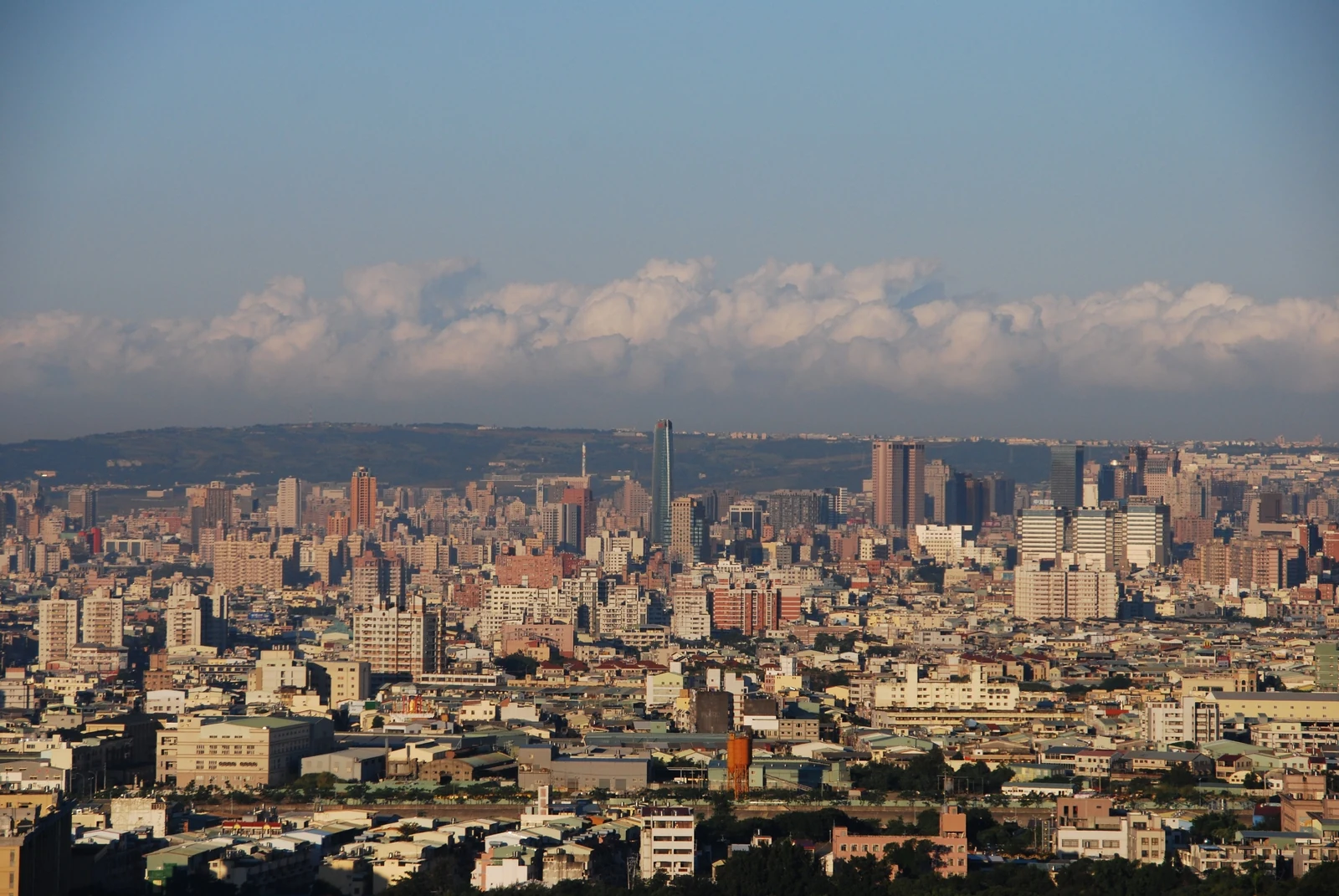
In the late Qing period, Taichung was selected as the site of a provincial capital, and construction began in the 1880s. The capital was later moved to Taipei, and only part of the planned city was built. Under Japanese rule, Taichung was planned again as an administrative centre. From 1900, engineers laid out a regular street grid and worked on the city's waterways, including Liuchuan and Luchuan (Green River), while laying out parks and sites for public buildings and a station. The street grid visitors see today reflects those plans.
From the journal
The city that was drawn before it was built
Taichung's old core still follows a Japanese plan of straight streets, canals and covered markets. The grid is the history.
In the same city · Taichung ↗Plans for a provincial capital
The Second Market
The Second Market opened in the old core in the Japanese period as a covered brick market, with stalls arranged around a central hall and a roof that keeps the rain off the aisles. It is still a market: fruit, fish, dried goods, cooked food, and small shops that have been in the same families for generations. The building is low, the passages are narrow, and the light comes in from above. Around it, the streets are named for virtues and seasons, a habit of the Japanese grid that survived the change of government. The market is busiest in the morning, when the surrounding shops are still pulling up their shutters.
The canal that came back
Liuchuan and Luchuan are two separate waterways in central Taichung. Luchuan is also known as Green River. Their restored banks bring paths and public spaces into the historic centre, bringing the waterways back into everyday city life.