Suzhou

Tongli and the Garden of Retreat

Ren Lansheng’s return from official life produced a garden that brings water close to every room; outside, bridges carry communal hopes.

In the same city · Suzhou ↗

Ren Lansheng comes home

Tuisi Yuan, usually translated as the Retreat and Reflection Garden, begins with a reversal of fortune. Ren Lansheng returned to Tongli after dismissal from office in 1885 and commissioned the painter Yuan Long to design his garden. Its name invokes the Zuo Tradition: service should be loyal, and withdrawal should prompt reflection and correction.

That is a more pointed idea than a comfortable retirement. The garden’s name allows an official to explain who he is after losing office. It also gives the visitor a question to carry through the rooms: how can architecture express both status and the wish to step away from public life? The answer is not a hidden code. It appears in the contrast between formal residence, transitional courtyard and intimate waterside landscape.
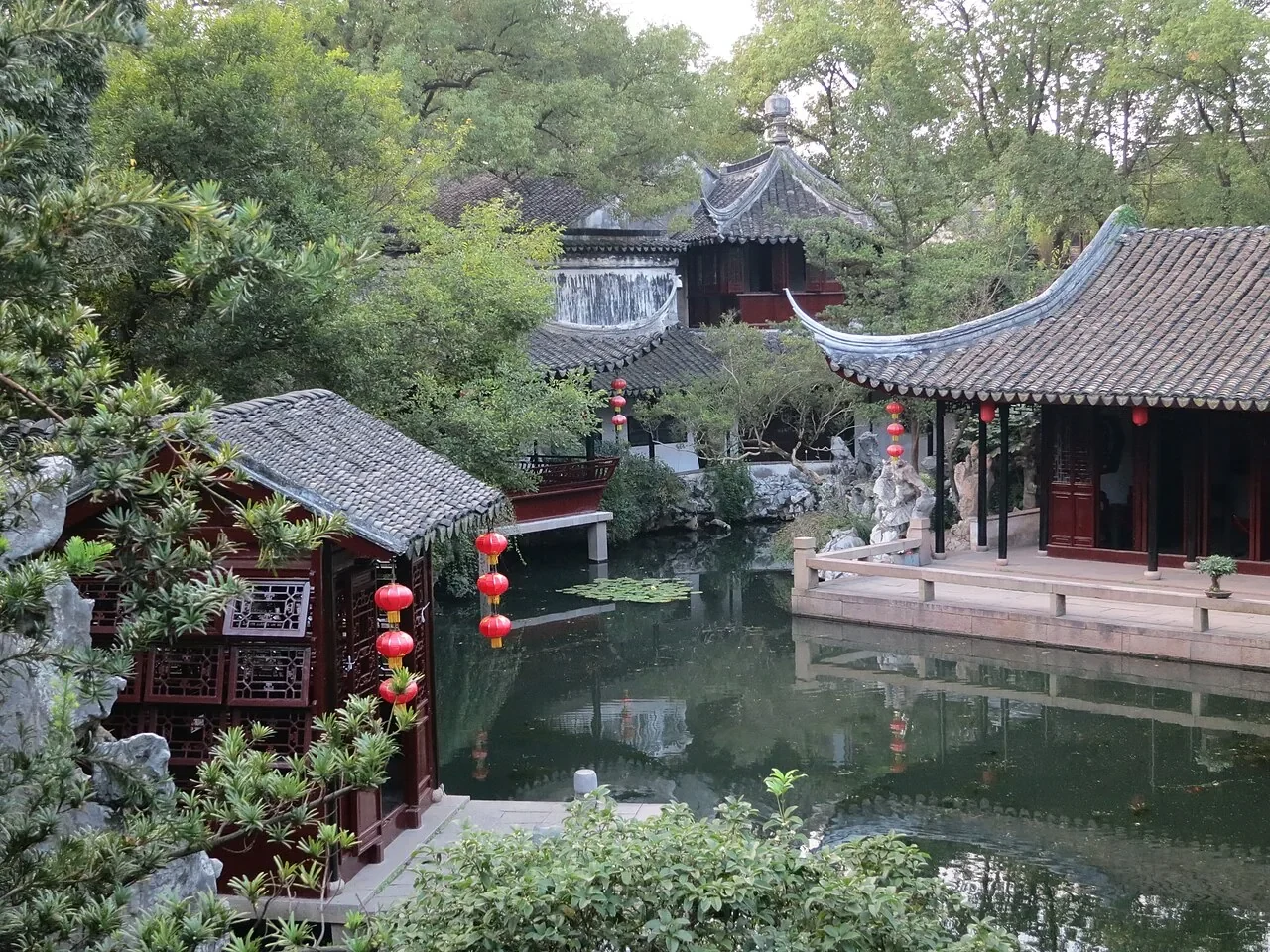
Curved-roof pavilions and covered galleries reflected in the pond at Tuisi Garden in Tongli.
Water, pavilions and galleries at Tongli's Retreat and Reflection Garden.

House, courtyard, garden

The layout moves laterally: residence to the west, courtyard in the middle and garden to the east. The house contains distinctions between receiving visitors and domestic life. A courtyard then mediates between social rooms and the planted landscape.

Read this sequence as a change in relationships rather than a rush towards the pond. In a hall, consider how people would face one another. At a threshold, ask what is disclosed and what remains screened. When the water appears, notice how the scale of your attention changes, from the position of a guest within a household to the view across a small landscape. These are ways of observing the arrangement; they do not require pretending that today’s visitor follows every movement of a Qing resident.

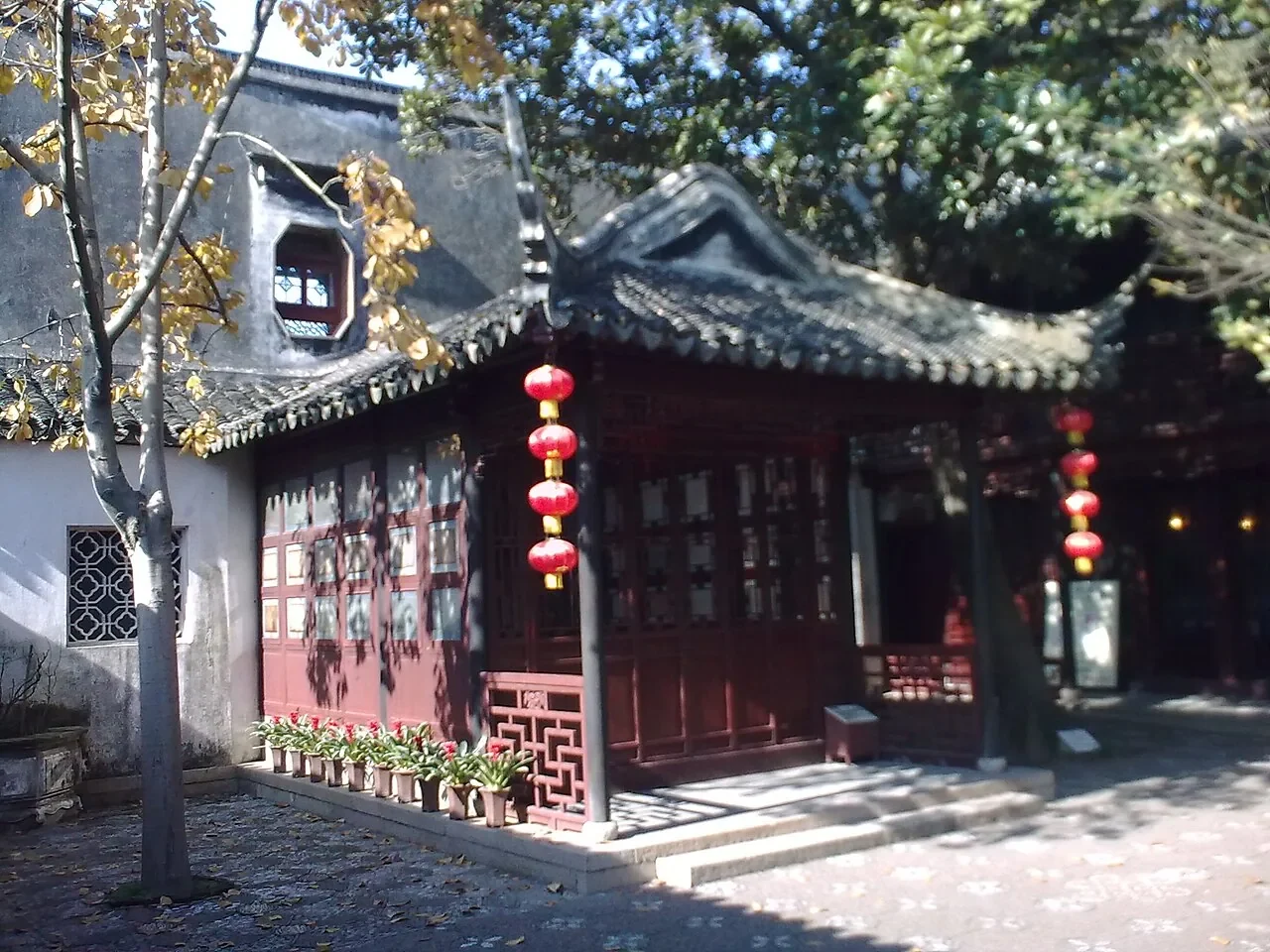
A red wooden pavilion with curved roof and lanterns in Tuisi Garden.
A close view of the garden structure identified by its photographer as the land boat at Tuisi Garden.

Why the water feels so close

The garden is known for placing its pavilions, corridors and other structures close to the water surface. Their reflections extend the apparent space, while roof edges and covered passages bring the viewer into the composition. The effect differs from seeing a lake at the end of a broad open lawn.

Try looking at the meeting point of wall, platform and water. Then follow a reflection rather than the building above it. Ripples break the reflected image into fragments; stillness restores it. This changing relationship is something you can inspect directly. It makes a compact site feel active without requiring monumental scale. Tuisi is one of the nine components of the UNESCO-listed Classical Gardens of Suzhou, not a separate listing for the entire town.

Outside the enclosure, a shared ritual

Tongli’s Taiping, Jili and Changqing bridges stand near a meeting of waterways. The custom of crossing the three connects their names with wishes for well-being, prosperity and enduring vitality. These associations belong to local custom, not a claim that crossing stone bridges changes a person’s fortune.

Here water has a different role from the enclosed pool in Tuisi. It separates routes and makes crossings necessary. A bridge can therefore be both practical infrastructure and a place where a community expresses hopes about life. Notice the convergence of paths and the way people pause or pass through. The garden gives a household its own landscape; the bridges connect the town.

A water town with a particular story

Tongli becomes easier to understand when a general image of a water town gives way to specific questions. What does retreat mean to Ren Lansheng? How does Yuan Long make buildings feel close to water? Why does a utilitarian crossing acquire ceremonial meaning?

You need not answer all three at once. Choose one thread and follow its visible evidence. Tongli then becomes a place to understand at several scales: the official’s household, the crafted garden and the community outside its walls.

Continue exploring · Tongli ↗
Photo credits and rights
  1. Water, pavilions and galleries at Tongli's Retreat and Reflection Garden.Christian Gänshirt · CC BY-SA 4.0 Photo source ↗ Rights information ↗ Resized and converted to WebP.
  2. A close view of the garden structure identified by its photographer as the land boat at Tuisi Garden.Lamassu Design Gurdjieff ( talk ) · CC BY-SA 3.0 Photo source ↗ Rights information ↗ Resized and converted to WebP.