Tianyi Pavilion

Reading a Garden at Tianyi Pavilion

A pond, a long roof and a wooden bookcase show how the library was meant to be used and protected. The garden helps visitors read the building as a place for books, not just an old facade.

In the same city · Ningbo ↗

Start at the water

Tianyi Pavilion sits inside a garden of paths, trees, rocks and water. From the pond, the long timber building appears as one part of a larger arrangement. Water is not merely a reflection in the view: the pond belonged to the library’s design and answered an everyday fear of fire. The building’s name refers to water too, drawing on a classical phrase. Here an idea can be read in the landscape before it is explained in a label.

The garden also changes how a visitor approaches the library. A path bends; trees and rockery partly screen the view; the roofline appears between leaves. Instead of meeting a freestanding monument in an empty square, you arrive through a sequence of smaller spaces. That sequence makes the library feel connected to a household and its garden, even though the museum is now a public place.
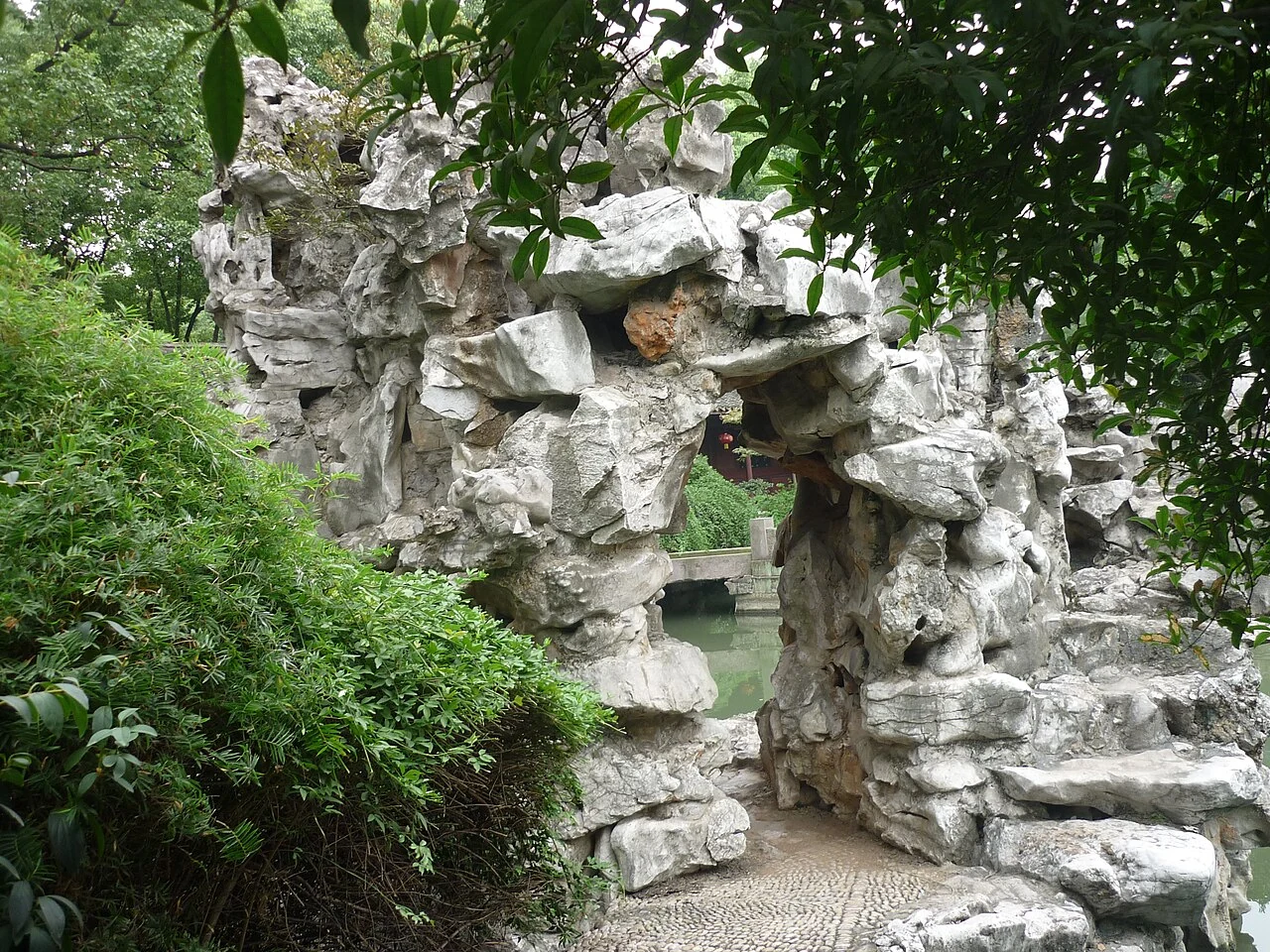
A pale stone rockery arches over a garden path and water at Tianyi Pavilion.
Rockery in the Tianyi Pavilion garden, photographed 24 September 2011.

A building for books

Tianyi Pavilion’s two-storey form carries the “one above, six below” arrangement associated with its name: one open room upstairs and six rooms below. The exact design can be understood by comparing the building’s broad upper level with the divided rooms beneath it. Thick walls and a compact footprint bring the shelves close to the structure. This is a place built to hold a collection, and its plan makes storage part of the architecture.

When you look at the timber facade, notice the rhythm of its bays and the depth of the roof. A library must control light, air and movement as well as create a dignified front. The building does not need to be enormous to feel important. Its authority comes from what it was designed to do and from the continuity of care that kept it in use.

The shelf as a small archive

Inside, a bookcase changes the scale of the story. It is a piece of furniture, but also an index: volumes can be placed, found and protected within a stable order. The bookcases and displays help visitors imagine how collecting became a routine rather than a single act. Books do not preserve themselves; someone has to sort them, limit handling and repair what time wears down.

Today, visitors encounter the library as part of a museum and garden. The experience moves between close details—wood, shelves, printed pages—and the larger setting of pond and trees. This is why the garden is useful to read alongside the collection. The water, enclosed paths and timber rooms make the collector’s purpose legible. A library is an idea, but Tianyi Pavilion lets you see the rooms and routines that gave that idea a home.

Continue exploring · Tianyi Pavilion ↗
Photo credits and rights
  1. Rockery in the Tianyi Pavilion garden, photographed 24 September 2011.Siyuwj · CC BY-SA 3.0 Photo source ↗ Rights information ↗ Resized; WebP conversion.