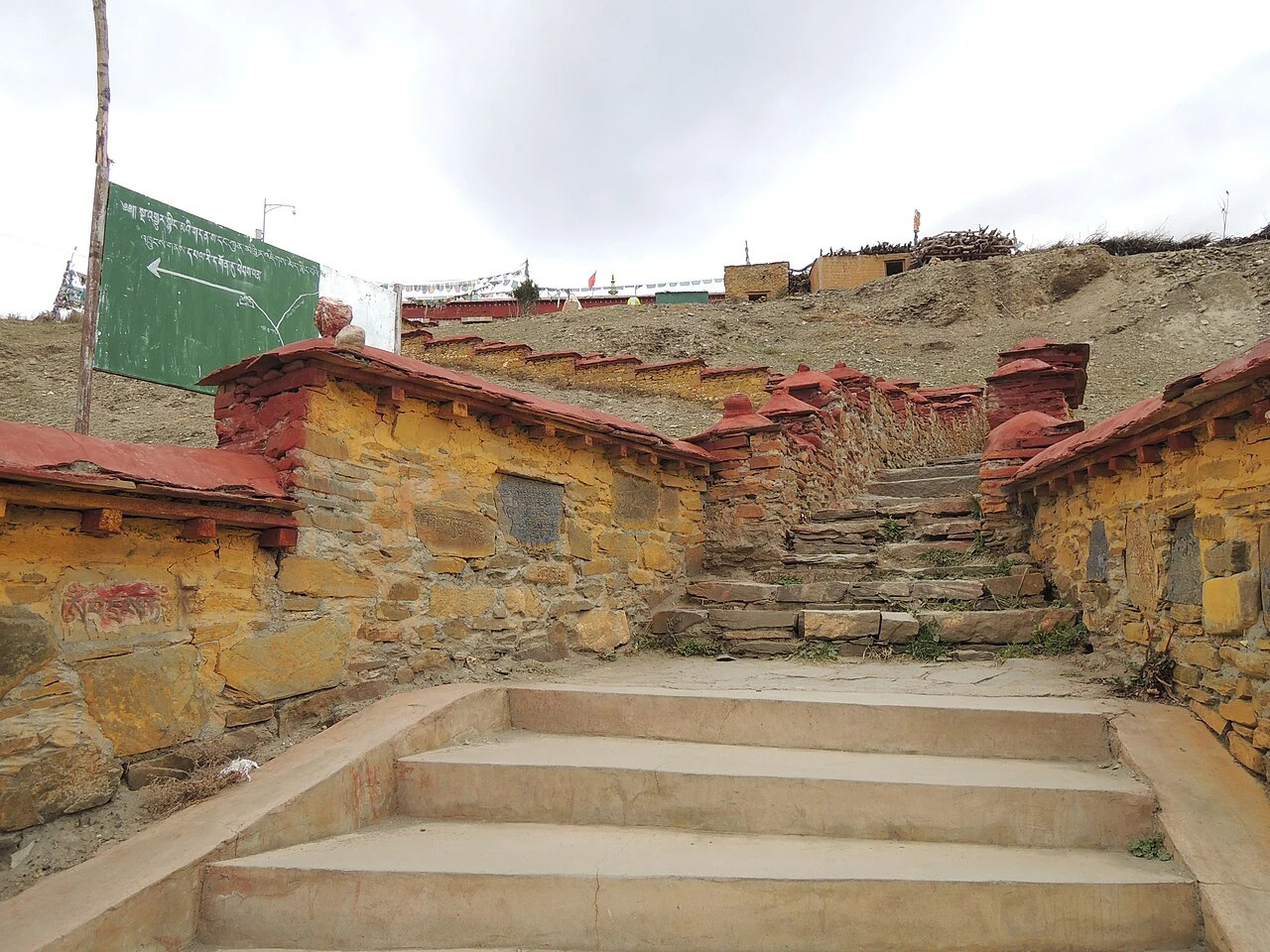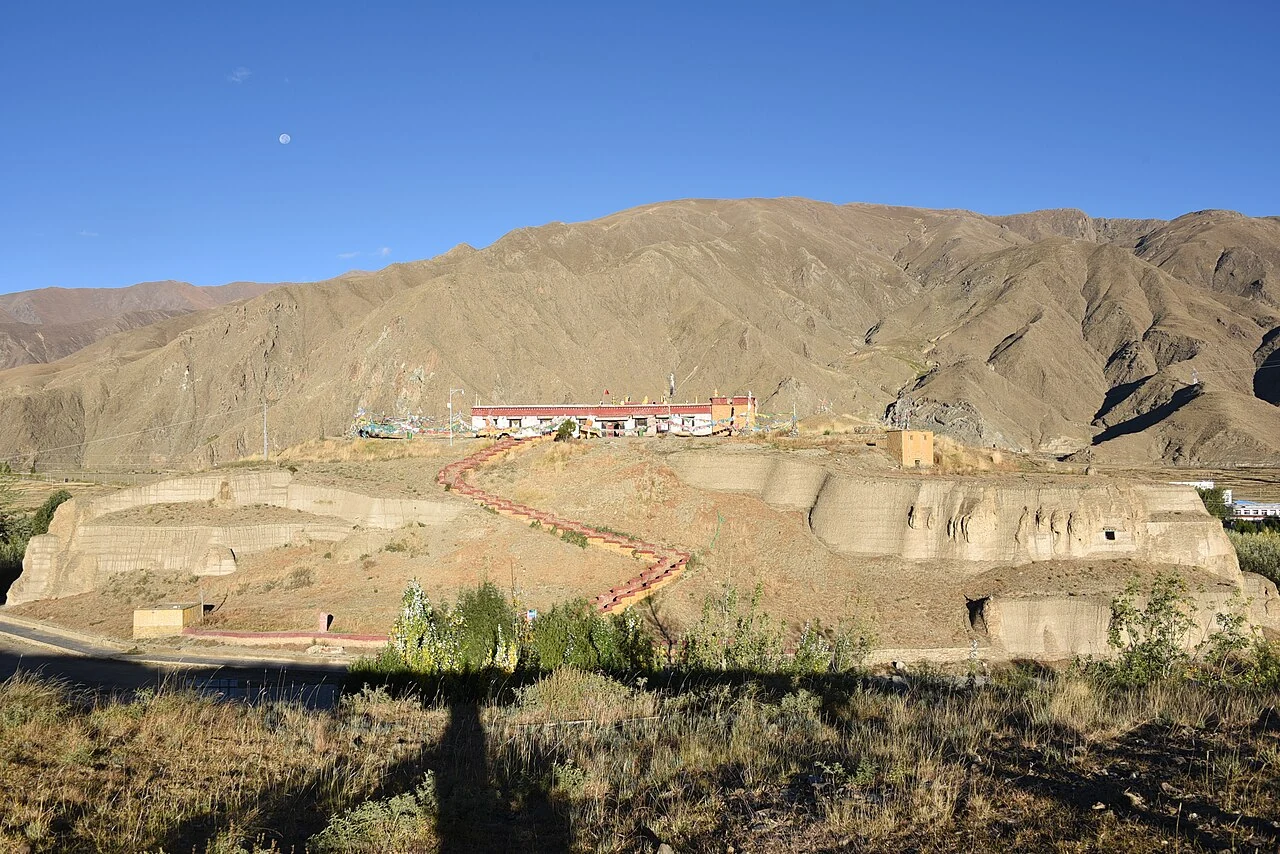
The royal tombs at Qonggyai belong to the period of the Tibetan Empire, broadly the seventh to ninth centuries. They lie south of the Qonggyai River, around the foot of Mount Mura and nearby valley ground. Their scale is first encountered through earth forms distributed across a landscape.
A mound is a different kind of monument from a palace or temple. Its mass draws attention to the ground itself, while distance between mounds makes the surrounding terrain part of the site. The tomb group is understood through relationships among these forms rather than through a single entrance or façade.