From the journal

The work of a living temple

Understand Nanputuo Temple in Xiamen through Guanyin devotion, Buddhist study, volunteer work and the changing craft of vegetarian cooking.

In the same city · Xiamen ↗

A different kind of attention

A living Buddhist temple asks for a different pace of attention from a monument visited solely for its architecture. At Nanputuo, the significant activity may be a person making an offering, someone guiding a visitor, or the quiet work of keeping a shared space orderly. These actions are part of the place’s meaning, even when they do not produce a dramatic photograph.

The temple’s own account of its volunteer department connects service with devotion to Guanyin, the bodhisattva associated with compassion, also known as Avalokiteshvara. This gives a practical expression to a religious idea. Compassion is not only represented in an image; it can be pursued through work done for other people.
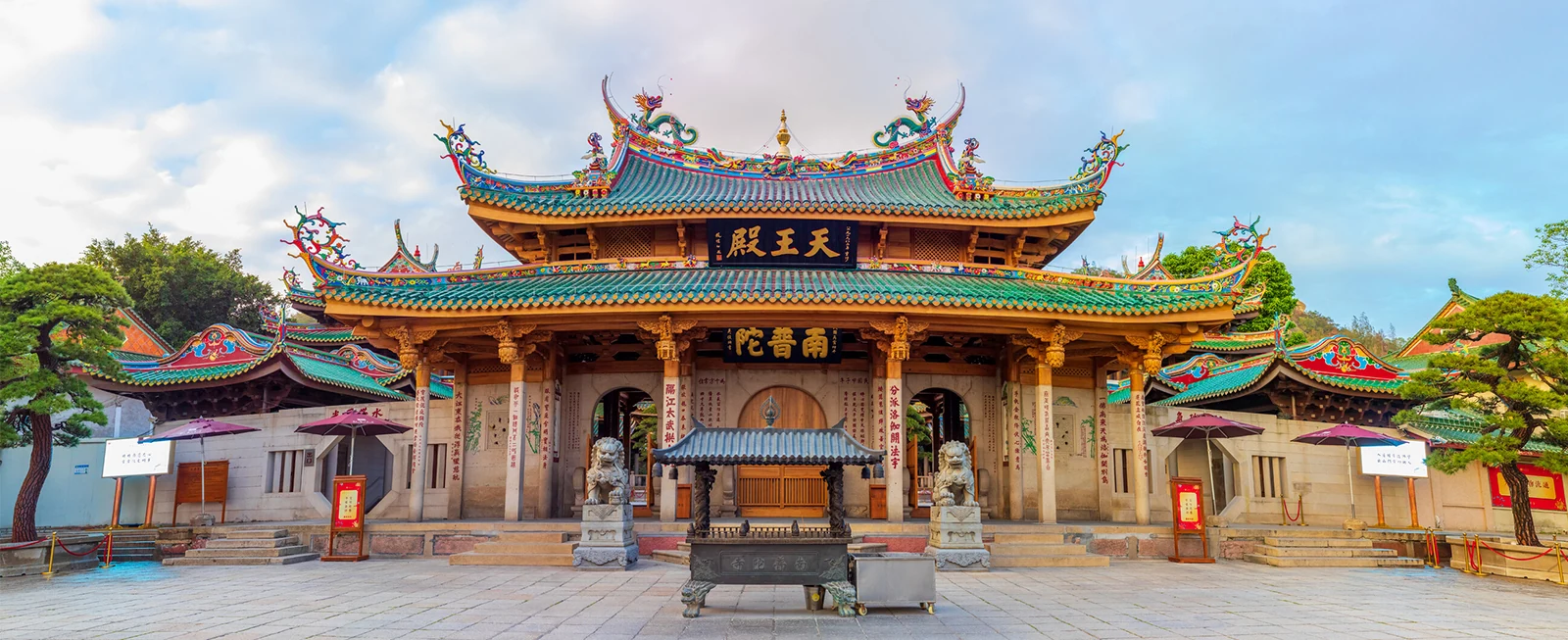
An ornate two-tiered temple roof with colorful ceramic figures above a stone forecourt.
The Hall of Heavenly Kings at Nanputuo Temple, Xiamen.

The hands that make a visit possible

The duties described by the temple include guidance, cleaning, care of offerings and support for ceremonies. These are concrete tasks. They involve thresholds, queues, surfaces and objects, the small points at which many people’s movements must fit together.

For a visitor unfamiliar with Buddhist practice, attending to this work is a useful beginning. Watch how a space is being used before deciding how to move through it. A passage may be serving a ceremony rather than offering the best camera angle. A volunteer’s direction can explain more about the immediate situation than a generalized idea of temple etiquette. The encounter becomes richer when the people sustaining worship are understood as participants with responsibilities, rather than as background figures in a scenic setting.

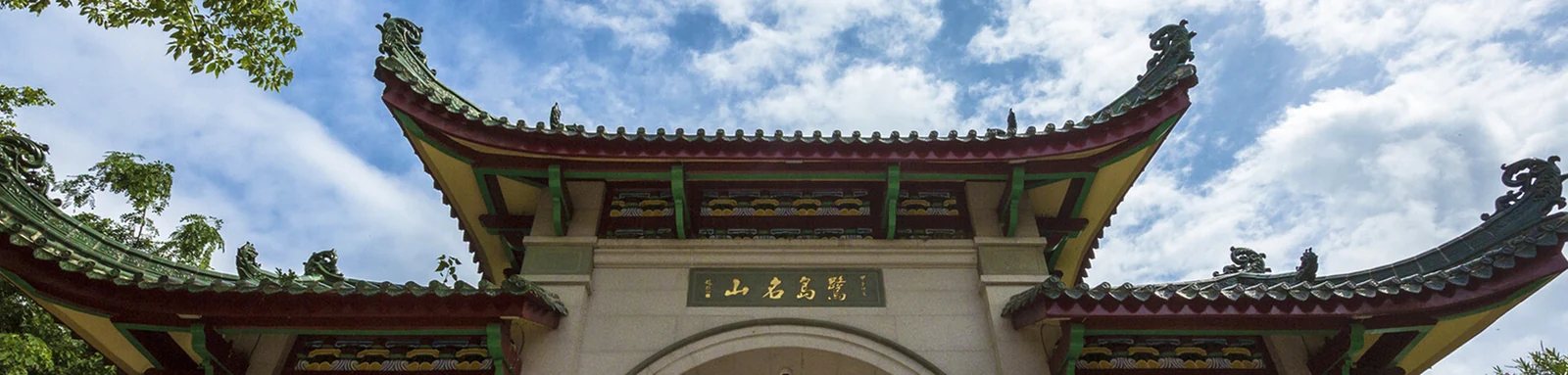
Upturned tiled eaves and carved roof ornaments frame an inscribed plaque against the sky.
The roofline of an entrance arch at Nanputuo Temple.

Belief has a curriculum

Nanputuo’s institutional world also includes Buddhist education. The published 2021 entrance syllabus of Minnan Buddhist College sets out formal areas of learning, including Buddhist history and doctrine. Even this administrative document is illuminating: it shows a tradition being studied through a structured curriculum, with knowledge that students must acquire and articulate.

That dimension can be easy to miss during a short visit. Visible ritual is only one part of religious life; reading, memorization, discussion and training have their own demands. A temple can therefore be approached as a community of learners as well as worshippers. Nothing requires a visitor to share its beliefs in order to recognize the seriousness of that intellectual and disciplined work.

A cuisine made through choices

Vegetarian food opens another route into Nanputuo’s continuing practice. In a December 2024 interview with Haixi Morning News, food scholar Yang Weifeng discussed a repertoire built from seasonal vegetables, bean products, gluten, mushrooms and bamboo shoots, alongside ongoing innovation. The ingredients point toward a cuisine with its own techniques and possibilities.

Consider what a cook must do when choosing among those textures: the resilience of gluten, the softness of bean products, the different structures of mushrooms and shoots. The interest lies in composition and skill, not simply in the absence of meat. A meal can extend attention from the temple’s public spaces to the labour of its kitchens. “Vegetarian” still does not explain every ingredient or allergen, so individual dietary needs require a direct conversation wherever food is served.

Continue exploring · Nanputuo Temple ↗
Photo credits and rights
  1. The Hall of Heavenly Kings at Nanputuo Temple, Xiamen.厦门南普陀寺 · Rights status unspecified Photo source ↗ Original aspect ratio retained. Display copies resized only when needed; no enlargement, crop or retouching.
  2. The roofline of an entrance arch at Nanputuo Temple.厦门南普陀寺 · Rights status unspecified Photo source ↗ Original aspect ratio retained. Display copies resized only when needed; no enlargement, crop or retouching.