The Man Mo Temple compound is not a single sanctuary. The Antiquities and Monuments Office lists three components: Man Mo Temple, Lit Shing Kung and Kung Sor. Their names mark a complex with differentiated spaces and purposes. Looking at the compound as a whole helps explain why it occupied a broader place in Sheung Wan life than a shrine considered on its own.
From the journal
Man Mo Temple’s Civic Rooms
The Man Mo Temple compound in Sheung Wan includes the temple, Lit Shing Kung and Kung Sor, a hall once used for neighbourhood affairs.
In this district · Central and Western ↗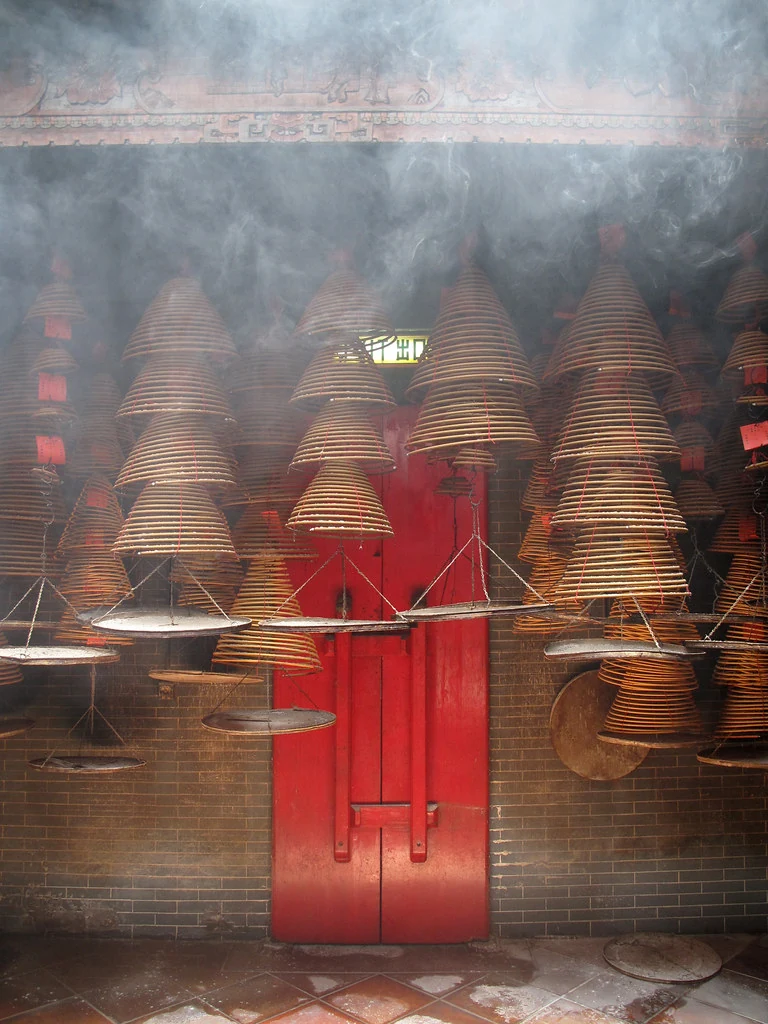
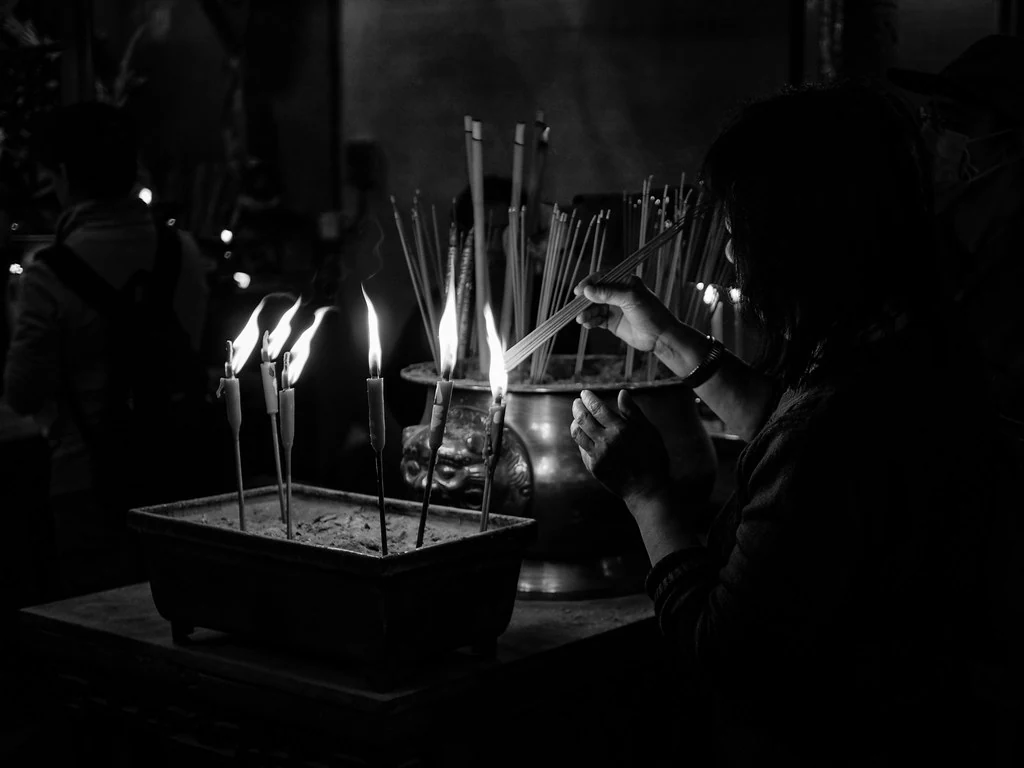
A compound with distinct parts
A room for communal affairs
Kung Sor served as a meeting place and a venue for handling community matters. That role brings civic life into the story of a religious compound. The hall was not simply an extension of ritual space; it offered a setting for people to gather and address shared concerns. Kung Sor’s role gives the compound a civic dimension alongside its religious life.
A layered neighbourhood institution
The compound brings devotional practice and communal organization together in one urban site. Its three buildings create distinct settings for worship and public affairs, giving the neighbourhood a shared institution whose role extended beyond individual prayer. In nineteenth-century Sheung Wan, the temple complex was part of the local civic landscape: people could worship, meet and address matters affecting the community within the same compound.