The Lenghu Observatory Environment Protection Regulation divides the observing environment into a dark-night protection core zone and a buffer zone. Within the core, fixed outdoor lights must point downward below a specified angle; the buffer zone also sets a downward direction for outdoor lighting. The rule makes a scientific condition visible in everyday infrastructure: a lamp’s direction can matter to a telescope many kilometres away.
From the journal
Protecting the Darkness Around Lenghu
A 2022 local regulation treats darkness as part of the observatory environment, with protected core and buffer zones and rules for night lighting.
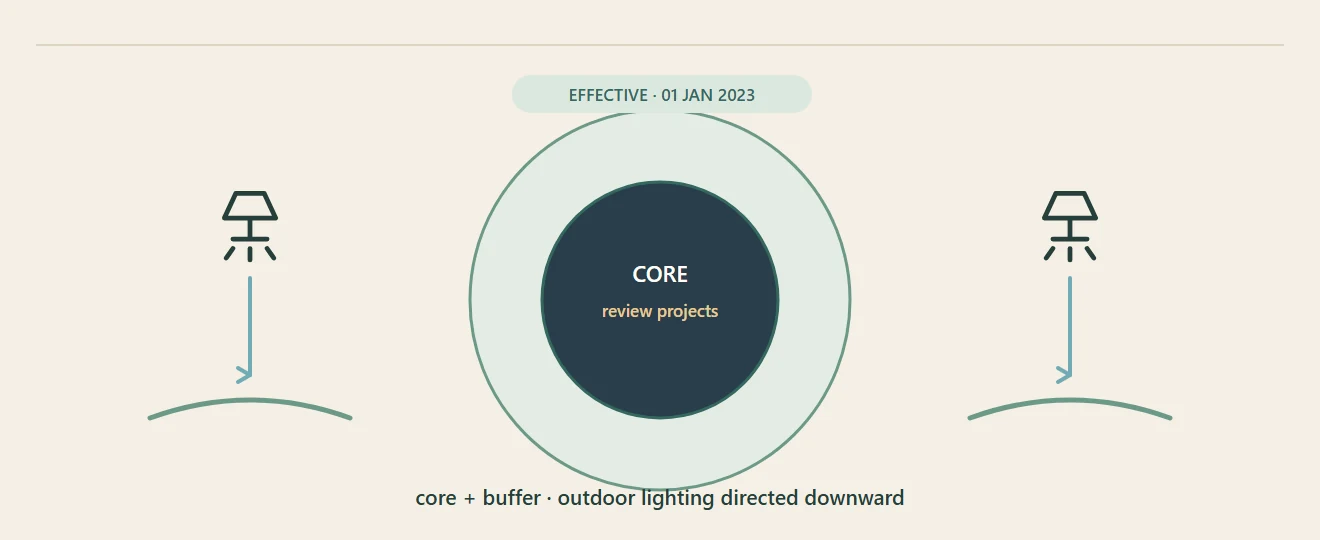
A legal boundary for the night sky
From sky quality to shared practice
The regulation took effect on 1 January 2023. It also requires environmental review for proposed projects in the core and sets a process for activities that may affect observing conditions. Astronomy depends on equipment above the ground, but it also depends on decisions made around roads, buildings and temporary works. The protected night sky is therefore a shared landscape, maintained through planning, lighting and oversight as well as observation.