Near Longjing Village, a spring and the old Longjing temple landscape are linked to stories about how the tea became famous. In a widely told local account, the Qing emperor Qianlong visited the area, tasted tea and praised what he drank. The story is often told beside eighteen tea bushes later known as the Eighteen Imperial Tea Trees. It is a compact scene: a ruler pauses at a village temple, a cup carries the taste of the hillside, and a small stand of plants acquires a new name. The account belongs to local legend and cultural memory. Its power lies in how it joins a specific place, a famous visitor and the crop that had already shaped the surrounding slopes.
Longjing Village
The eighteen bushes and an emperor’s visit
Discover the Longjing story of Qianlong, a temple visit and eighteen tea bushes, a local tradition that made imperial favour part of the landscape.
In the same city · Hangzhou ↗A spring, a temple and a cup
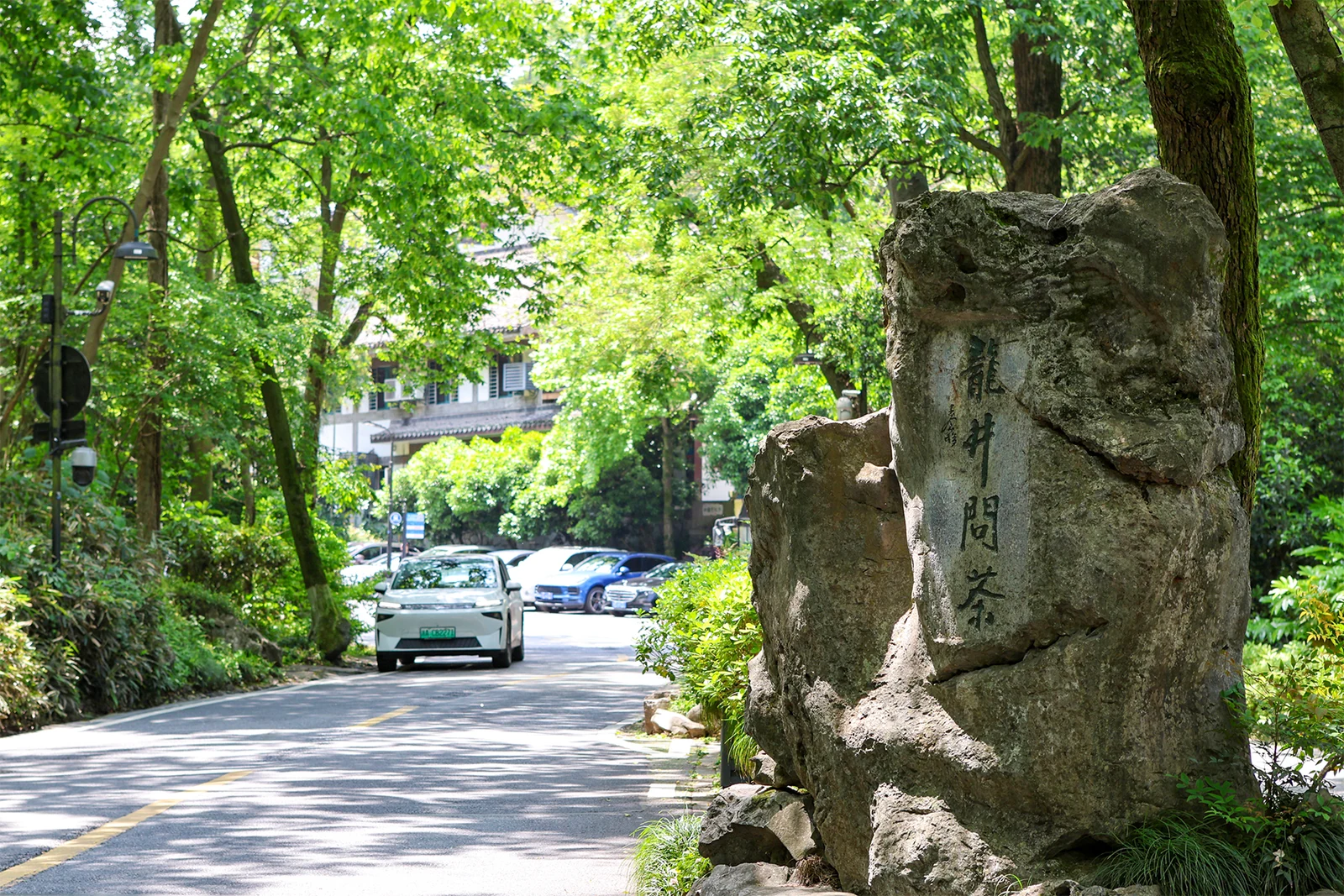
How a legend gives the landscape a name
The phrase “imperial tea” turns a group of bushes into more than agricultural plants. It makes them markers in a story about recognition: the emperor’s attention is remembered as a sign of distinction for tea grown near Longjing. The story spread with the reputation of West Lake Longjing and gave later visitors a scene to seek out. Yet the eighteen bushes are not a shortcut to understanding the whole tea region. They are one memorable landmark within a much larger system of family plots, seasonal picking and skilled processing. The legend compresses that larger history into an image that is easy to carry: eighteen plants, a cup and an imperial visit. That image helped connect the village to the wider culture of tea appreciation.
A legend beside the living landscape
Today the tale sits alongside a working landscape: tea gardens remain on the hills, homes and businesses form the village, and the spring and temple site retain local associations. In local telling, names and places carry memory forward. The name “Eighteen Imperial Tea Trees” links a stand of tea bushes with the account of Qianlong’s visit and the praise traditionally attributed to him. It makes one landmark part of a wider tea culture shaped by cultivation, seasonal picking and skilled processing. The village can be read through both its memorable legend and the rows, paths and homes that make up its present setting.