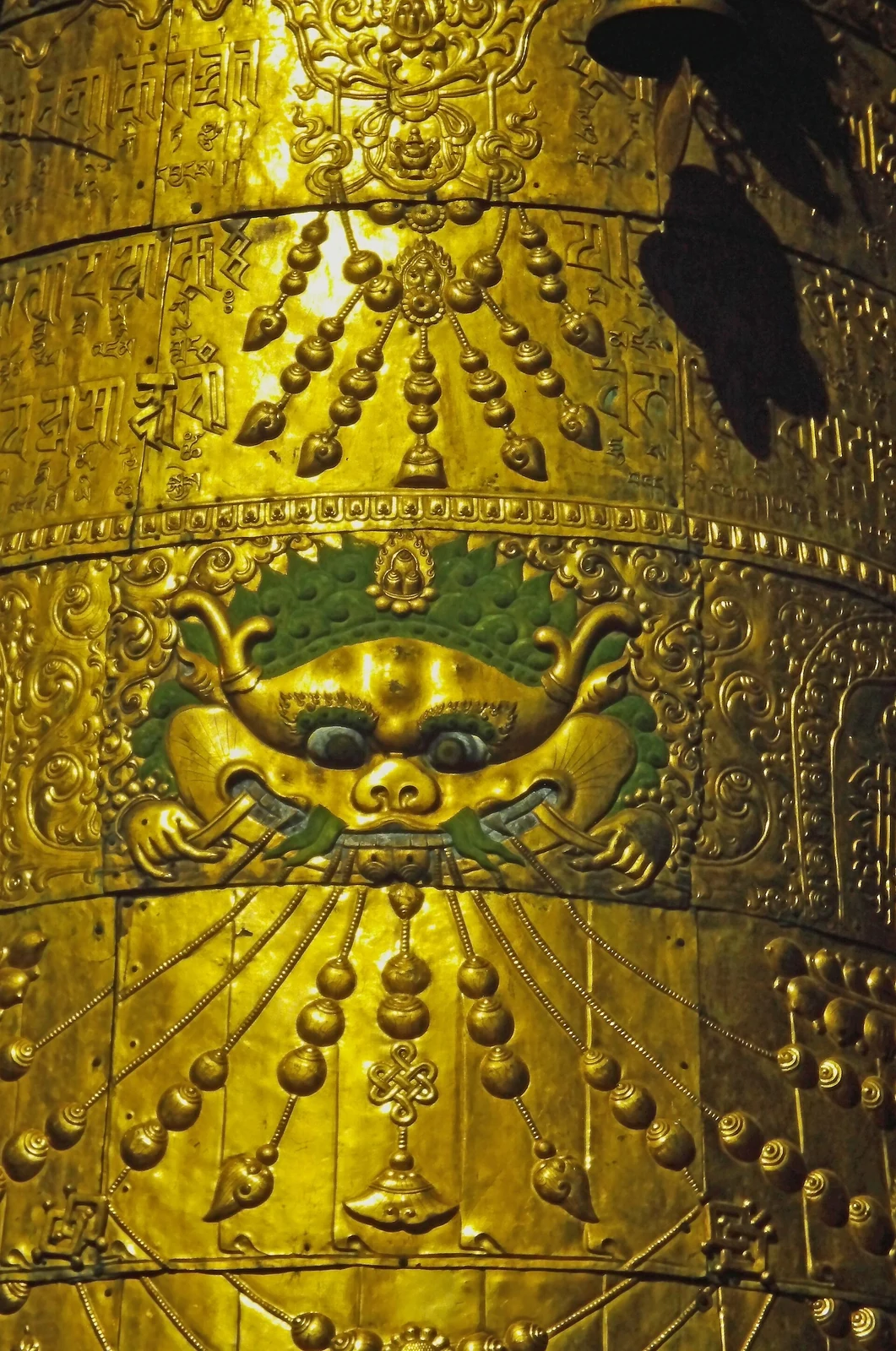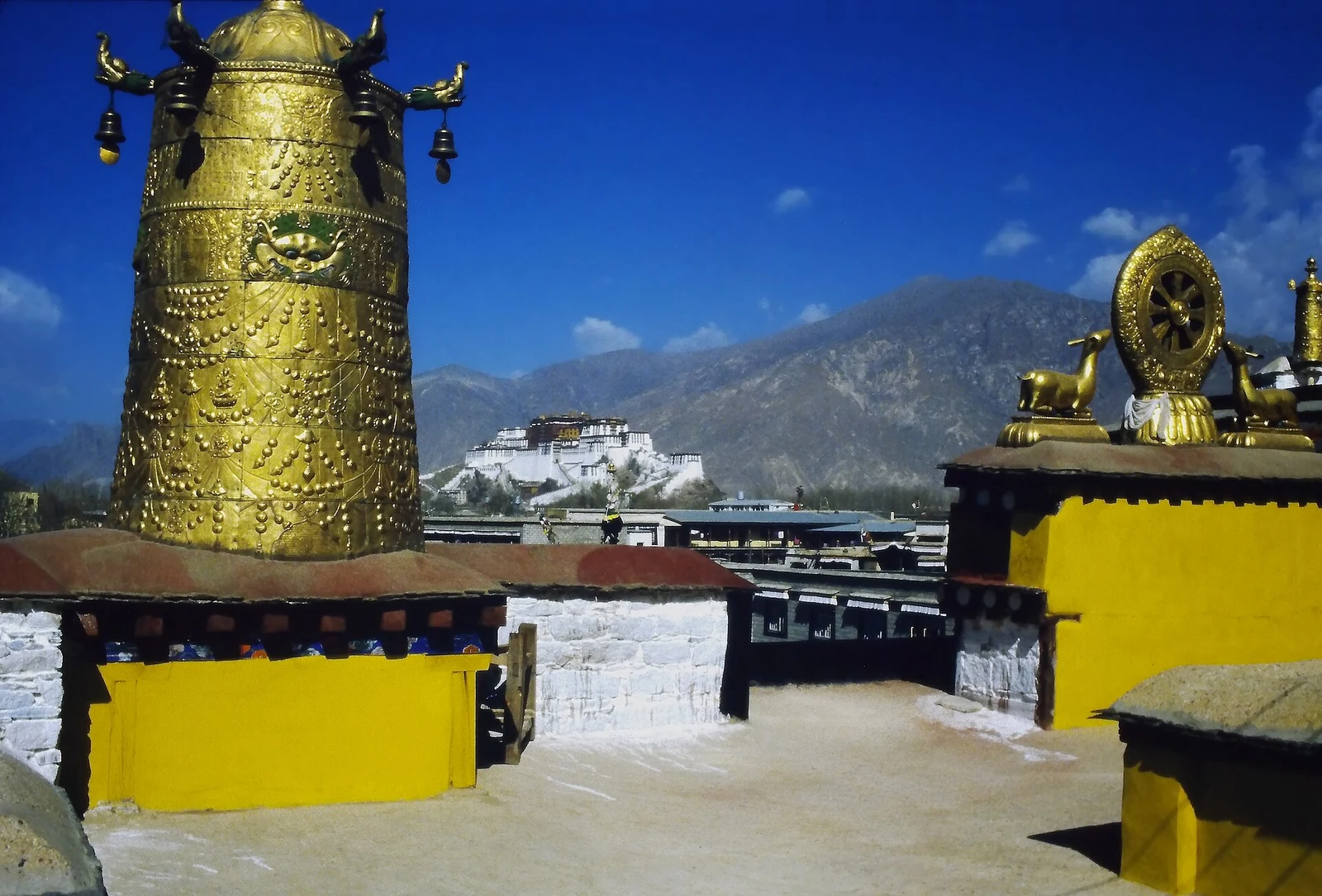
The space around Jokhang feels different from the long view toward the Potala. Here, a religious centre is enclosed by streets and daily movement. The temple is not a distant shape on a ridge but the focus around which the surrounding old city is understood. Its courts and thresholds create changes of scale between the street, the building and the objects within.
Founded in the seventh century, Jokhang belongs to an early chapter in the establishment of Buddhism in Tibet. The complex developed through repeated repairs and additions. Its visible architecture carries the work of many generations.
A local account distinguishes three circuits around Jokhang. Nangkhor runs inside the temple around the central Shakyamuni hall; Barkhor follows the outer wall, with streets radiating from it; and the wider Lingkhor includes the Potala, Medicine King Hill and Ramoche. These names map religious movement onto the city, carrying the story of a courtyard outward into Lhasa’s streets.