Kowloon City’s Hau Wong Temple preserves a history that is easier to miss if one looks only at its roofline. The Antiquities and Monuments Office records that Qing officials and soldiers from Kowloon Walled City paid their respects there. The temple and the fortified settlement belonged to the same local landscape, but they served different purposes: one was a place of worship, the other a military outpost established in 1847. Together, the nearby temple and garrison place worship, military authority and neighbourhood life within the same Kowloon landscape.
From the journal
A Censer and a Stone Character at Hau Wong Temple
Two dated objects inside Kowloon City’s Hau Wong Temple connect local worship to the nearby garrison town.
In this district · Kowloon City ↗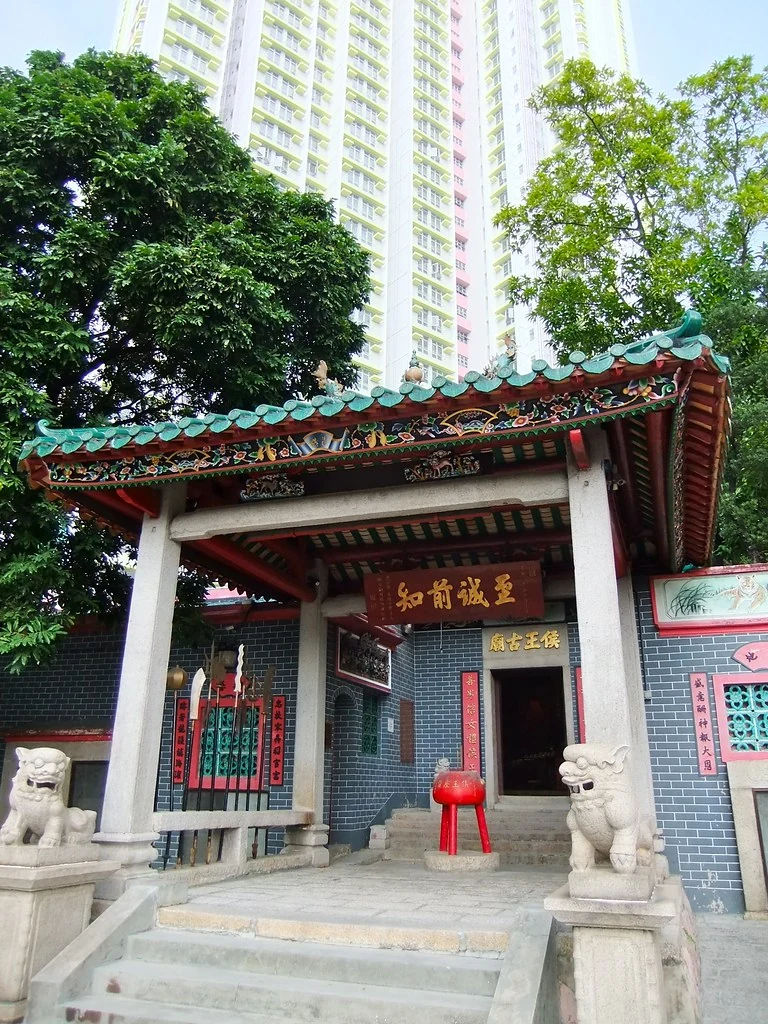
A temple beside a garrison
An offering with a date
One surviving object is a censer donated in 1847. A censer is practical: incense is placed in it during worship. Its date also gives the temple a material link to the year the Qing government established the walled garrison. The censer’s date places an act of worship in the same year that Qing military presence in Kowloon took formal shape. Its incense vessel belongs to the temple’s ritual life, while the garrison grew nearby as a separate institution.
The carved character
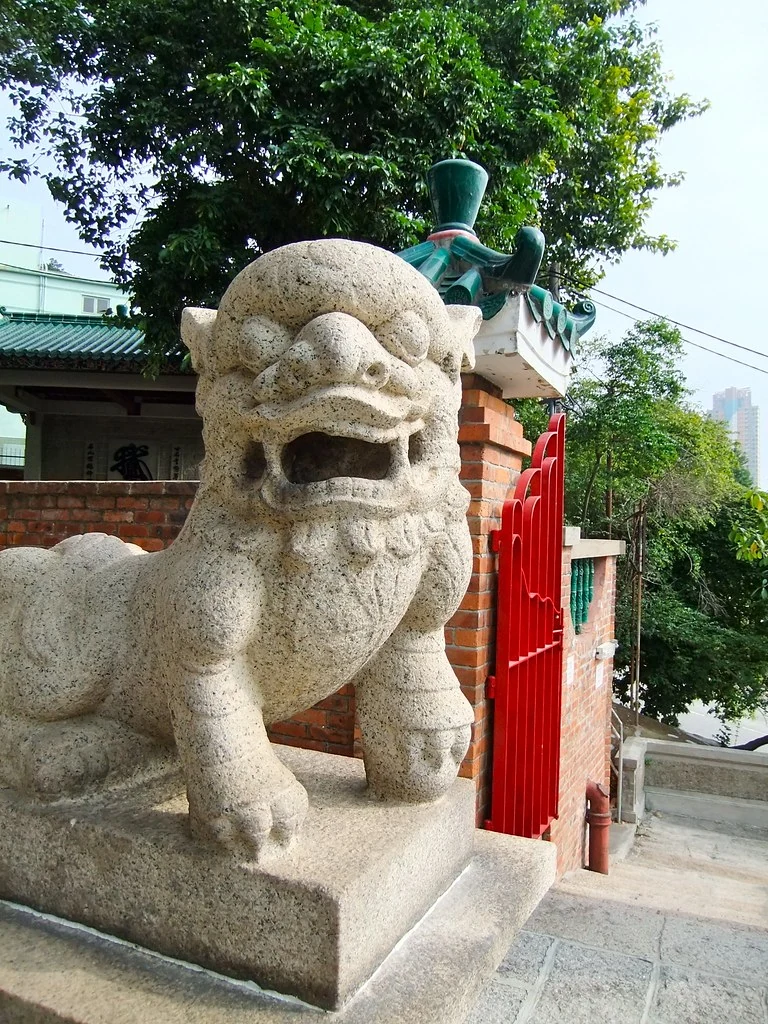
Behind the main hall is a stone inscription dated 1888, bearing the single character 鶴, meaning “crane.” Its presence is different from the censer’s. One object was given for ritual use; the other is a mark cut into stone and fixed to the temple fabric. Together they make time visible in two forms: an object that could be moved or handled, and an inscription embedded in a building. Their dates span four decades of the temple’s nineteenth-century history.
Objects, not a complete biography
The censer and the crane inscription bring two different kinds of temple history into view. One held incense during worship; the other was carved into stone in 1888. Around them, the nearby garrison formed part of a wider Kowloon landscape in which religious practice and military presence existed side by side. The temple kept its own identity as a place of worship, even as soldiers and officials came to pay their respects.