Music gathered in a hall
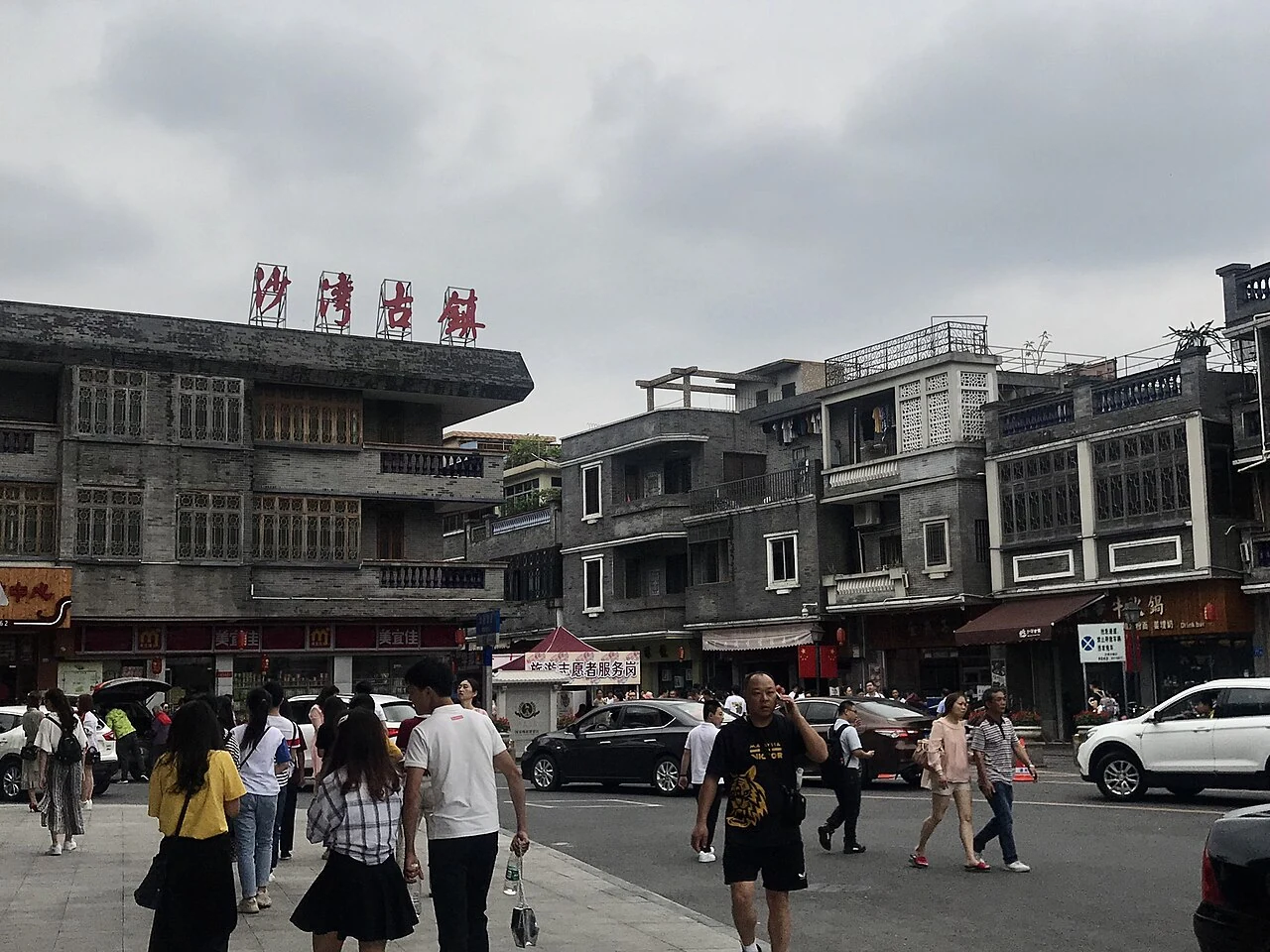
In Shawan, south of central Guangzhou, a piece of music can lead back to a family and a room. Three musicians from the He lineage—He Liutang, He Yunian and He Shaoxia—became known as the Three He Masters. Their predecessors passed tunes through playing and memory; later generations collected, notated and developed the repertory. Names such as Rain Striking the Banana Leaves give this instrumental tradition a vivid vocabulary even before a note is played.
The music grew through the encounter of different sounds. Earlier ensembles combined bowed and plucked strings with instruments such as the yangqin, whose strings are struck with small hammers. The He family's reputation included the pipa, a pear-shaped lute. Across the wider Guangdong tradition, changes in instruments and playing also changed the sound of an ensemble.
Sanren Hall gives that history an address in Shawan. An old Qing-period building, repaired in 2002 and reused as a public cultural space in 2012, it has hosted displays, performances and gatherings of amateur musicians. A hall once again becomes a place to bring instruments together.
A bowl that waits to set
Milk brings another kind of skilled work to Shawan. The local food called jiangmai nai belongs to the ginger-milk-curd tradition: milk and ginger juice come together, and the liquid sets into a soft curd. A bowl and a spoon give this craft a much smaller stage than a music hall or a street procession.
In the general Guangdong process, heated milk is poured into a bowl containing ginger juice, then left to set. The pause is part of the making. What began as a liquid becomes something that can be lifted with a spoon, with ginger remaining in the taste. Shawan's name for the food gives this familiar combination a local identity.
A steel branch behind a floating figure
Shawan's floating-color processions turn another kind of material knowledge into spectacle. Elevated performers appear to balance within elaborate scenes. A carefully forged steel support, the segeng, carries the composition; a craftsman interviewed in 2024 explained how the support itself can take the form of a weapon, dragon or snake. The structure becomes part of the picture rather than an ordinary exposed pole.
For the procession reported on the third day of the third lunar month in 2024, village groups and the Shawan Floating-color Association brought their works into the streets. The scene depended on people working together, just as an ensemble depends on more than a single instrument. In Shawan, a hall, a bowl and a moving tableau each hold a different kind of practiced knowledge.