From the journal

Cai Zhi and the Mirror-Based Gésar Tradition

A national heritage profile names Cai Zhi, a performer from Jiuji County, among the Gésar epic tradition’s representative bearers and describes his family’s mirror-based practice.

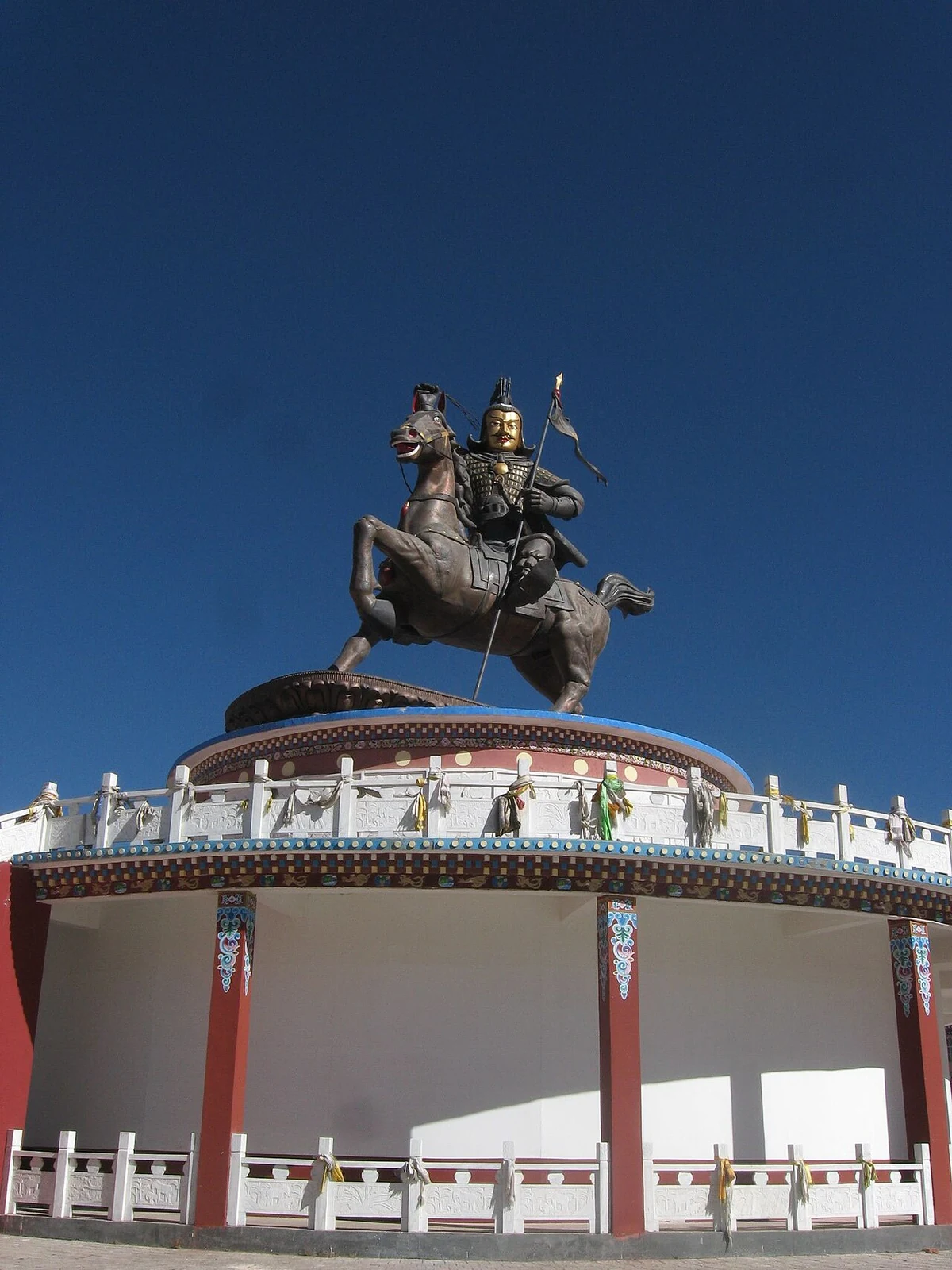
A statue of Gesar in Dawu, Maqin County, Guoluo.

A family practice recorded in Jiuji

The national heritage profile of Cai Zhi places him in Jiuji County, Guoluo, and identifies him as a representative bearer of the Gésar epic tradition. It traces his training to a family line of “guang” performers: in 1980, he received the practice and a ritual mirror from Longyang Gyatso, described as the fourth generation in the family.

The profile says Cai Zhi used what appeared in the mirror as a basis for detailed written description, later bringing “Gésar in the mirror” into documentary form. Cai Zhi’s family practice is one local thread in a much wider oral epic. The national record describes Gésar as a shared tradition with bearers and narrative forms across several regions and language communities.

An epic carried by performers

A 2017 cultural report describes Gésar as an oral epic that continues to grow through performers. It names several kinds of performer, including those who sing or recite, and notes that new versions and texts continue to emerge. In a separate interview, a researcher from Qinghai’s Gésar institute places the Sanjiangyuan region within the epic’s origin and performance geography.

Cai Zhi’s mirror practice offers one precise doorway into that wider tradition. A family ritual method, a performer’s voice and the ongoing life of an epic meet in his profile. Rooted in Jiuji, the epic also travels across communities and languages.

Continue exploring · Golog ↗
Photo credits and rights
  1. A statue of Gesar in Dawu, Maqin County, Guoluo.Hana Cincerova · CC BY-SA 4.0 Photo source ↗ Rights information ↗ Proportionally resized and converted to WebP without cropping. No objects were added, removed or reconstructed.