From the journal

Changting: The Urban Life of Hakka Country

The Ting River, Wolong Mountain and Changting’s repaired city walls reveal a Hakka cultural centre shaped by streets, trade and migration.

In the same city · Longyan ↗
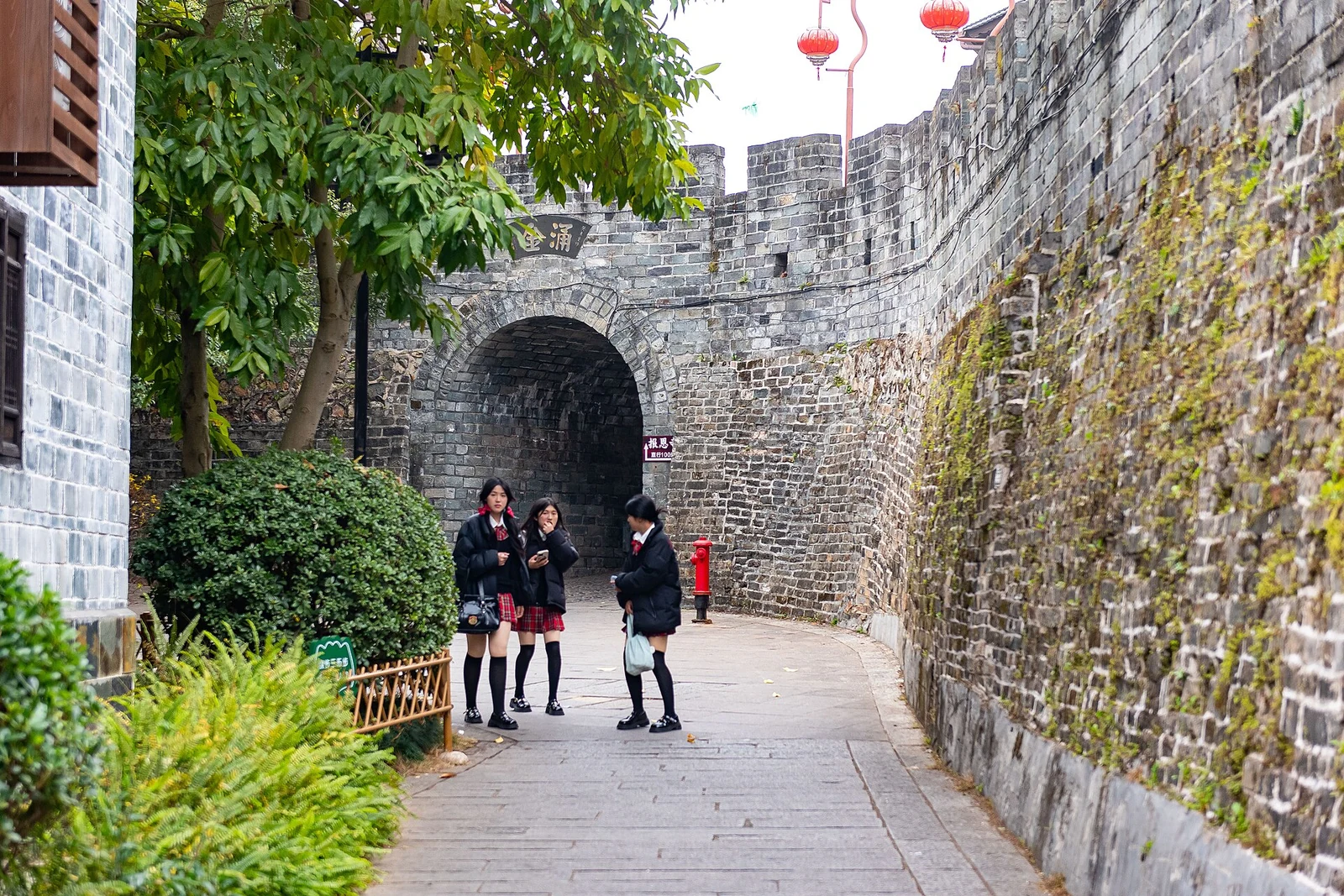
A stone city wall and arched gate, with visitors walking through.
The restored city wall in Changting.

A hill belongs inside the city

Changting’s old town is organized around an unusually memorable relationship: Wolong Mountain rises within the historic city setting, while the Ting River curves beside it. The surviving wall and its repaired stretches give the relationship a visible outline. Seen together, hill, water and masonry explain more than any single ornamental gateway.

The historic name Tingzhou remains central to the town’s identity. Often celebrated as a Hakka cultural capital, Changting shows the urban side of a culture that visitors may first encounter through rural tulou. Here the emphasis falls on streets, public institutions, commerce and a river capable of connecting an inland settlement to a much wider world.

Water points towards the coast

The Ting River belongs to a downstream route that reaches the Han River and the ports of the Chaoshan region. Provincial village-conservation research connects this water system with historic piers, commercial roads and Hakka migration towards coastal and overseas destinations. A mountain location could therefore be a point of departure as well as a place of refuge.

That changes the reading of the riverfront. Water beside an old town can look primarily decorative today, especially when reflected lights become the dominant evening image. Its historical significance lay also in movement. Goods, travellers and family connections linked local places to destinations far beyond the visible reach of the river.

Changting’s importance is easier to grasp with that outward direction in mind. The surrounding mountains framed a centre with connections.

An urban pattern survives between the landmarks

The approved conservation plan protects several historic street districts, including Diantou Street and Shuidong Street across the river. It also identifies the street network around the Tingzhou examination compound as an important part of the city’s form. Shops and routes, institutional spaces and neighbourhoods belong to the same urban history.

The examination compound introduces another kind of movement: the pursuit of learning and office. A cultural centre needed places where people gathered, studied, traded and marked civic occasions. Its identity cannot be reduced to a particular house type.

Between major buildings, the streets carry the transitions. Changes in width, a turn towards the river or the alignment of a public structure help distinguish an inhabited town from a collection of detached monuments. The connective spaces deserve attention in their own right.

A wall is also a record of care

The history of Changting’s wall includes modern efforts to preserve it. A 2023 provincial report described the work of local conservation advocates, including Chen Yuxian, and noted the visible traces of successive repairs. Those layers are part of the story. A restored riverfront should be understood through its surviving fabric and later interventions, rather than imagined as an untouched scene carried intact from one distant century.

The practical objective is a town that can continue to function. Conservation planning addresses water systems, roads, services and living conditions alongside historic buildings. These concerns are closely connected: the same streets that allow visitors to understand the old city are routes residents use in daily life.

Changting broadens the picture of Hakka country. Its memorable image is a wall joining mountain and river; its deeper subject is the urban community held within and beyond that outline.

Continue exploring · Changting Ancient City ↗
Photo credits and rights
  1. The restored city wall in Changting.N509FZ, CC BY-SA 4.0, via Wikimedia Commons · CC BY-SA 4.0 Photo source ↗ Rights information ↗ Original aspect ratio retained. Display copies resized only when needed; no enlargement, crop or retouching.