Tai Kwun is often approached today through its galleries, courtyards and performances. Its older plan carried a more exacting purpose: to gather the institutions that enforced order in one guarded site. The former barracks date to 1864; the Police Headquarters Block followed in 1919. Their different dates mark successive layers of administrative expansion rather than a single moment of construction.
From the journal
Tai Kwun and the Machinery of Colonial Law
Within one Central compound, barracks, a police headquarters, courts and a prison placed several instruments of colonial rule side by side.
In this district · Central and Western ↗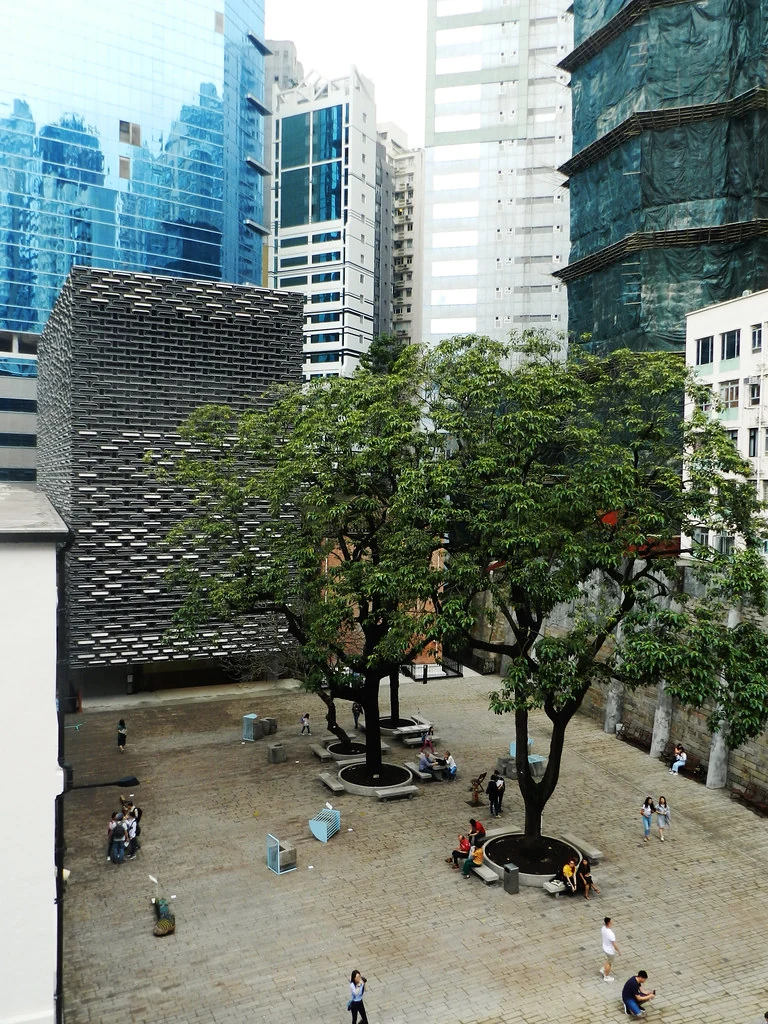
From street encounter to confinement
Police work, judicial proceedings and imprisonment were not abstract branches of government here. The compound joined the route from arrest and investigation to court and custody. A visitor can still read that institutional arrangement in the grouping of buildings, even though the site now serves cultural uses. It is a reminder that architecture organized not only movement through the city but also who could exercise authority over whom.
Reuse without erasure
Tai Kwun’s present cultural life gives the compound a public role very different from its original one. That change is meaningful precisely because the older use remains legible in the buildings. The story is not simply an old prison made attractive; it is a place where a city can encounter the physical setting of law, policing and confinement while using the same courtyards for shared cultural activity.