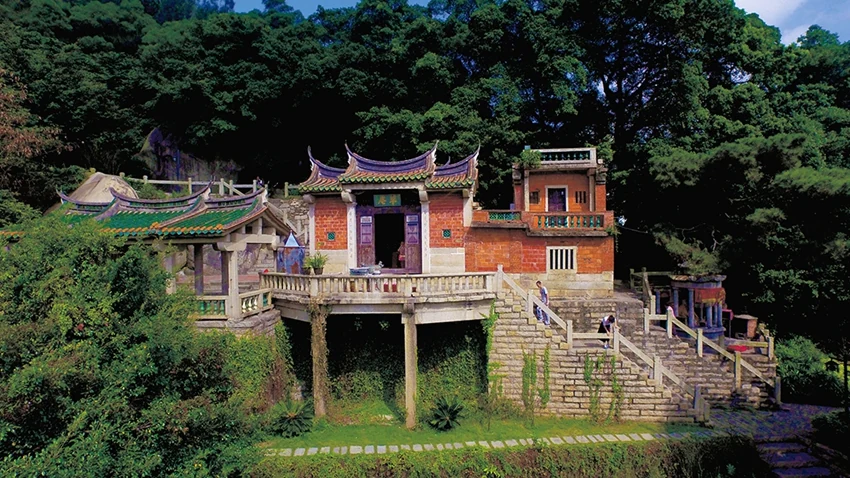
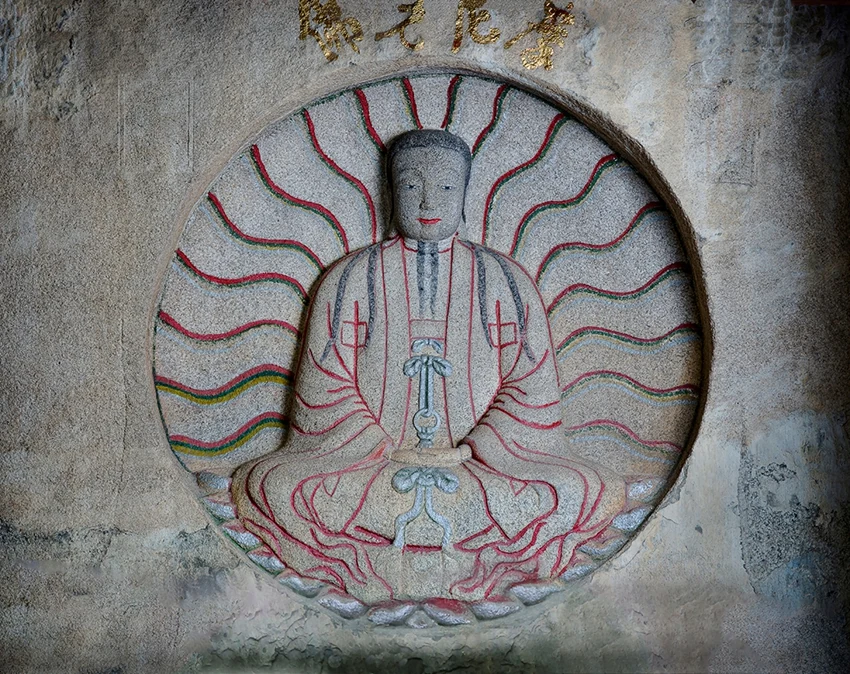
Cao’an sits against the foothills of Huabiao Hill in Jinjiang, within the wider Quanzhou municipality. Its scale is modest beside the city’s great temple complexes, but the stone relief inside connects it with a religious history that crossed much of Eurasia. The key is a seated image identified as Mani, the founder of Manichaeism.
The religion originated far west of China and became known locally as Mingjiao, the Religion of Light. At Cao’an, its presence takes a material form that can look familiar to someone accustomed to Buddhist imagery: a seated sacred figure with a halo. That resemblance makes the details more interesting. The object belongs to a setting where religious ideas and local visual conventions met, and where recognizing an identity requires attending to more than a general silhouette.