The Blue House site’s history begins with a name that has nearly disappeared from the street: Wah To Hospital, also known as Wan Chai Kai Fong Hospital. The Development Bureau records it in the 1872 Rate Book and says it may have been the first hospital in Wan Chai to offer Chinese medical services to local Chinese residents. When the hospital closed in 1886, the site became a temple to Wah To, the God of Medicine. Care changed form, but the association with healing remained.
From the journal
From Wah To Hospital to a Wan Chai Tenement
The Blue House site was once home to Wah To Hospital, listed in the 1872 rate book, before the address became residential.
In this district · Wan Chai ↗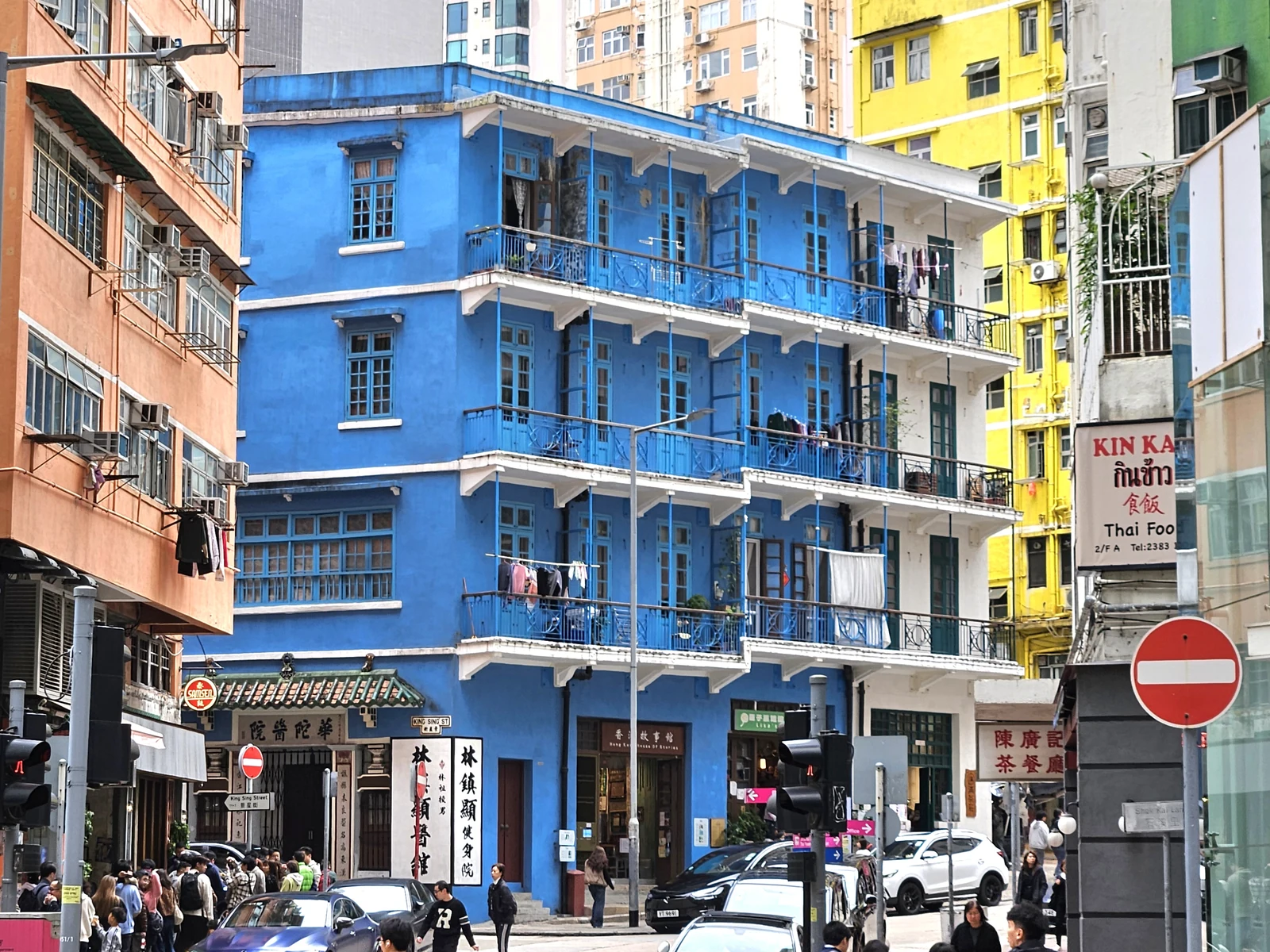
A hospital, then a temple
From temple to clinic
At 72 Stone Nullah Lane, the ground floor housed Wah To Temple. In the 1950s it became a martial arts school; in the 1960s it became an acupuncture clinic. Those successive uses give one address an unusually vivid chronology: hospital, medicine deity, martial arts, treatment. The building cluster’s history is not a straight line from old to new. It is a sequence of local institutions and practices occupying the same piece of Wan Chai.
A tenement made for street life
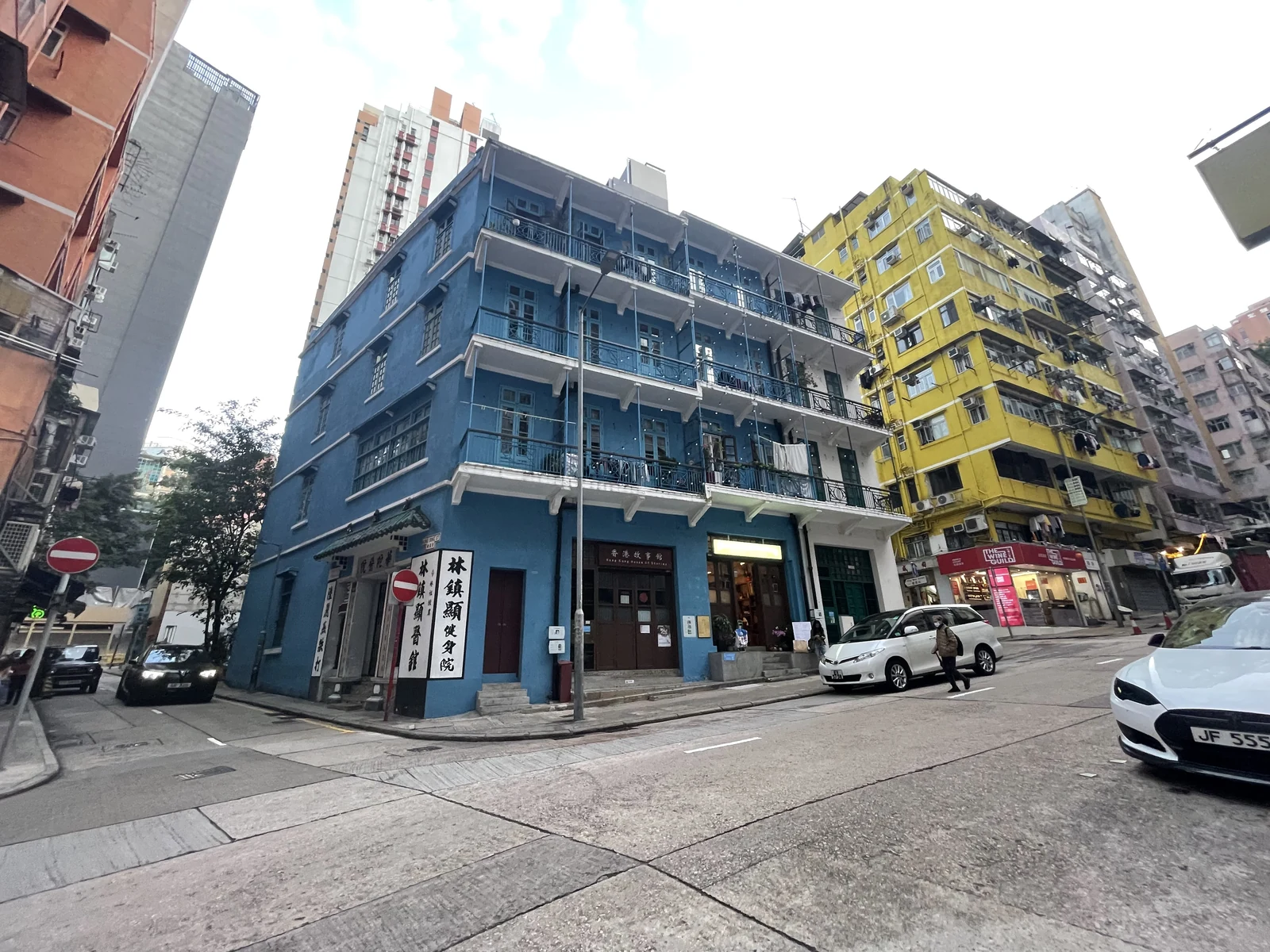
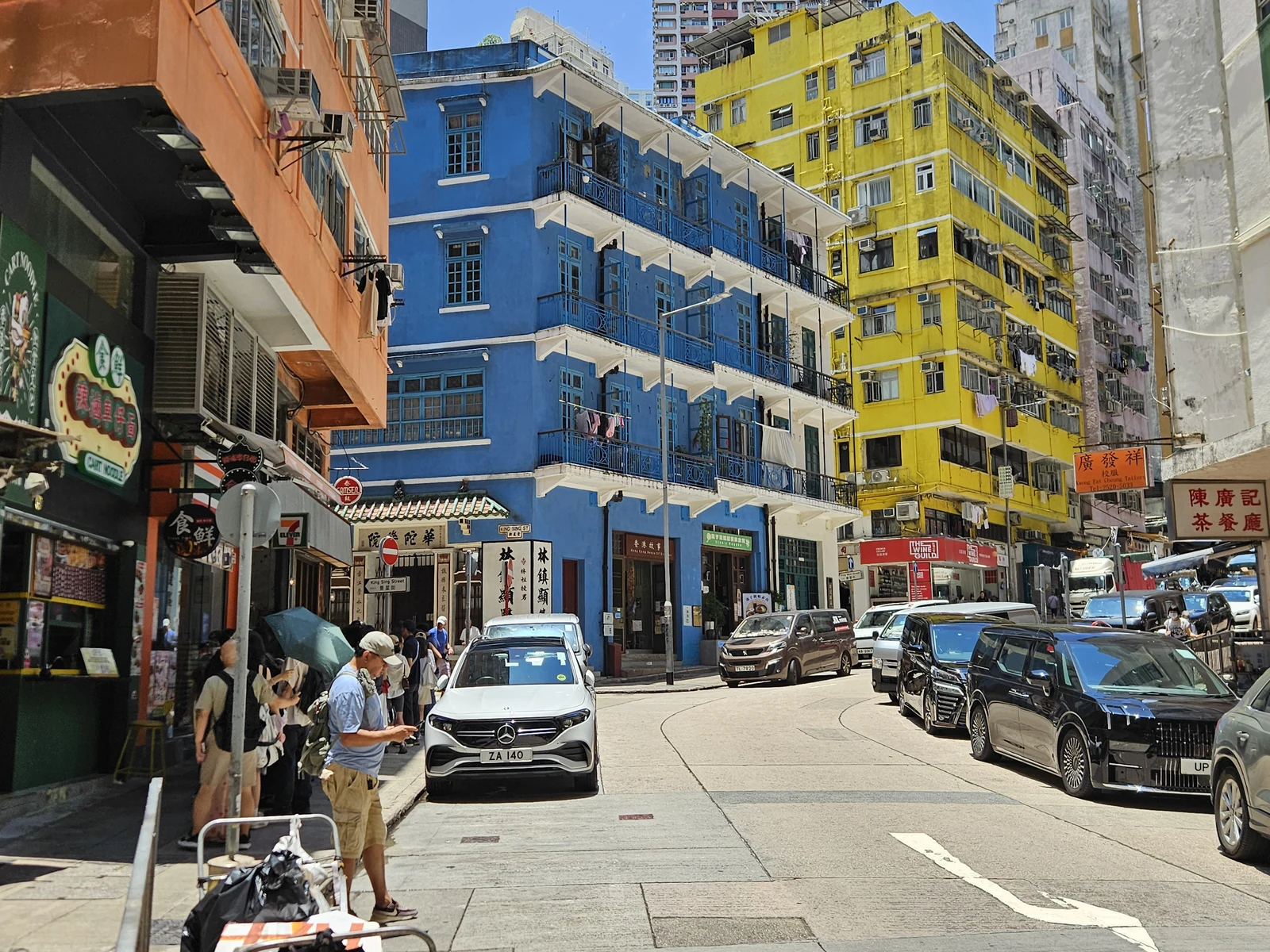
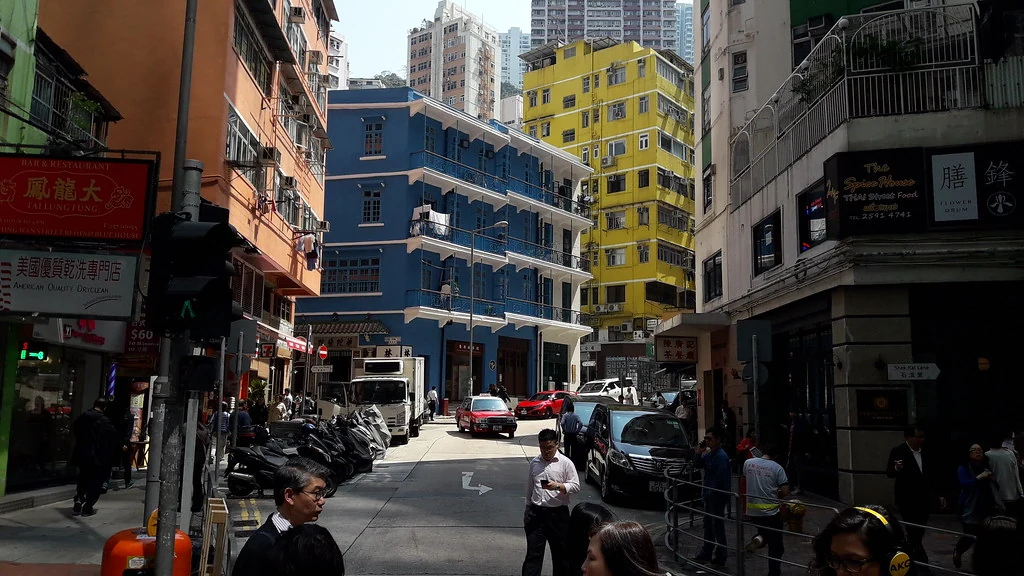
The Blue House itself is a four-storey shophouse with brick walls covered in plaster. Timber stairs sit between pairs of blocks, and the upper flats have balconies that project over the street on reinforced-concrete supports. Panelled, glazed doors open onto verandahs. These details describe a building designed around compact flats, shared access and a close relationship with the lane below. The exterior’s blue paint dates to 1978, when ownership of numbers 72, 72A and 74 was surrendered to the government. The colour is memorable, but the deeper story is how this address moved through care, worship, work and home life.