Before the audience gathers, the theatre has to be made. Bamboo poles and timber rise into a framework, creating a room where there was an open site. A roof turns that framework into shelter; a stage establishes the direction in which people will look. Hong Kong’s temporary bamboo theatres bring architecture and performance together for a particular occasion, then release the space again when the occasion is over.
From the journal
A Theatre Built for the Festival
Bamboo poles and timber beams turn an open site into a temporary theatre, bringing performance and ritual into the heart of a community.
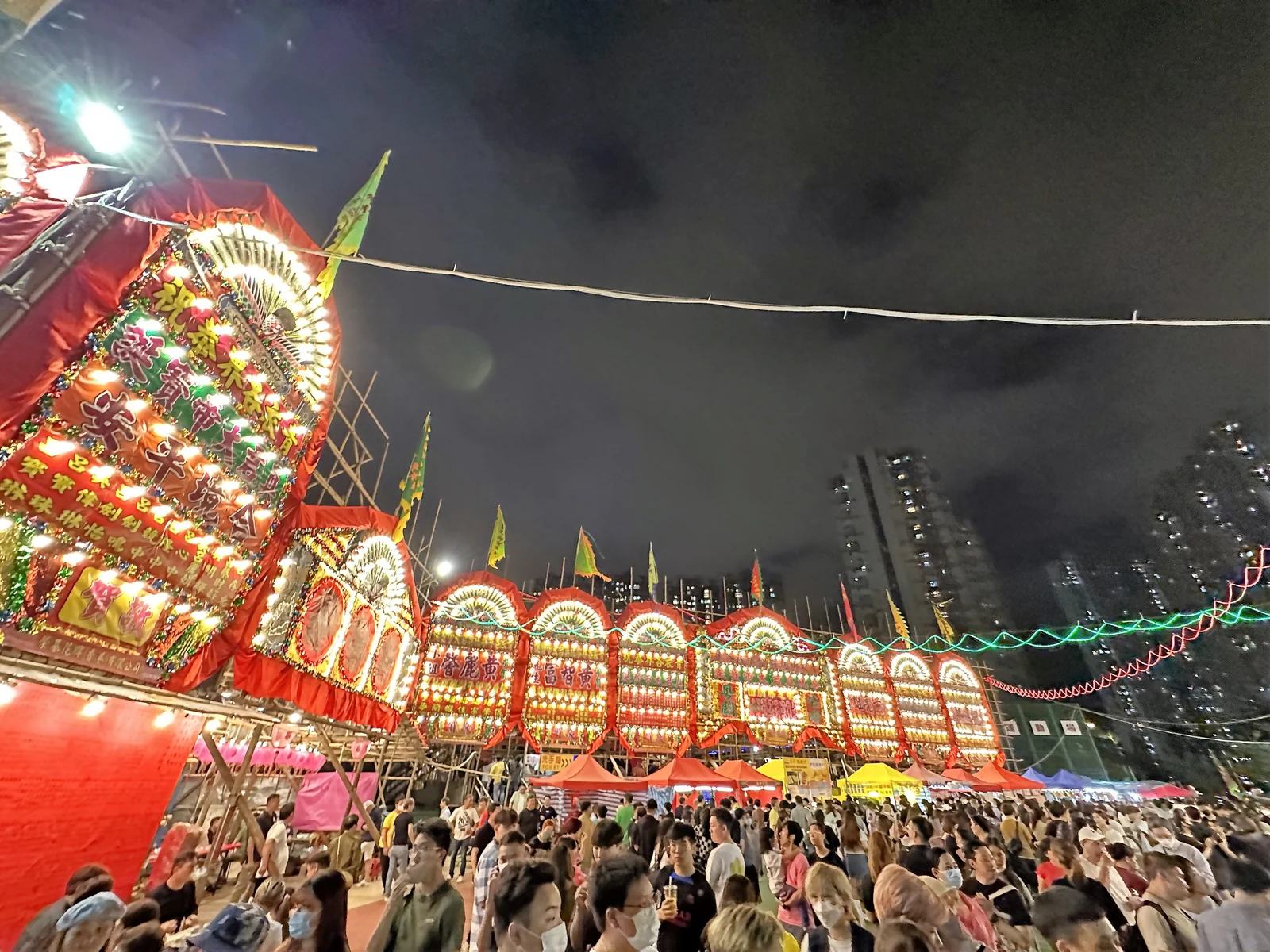
An open place becomes a theatre
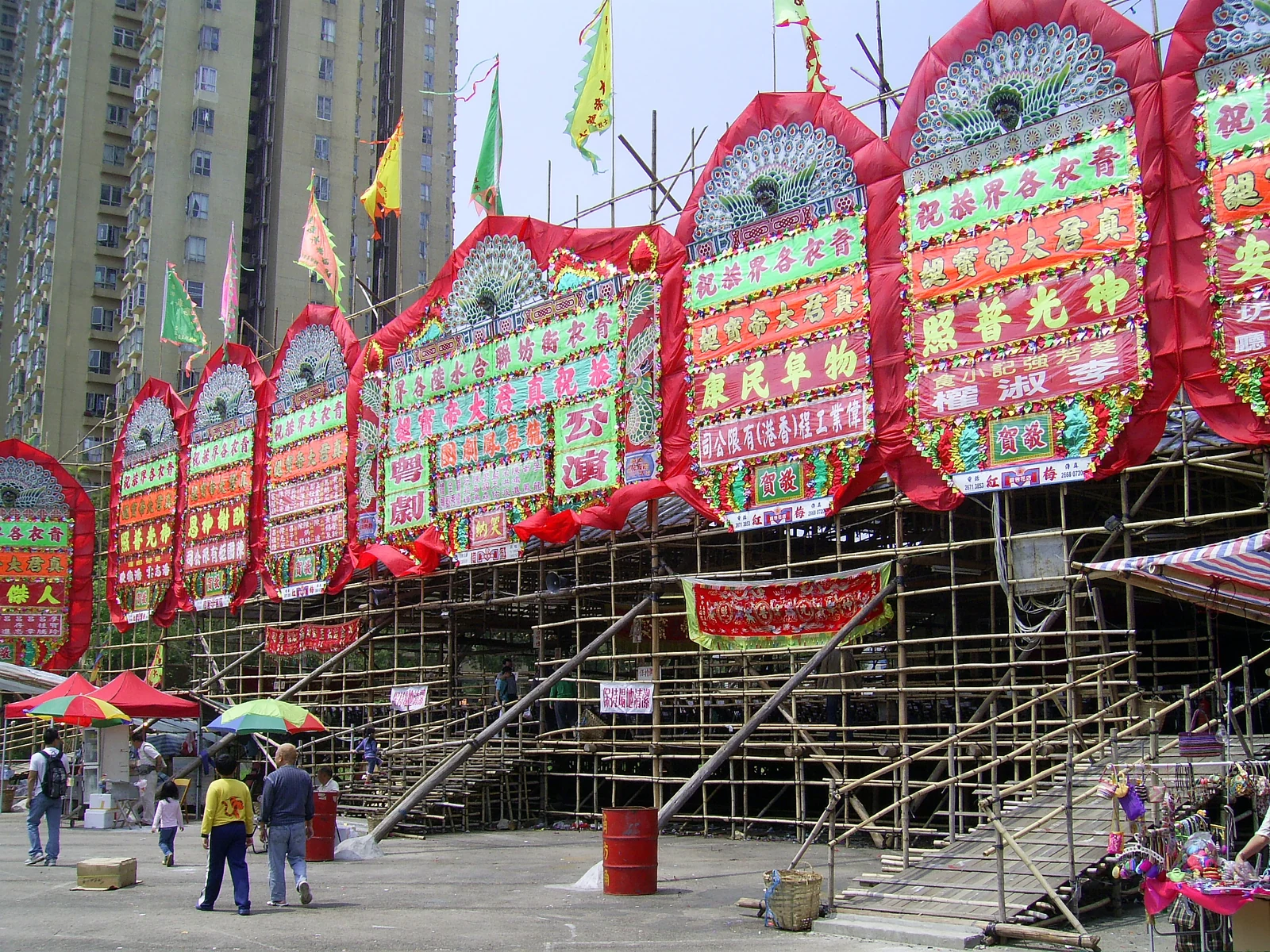
A performance offered as thanks
Communities put up these theatres for deities’ birthdays, jiao festivals and Yu Lan observances. Chinese opera can be offered as thanksgiving to the gods, and the structure also accommodates religious activity. The audience is part of a wider arrangement of performers, musicians, organisers and ritual participants.
This setting changes how a theatre is understood. A stage is not simply a platform available for any show: it belongs to a calendar, a place and the people who prepare the event. The relationship between community and performance gives the temporary building a purpose beyond keeping spectators dry. Its construction is one of the tasks through which an occasion becomes possible.
The building answers the site
Bamboo poles and Chinese fir members form the supports and framework, while sheet-metal covering provides shade and protection from rain. The scale can vary greatly, from a comparatively small gathering to audiences counted in thousands. Rather than repeating a single permanent auditorium, the builders respond to what is needed for the occasion.
Much of the theatre’s character lies in this combination of material economy and spatial ambition. Seen empty, the frame makes its own pattern overhead. In use, attention shifts to voices, music and the stage. Both views belong to the same craft: making a substantial shared space that is intended to last for the festival, rather than for generations in one fixed place.