Yau Ma Tei Wholesale Fruit Market began in 1913 as a government market dealing in fruit and vegetables. Over time its role narrowed toward fruit. When the Cheung Sha Wan Wholesale Market opened in 1965, vegetable and fish stalls moved out, leaving the market increasingly associated with fruit wholesale. This was not simply a change in signage. It was a shift in how the city organised the movement of fresh produce between wholesale buyers and local markets.
From the journal
The Fruit Market’s Night Shift
Yau Ma Tei’s wholesale fruit market links a 1913 government market to the overnight rhythm of produce distribution.
In this district · Yau Tsim Mong ↗
A market changes its stock
Trading while much of the city sleeps
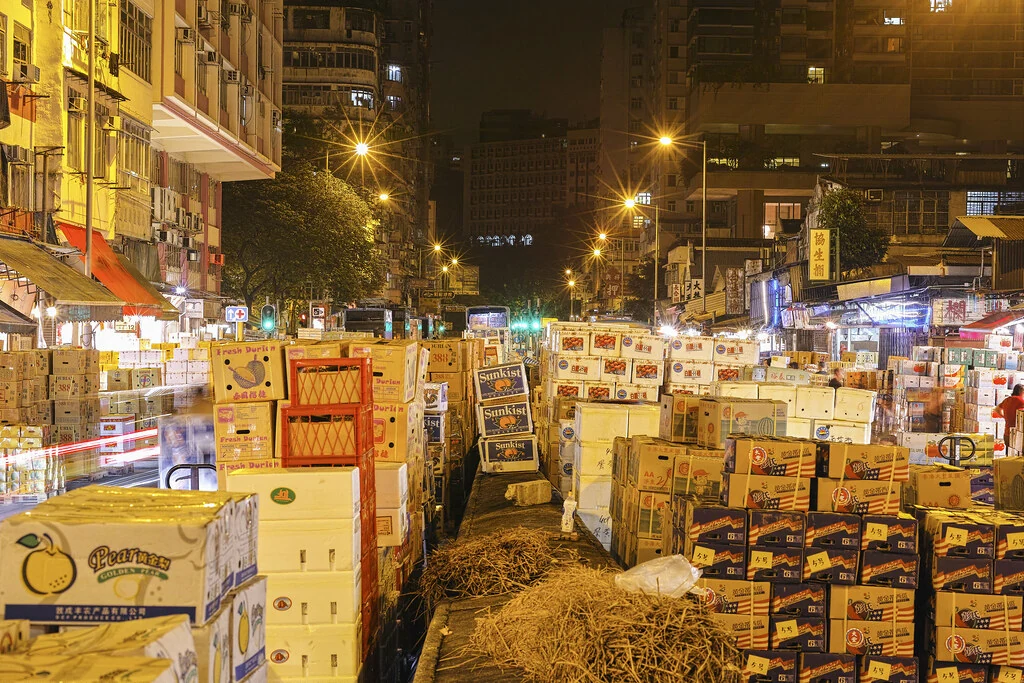
The government heritage booklet describes wholesale trading at the market as most active in the early hours. The night schedule follows the needs of a perishable commodity: produce arrives, changes hands and moves onward before daytime retail begins. The market’s rhythm is therefore tied to a larger chain connecting growers, transport, wholesalers and street markets. The old buildings give that activity a fixed address, while the work inside depends on timing and quick movement.
A historical measure
At its peak, more than 300 fruit stalls operated in the market, filling the night with the movement of produce and traders. That figure belongs to a historical description, not a count of stalls operating today. It helps convey the scale the market once reached and why the district’s wholesale activity mattered. A cluster of stalls can coordinate buying and distribution more efficiently than isolated shops; the market’s architecture supported this concentration by bringing many traders into one working compound.
A wholesale building in a changing district
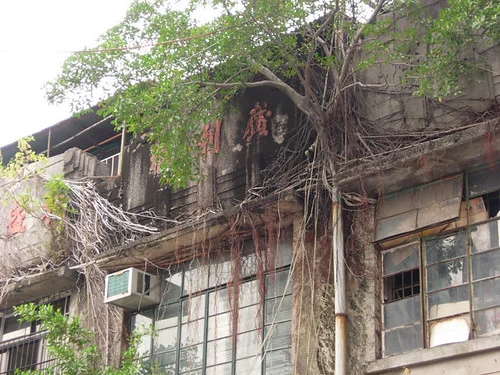
The fruit market stands among other Yau Ma Tei landmarks that grew as the district developed from an anchorage into a market town. Its role is different from a temple, theatre or street shop, yet it belongs to the same local history of commerce and public life. The market’s long use gives the architecture its meaning: loading, sorting and selling shaped the space over time. To understand the site, it helps to picture the hours when fruit changed hands and the city’s supply routes began moving again.