Xuzhou

Xuzhou's Han reliefs: the living world inside the tomb

Read weaving, feasting and supernatural imagery as carefully constructed scenes, rather than photographs of everyday Han life.

In the same city · Xuzhou ↗

Pictures that once belonged to buildings

A stone relief in a museum can look like a self-contained picture, ready to be admired and passed. At Xuzhou's Han Stone Relief Art Museum, resist that first impression. These images belonged to tombs, shrines and associated structures. Their architectural setting helped determine who could see them and why they mattered. The museum brings together things once distributed across burial landscapes.

Start by reading the object's original function and findspot. Then look at the image. A scene beside a tomb entrance and one in an ancestral shrine may share familiar motifs without doing exactly the same work. This simple sequence prevents a gallery from becoming a blur of ancient people in profile. It restores a question about audience: was an image addressing the dead, the living, or both?
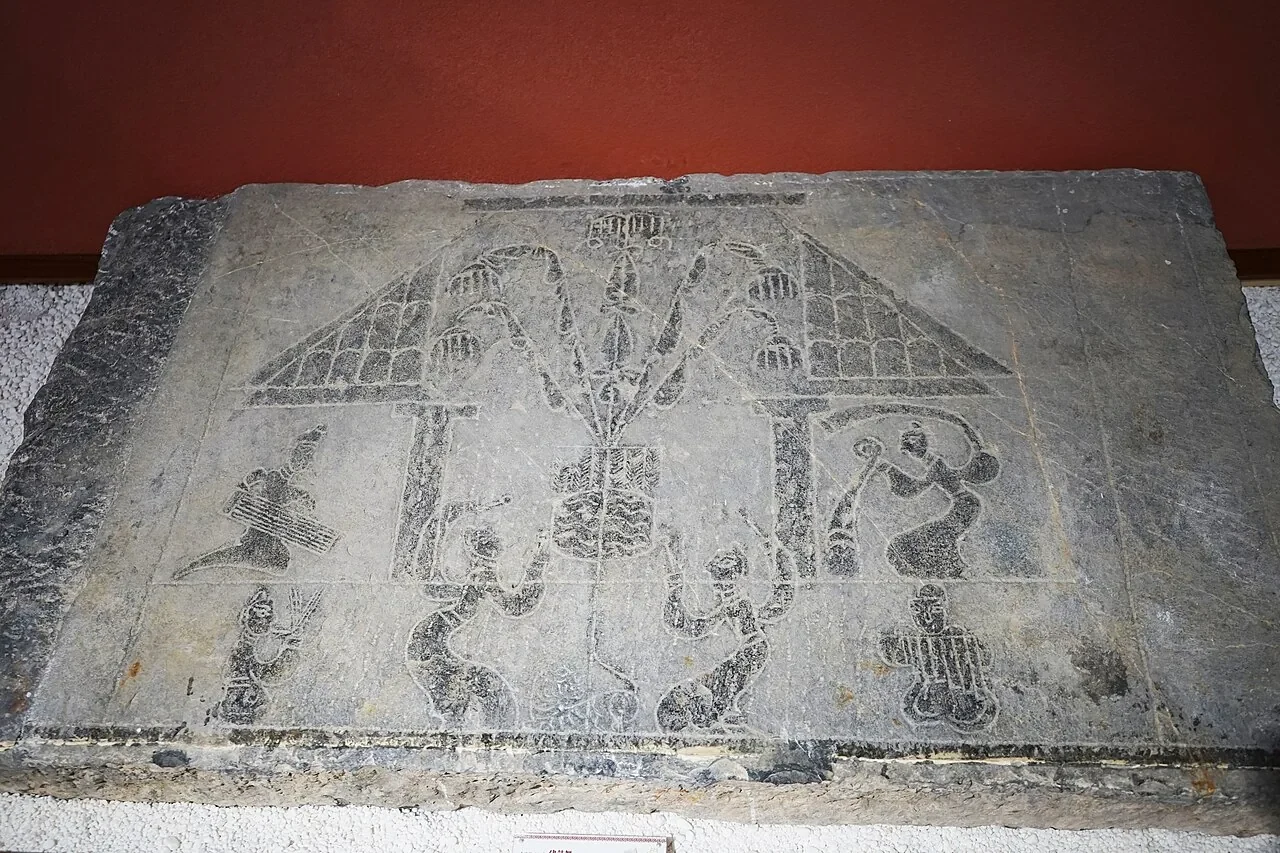
A Han stone relief depicting a drum-dance scene in the Xuzhou Han Dynasty Stone Relief Art Museum.

A weaver turns towards a child

One particularly affecting subject is the weaving relief from Qingshanquan, in today's Jiawang area. Accounts of the work describe women processing thread and a woman at the loom turning to receive an infant. The scene holds coordinated labour and an interruption within the same frame. It is unusually effective at making an ancient household feel inhabited.

Look first at bodies and tools, then at the relationships between them. Which gestures describe a sequence of work? Which link one person to another? The infant matters because it prevents labour from becoming an abstract symbol. The image suggests care and production occupying the same social space. That is an interpretation prompted by the depicted action, not a claim that the relief records a named family's day exactly as it happened.

The importance of this imagery also extends beyond the museum. Tongji University's exhibition account notes that weaving and dance images from Xuzhou were used on Chinese stamps issued in 1999. Their modern circulation is another chapter in how a local archaeological object becomes a widely shared picture of the past.

Follow food towards the feast

Kitchen and banquet scenes offer another useful reading exercise. Instead of focusing only on the seated diners, follow the people who prepare, carry and present the meal. Museum exhibition material from Wuhan includes kitchen imagery among the Xuzhou subjects it presented, alongside weaving and ceremonial scenes. These themes bring practical action into a setting concerned with remembrance and the afterlife.

A banquet can communicate more than enjoyment. Arrangement, service and differences of posture can make hierarchy visible. Ask who is still, who moves, who receives and who supplies. Those questions often reveal more than counting the number of dishes. They also remind us that the apparent liveliness of the image was composed for a purpose. A funerary picture of abundance is evidence of an ideal as well as evidence of material culture.

Do not separate the ordinary from the strange too quickly

Han reliefs also include supernatural beings, auspicious creatures and stories. It is tempting to classify the realistic scenes as history and the fantastic ones as decoration. That division can make the objects harder to understand. In a commemorative or funerary setting, a comfortable meal and a promise of transcendence could belong to the same desired future.

Finally, change the distance from which you look. From farther back, follow the organisation of registers and the direction of movement. Close up, examine how carved contours separate bodies from the ground. A rubbing, when displayed, makes another version of the image by emphasising contrast on paper. Neither view substitutes for the other.

You need not identify every mythological figure to leave with a stronger understanding. Choose one gesture, one tool and one visual relationship. The reliefs repay that attention because they combine large ideas about death with small, recognisable acts of living.

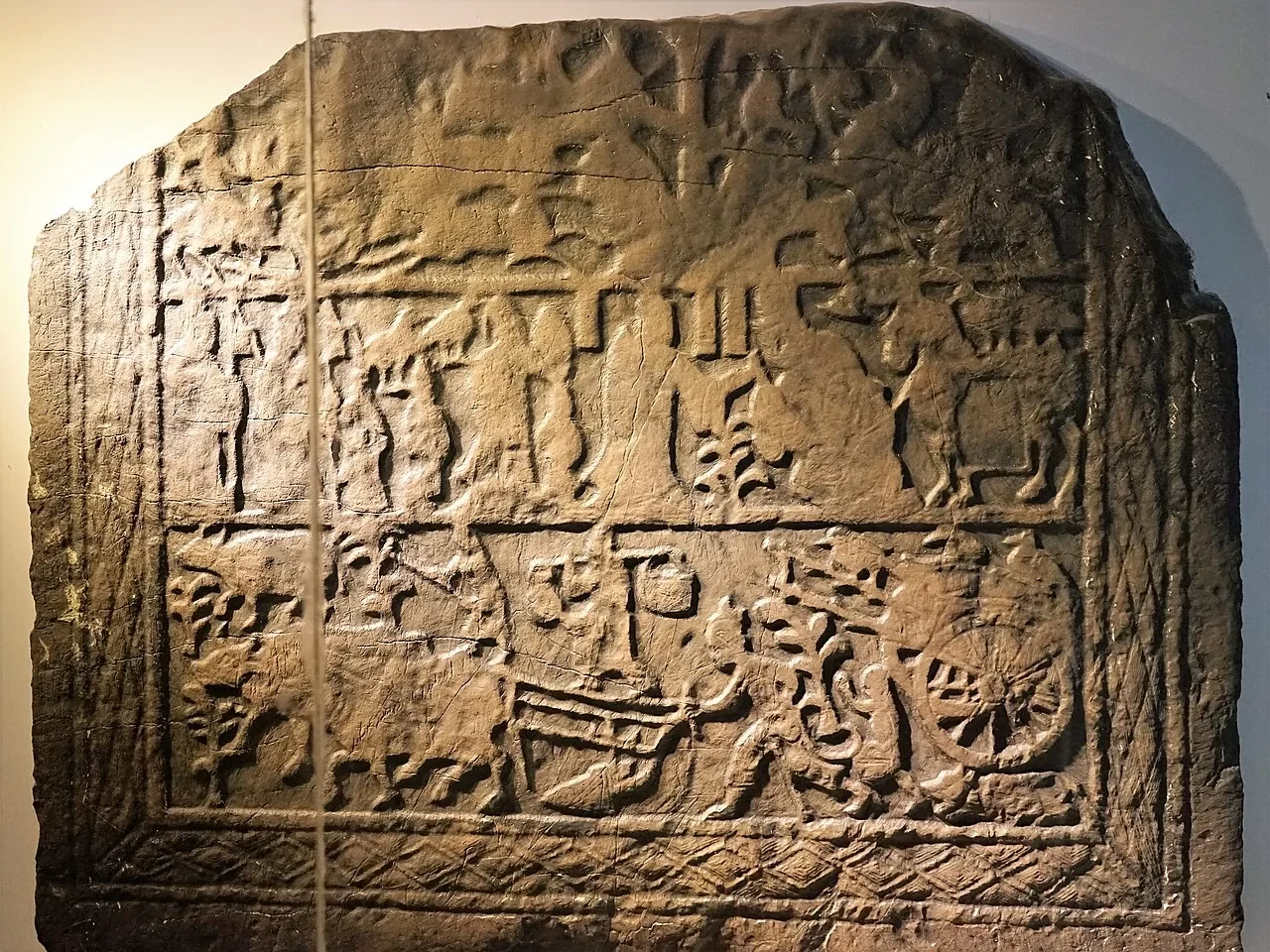
A Han stone relief in Xuzhou with figures, animals and an ox-ploughing scene in several registers.
Continue exploring · Xuzhou Han Stone Relief Art Museum ↗
Photo credits and rights
  1. A Han stone relief depicting a drum-dance scene in the Xuzhou Han Dynasty Stone Relief Art Museum.Augustohai · CC BY-SA 4.0 Photo source ↗ Rights information ↗ Resized and converted to WebP.
  2. A Han stone relief in Xuzhou with figures, animals and an ox-ploughing scene in several registers.Cangminzho · CC BY-SA 4.0 Photo source ↗ Rights information ↗ Resized and converted to WebP.