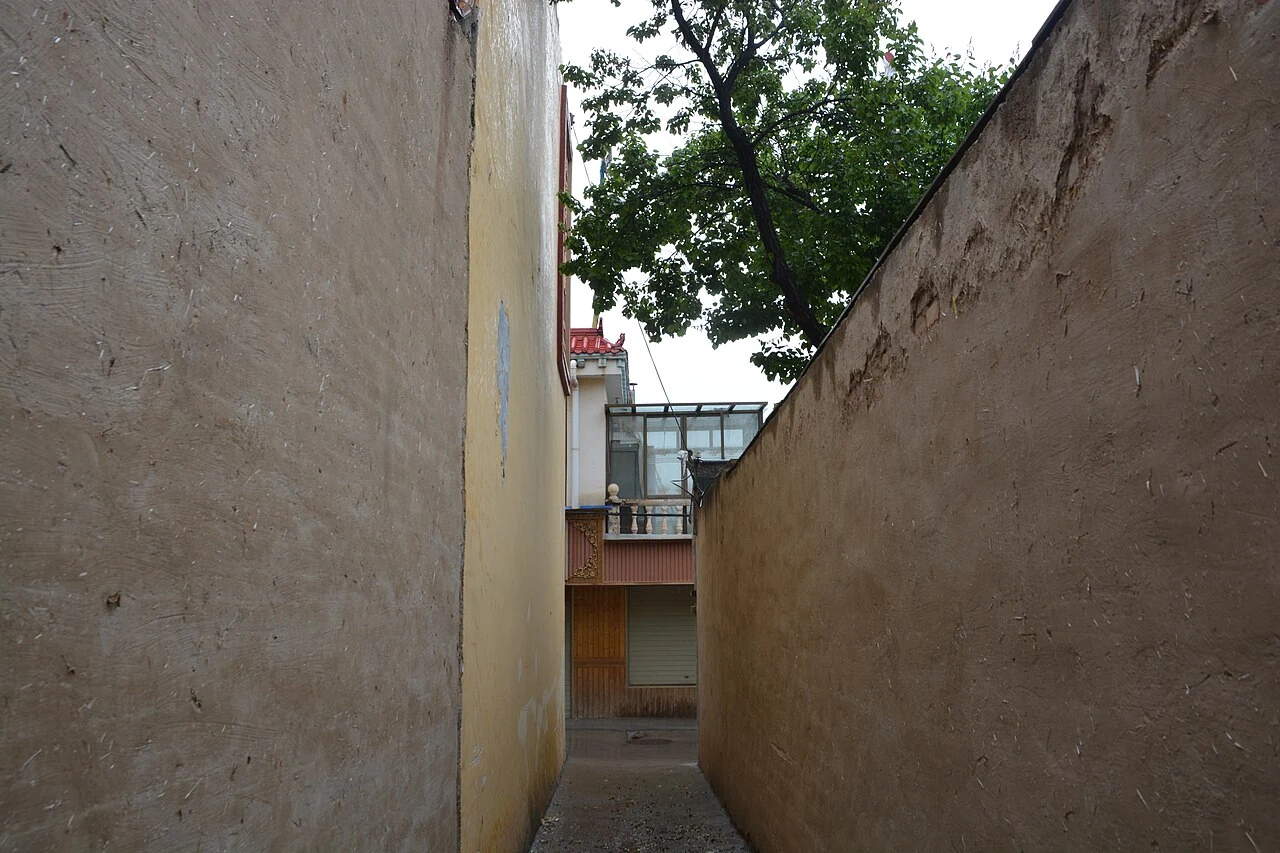
In 2020, a report from Wutun village described Xiawu Jiao as a painter and sculptor who passed on Regong arts. It also followed a young learner named Doula, then 20, as he applied color to a canvas at the Longshu art courtyard. His brush moved across a work already laid out on cloth; learning happened beside the visible image, with a teacher’s practice and a student’s hand in the same village setting.
From the journal
Learning to Paint in Wutun
A 2020 report shows Wutun’s thangka practice through a teacher, apprentices and a young learner coloring canvas at the Longshu art courtyard.
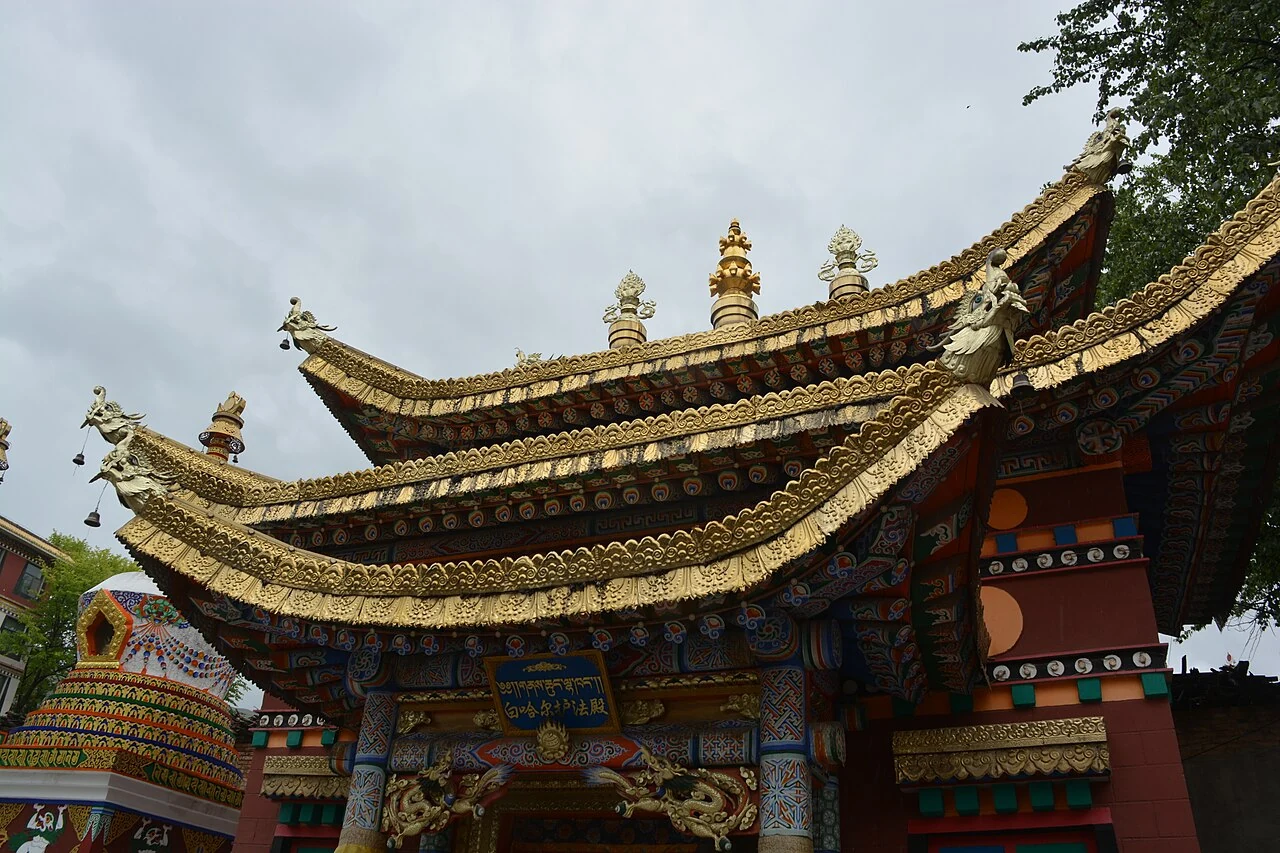
A teacher and a young learner
Practice becomes a livelihood
Another learner in the report said she had studied painting for three years and earned around 30,000 yuan a year. The figures belong to those individuals and to the 2020 report, but they reveal what apprenticeship could mean in Wutun: time spent learning a detailed art, then work connected to commissions. The article also described the Longshu art courtyard as signing more than 400 artisans each year. Training and production met within one place, linking the painted image to a working community.