The old Tai Po Market Railway Station stands in the town centre, but today its platforms belong to a museum rather than a working railway. Built in 1913, the station building has a pitched roof in the tradition of Chinese architecture. Its form makes the structure recognizable as more than a utilitarian stop: the roof gives a railway building a local architectural presence. The Hong Kong Heritage Museum describes the site as an open-air museum occupying about 6,500 square metres and converted from the old station. The railway is no longer experienced here as a schedule or a moving train. Instead, the station itself becomes the object through which visitors encounter railway history. This shift gives the place a double identity: it retains the scale and arrangement of a station, while operating as a heritage space inside Tai Po Market town centre.
From the journal
The Old Tai Po Market Station, Reframed as a Museum
A railway station built in 1913 now preserves the material memory of Hong Kong’s railway inside the town it once served.
In this district · Tai Po ↗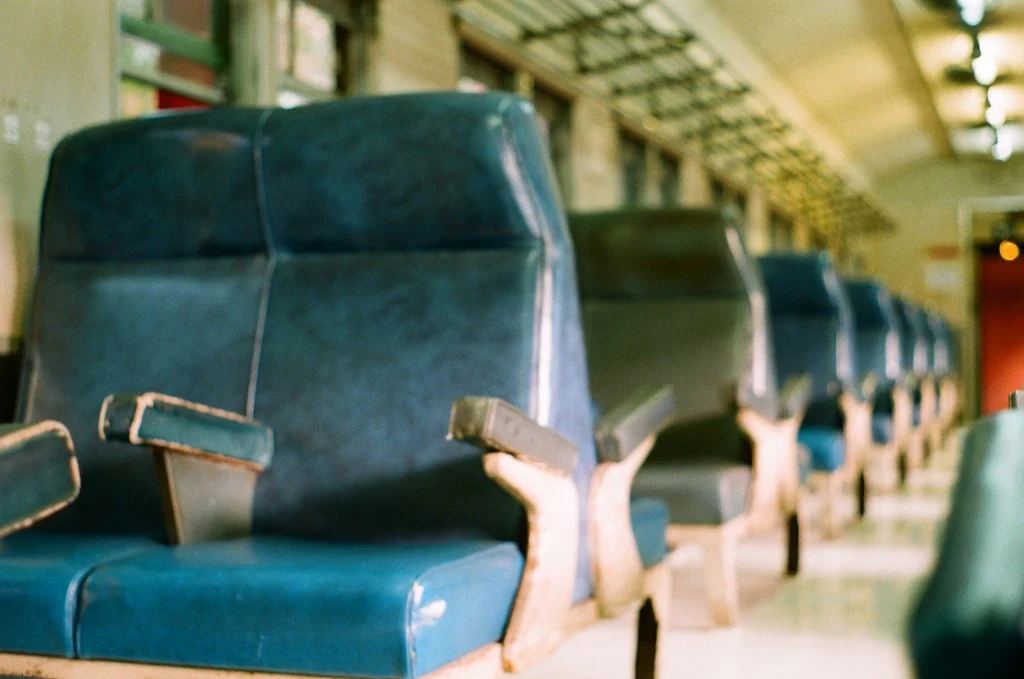
A station in the town centre
From transport to monument
The building was declared a monument in 1984, refurbished and opened as a museum in 1985. Those dates mark a deliberate change in how the station is valued. Its function as transport infrastructure gave way to a role as a public record of railway development. The museum’s exhibitions use artefacts, models and historical photographs to introduce the railways of Hong Kong. Inside the station building, an exhibition gallery sits alongside the old ticket office and signal cabin. Each room keeps a connection to the work that once happened there: tickets were issued, signals managed, and passengers passed through. The site therefore communicates history through both objects and the original rooms that held railway operations. A model train can explain a system; an old station office gives that system a specific address and physical scale.
Railway objects in the open air
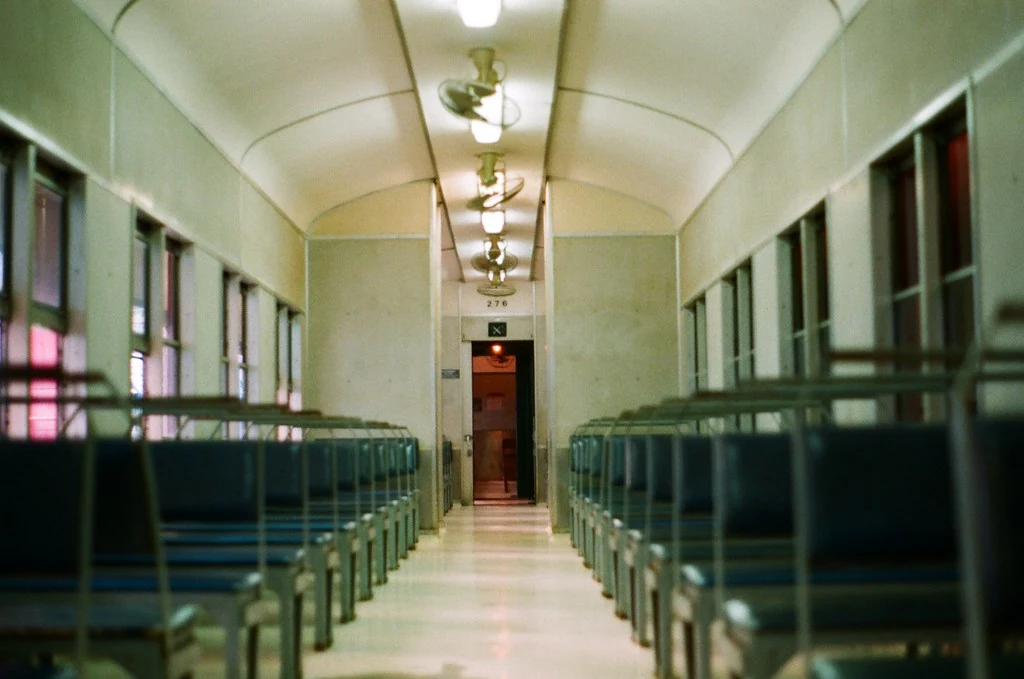
The outdoor display area extends that story beyond the station building. It includes steam and diesel locomotives, historic coaches, trolleys and semaphores. The range of objects lets a visitor see railway technology as a collection of related parts rather than a single locomotive image. Inside, photographs and artefacts provide historical context; outside, the machinery occupies space at human scale. The museum thus combines a preserved station, its original service spaces and a set of railway relics. This combination makes the conversion itself part of the experience. The old station has not simply been replaced by a museum building elsewhere; it has become the frame for interpreting its own former purpose. Tai Po Market’s railway memory can therefore be encountered in the architecture, the service rooms and the objects that once belonged to a wider network.