St John’s Cathedral was built in 1849 and is the oldest surviving Western ecclesiastical building in Hong Kong. Its presence in Central reflects the arrival of a new colonial administration and the Christian institutions that accompanied it. The cathedral’s Gothic Revival form made it distinct from nearby Chinese temples and commercial buildings, while its religious function gave the growing settlement a place for worship and community.
From the journal
St John’s Cathedral Through Wartime Change
Built in 1849, St John’s Cathedral has witnessed changing religious and civic life in Central, including its use as a Japanese club during the occupation.
In this district · Central and Western ↗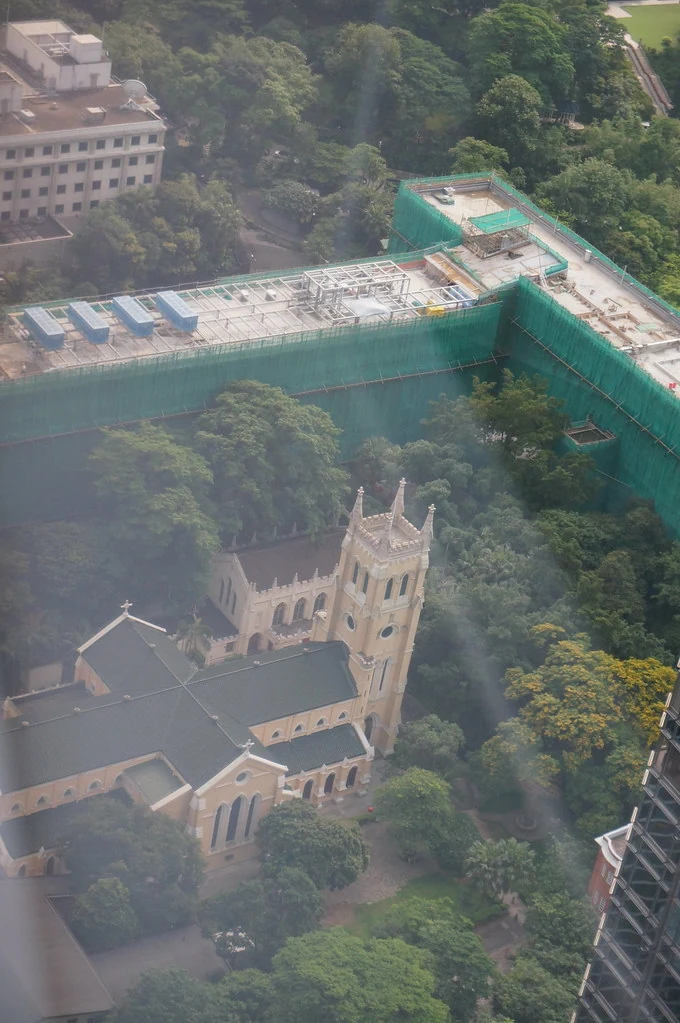
A church in a new colonial city
Occupation and altered use
The building’s history did not follow a simple path of continuous worship. During the Japanese occupation of Hong Kong, the cathedral was used as a Japanese club. That change of function belongs to the difficult history of wartime Central: familiar buildings could be taken over and assigned new purposes. After the occupation, the cathedral returned to religious life, carrying the memory of this changed use into its later history.
A surviving landmark
St John’s continues as a cathedral, linking the present city to a building erected more than a century and a half ago. Its story is best read through those successive uses rather than architecture alone. The surviving structure points to both continuity and disruption: a religious building that endured a period when its original purpose was displaced, then returned to a place within Hong Kong’s public life.