In the early twentieth century, Sham Shui Po began shifting from agriculture toward industry and commerce. Textile, garment, metalwork and enamelware businesses appeared as the district’s population grew. The result was not a single factory quarter separated from everyday life. Work, housing and trade developed alongside one another, and the street became an important place where goods changed hands. Later, when manufacturing moved north, the district’s industrial buildings did not all become relics; many shifted into commercial, exhibition, trading and logistics uses.
From the journal
Industrial Memory in Sham Shui Po’s Streets
Textile, garment, metal and enamel industries shaped Sham Shui Po; specialist streets still carry traces of that commercial landscape.
In this district · Sham Shui Po ↗
From farms to workshops
A street can keep a trade
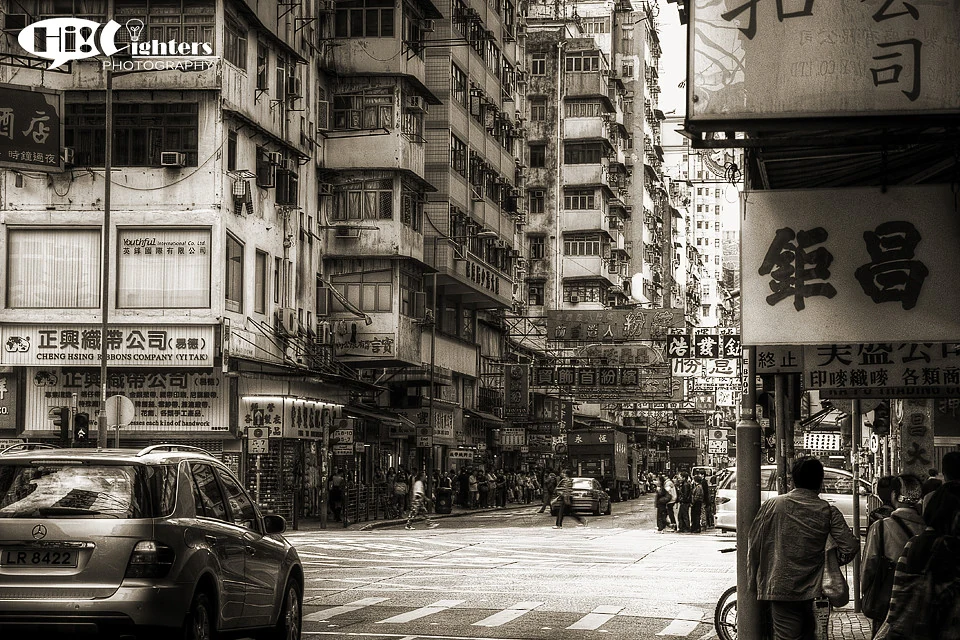
The district guide points to several streets where specialist commerce remains visible: Apliu Street, the Buttons, Laces and Beads Streets, and Fashion Street along Cheung Sha Wan Road. Their names and shopfronts make a different kind of industrial history legible. Production may have moved elsewhere, but materials, suppliers and buyers continue to meet in local trading spaces. The shops are not factories, but they keep specialist goods moving through a local chain of suppliers, traders and buyers.
Old buildings with new work
Industrial buildings that shifted to commerce, exhibitions, trade and logistics kept work and enterprise rooted in the district. Some older structures have also been revitalised for new uses, including the Jockey Club Creative Arts Centre and Jao Tsung-I Academy. These examples are distinct from the active street markets: one gives an old building a new institutional use, while the other sustains specialist exchange in the street. Together, the street markets and adapted buildings show how work in the district changed form while remaining part of daily life.
The city as a working archive
Sham Shui Po’s industrial memory is not limited to plaques or preserved machinery. It remains distributed across the purposes of buildings, the goods sold along particular roads and the way businesses cluster around specialised trades. Moving from a trading street to a reused industrial block reveals two responses to economic change. Their continued activity shows how Sham Shui Po’s industrial and commercial centre adapted as production patterns shifted.