In August 2024, Nagqu’s Qiaqing Horse Festival opened at the Gesar Racecourse. The official programme placed racing and equestrian displays alongside performances by county groups, a traditional-clothing show, a grassland concert, Guozhuang circle dancing and a market for local products. That mix matters: the festival was not only a contest between horses but also a place where people gathered to perform, watch, trade and meet. The programme changed from one year to the next, so its particular schedule belongs to that 2024 edition. It is better read as a snapshot of a contemporary festival than as a permanent list of customs.
From the journal
The Nagqu Horse Festival: Speed, Skill and a Shared Field
At the 2024 Qiaqing Horse Festival, racing sat beside music, dance, dress and market activity. The programme shows how a contemporary gathering brings several kinds of public life together.
In the same city · Nagqu ↗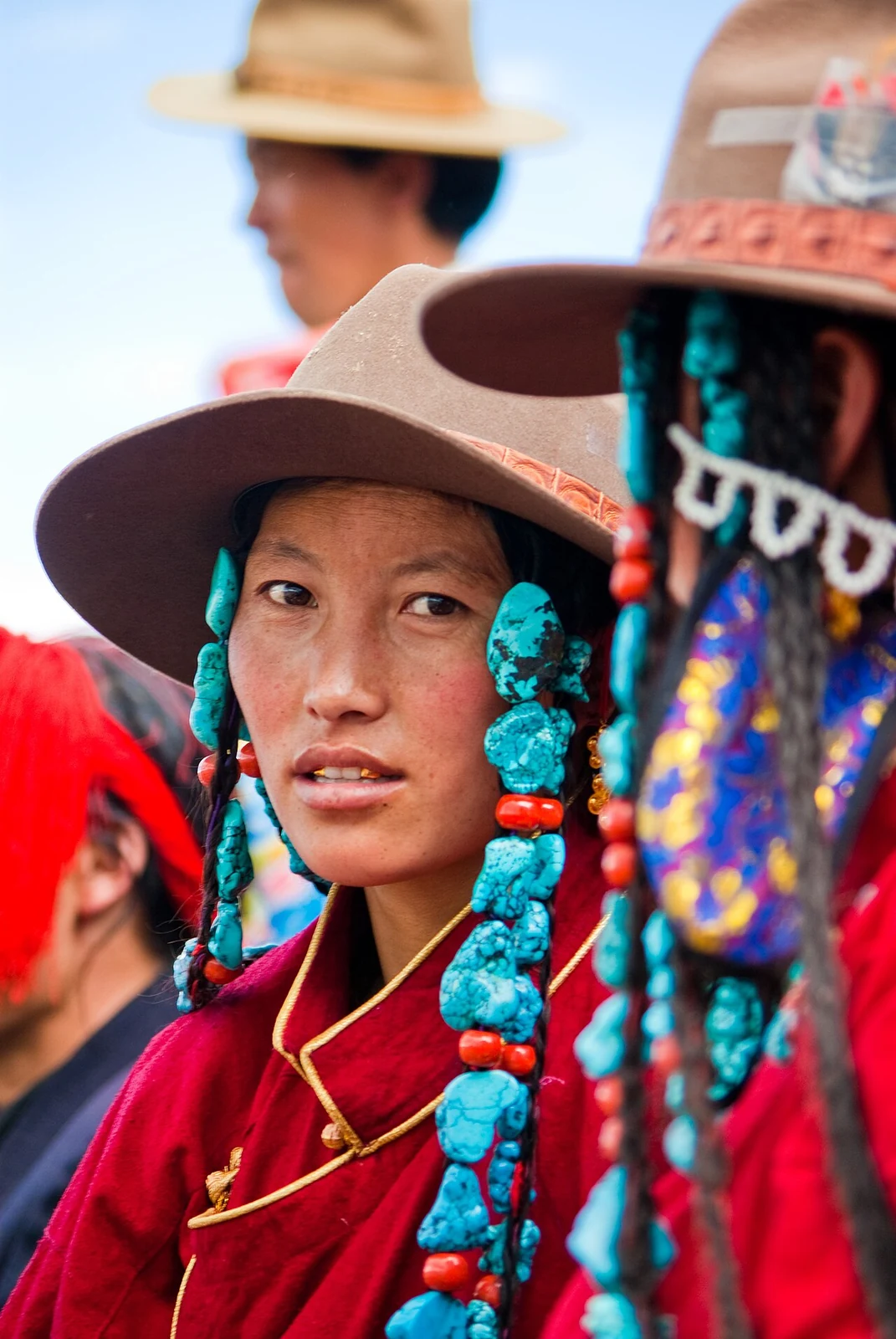
A festival built around horses
The long race
A Xinhua report from the 2024 event follows the traditional 10-kilometre race. Riders lined up after inspection, then set off as spectators called out and colorful prayer flags moved through the air. Some jockeys were still teenagers. One rider interviewed by the report said he had begun riding at six; the detail gives a sense of how early some young competitors start, without suggesting that every rider shares the same path. More than a thousand horse entries took part across the programme, according to the report. The distance and repeated rhythm of the race made stamina visible: the competition unfolded over a long course rather than in a brief sprint around a ring.
Horse and rider
The report also notices the care surrounding the animals. It describes horses decorated with colorful cloth, braided manes and tails, and some young riders climbing into the saddle in socks so that their footwear would not hurt the horse. After one race, an owner walked a tired horse past the stand while people offered khatas and water was poured over its legs to help it recover. These are reported moments from one event, not universal rules of horse care. They show how the festival’s public excitement depends on close attention to individual animals and the people who know them. A winning horse can become a source of shared pride, while the race also makes visible the work that precedes and follows competition.
A tradition in the present
The 2025 edition offers a later comparison: its official coverage records a ten-kilometre traditional race, a large field of competitors and additional public events, while the 2024 report describes its own programme in different terms. Together, the two accounts show continuity through change. Horse racing remains central, but the surrounding festival can incorporate contemporary performance, commerce and media. The name Qiaqing is therefore not a promise that every year will look identical. It names a recurring gathering whose details are organized anew. For Nagqu, the racecourse becomes a temporary meeting ground: a place where practiced horsemanship, family attachment to horses and a modern public festival are visible at once.