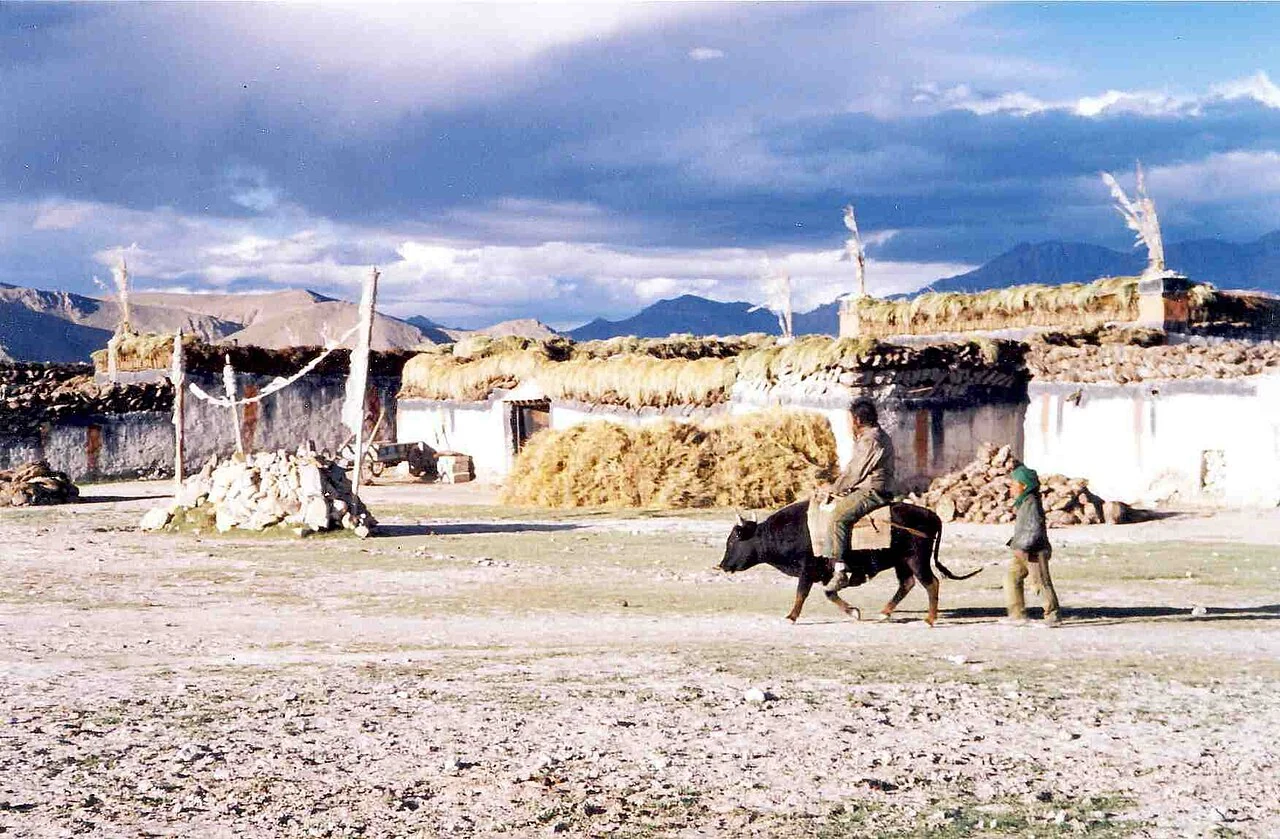
A 2017 Tibet Daily report profiled Zhuoma Quzhen, a resident of Tashi Zong Village in Dingri County. Her five-person household had long lived with cattle and sheep beneath the mountains, depending on pastoral work. The story begins with this older rhythm: a family’s livelihood tied to its herd and to the high-altitude landscape around the north side of Everest. The report locates the household in Tashi Zong Village beneath the mountain. It also captures a moment when new work was opening around the climbing season, adding another source of income to household life.
From the journal
Herding, Yak Caravans and Wildlife Corridors
A Tashi Zong family’s 2017 account shows how seasonal yak work and tent hospitality grew beside pastoral life, while a later restoration project repaired high-altitude habitat in Dingri.
In the same city · Shigatse ↗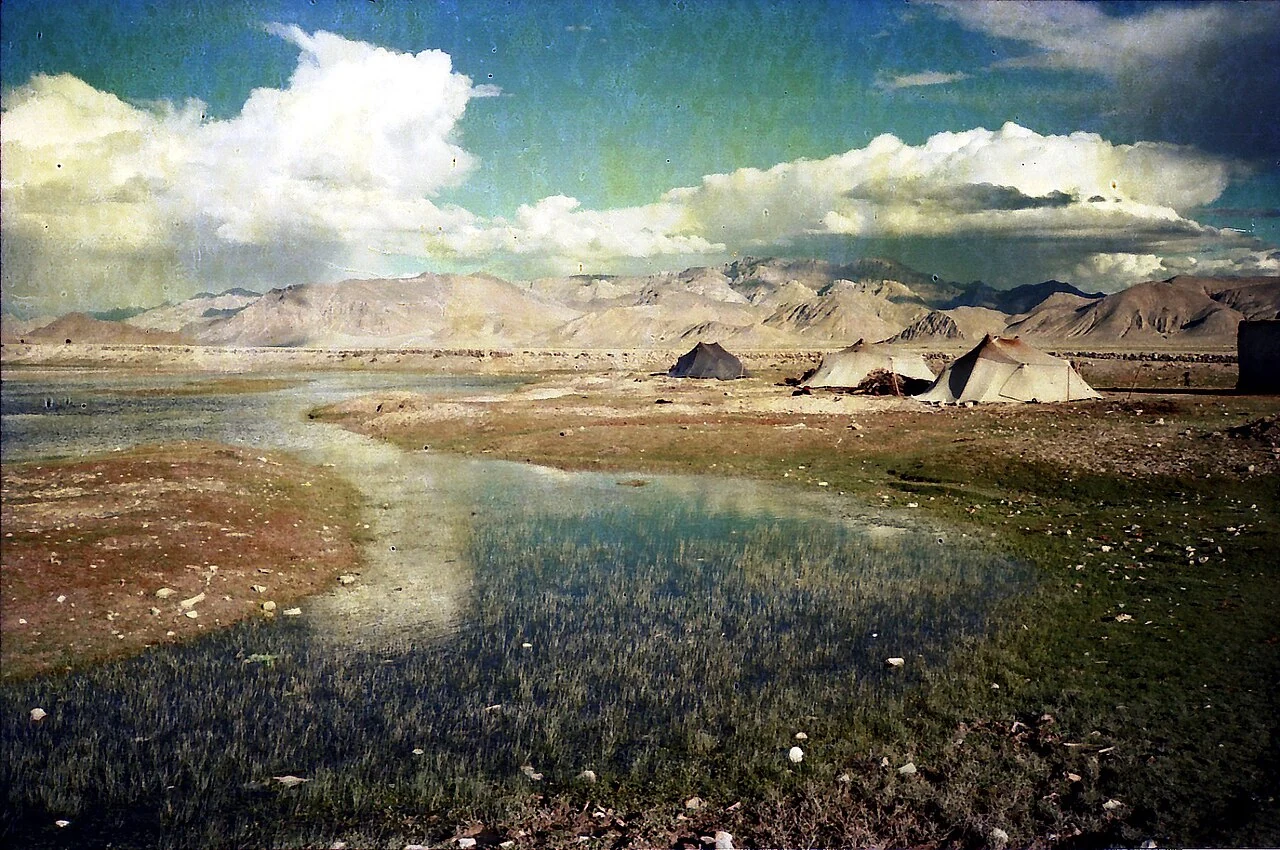
A household living with its herd
A tent that served tea and lodging
By the time of the 2017 report, Quzhen and other villagers had begun operating a cluster of tent teahouses near the mountain. Each tent could function as a small inn and restaurant, serving butter tea, sweet tea and meals as well as providing a place to sleep. The yaks remained part of the work: in March, before the spring climbing season, families drove them toward the mountain with supplies, and the animals could later carry climbing equipment. Herding knowledge and visitor services met in the same household economy.
A seasonal calendar around the climb
The report places the busiest visitor period between March and October. At the start of the season, villagers set up tents and prepare facilities; during the following months, the teahouses host climbers and other visitors. Yaks provide a second seasonal role as pack animals. The article reported that more than 50 tents had grown from an initial two or three and that Quzhen’s family earned over 100,000 yuan from tourism in 2016. These are details of one household and one moment in the local economy, recorded in 2017.
Grassland habitat and a repaired corridor
Dingri’s pastoral landscape is also habitat for wildlife. A 2025 report from the Tibet natural resources department describes the county as dominated by alpine meadow and identifies it as important habitat for Tibetan antelope and snow leopards. It records a 2023–2024 effort to restore 26 abandoned mine plots across 94.37 hectares along the G318 and G219 highways. The restored slopes developed diverse shrub and grass communities, and the agency reported improved connectivity for wildlife movement. Here, local livelihoods and habitat share a high-altitude landscape whose condition matters to both.