Nan Lian Garden opened to the public in 2006 as a Tang-style public park. Its timber structures, old and valuable trees, and rocks are arranged as a composed landscape in Diamond Hill. The opening announcement describes the garden as a place for quiet leisure rather than active recreation. That purpose shapes how its elements work together: paths guide visitors through a deliberate sequence, while water, stone and wooden buildings create places to pause and look.
From the journal
How Nan Lian Garden Frames Quiet
A Tang-style public garden in Diamond Hill arranges timber, water, rocks and trees as a place for quiet leisure.
In this district · Wong Tai Sin ↗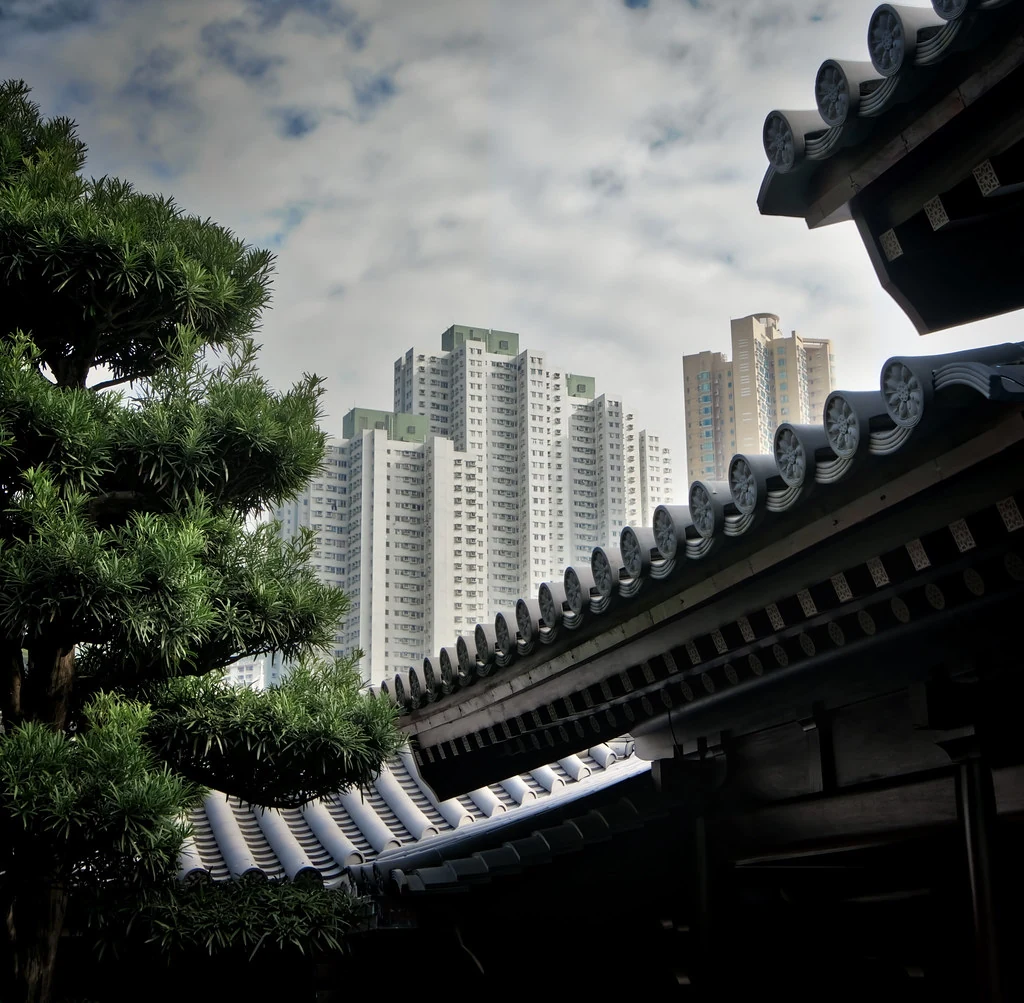
A garden made for quiet leisure
A public garden with monastic care
The garden belongs to the Leisure and Cultural Services Department, while Chi Lin Nunnery was entrusted with its management and maintenance. That partnership places a public park beside a Buddhist nunnery and gives the garden’s Tang-style language an institutional context. The public garden is maintained by the neighbouring religious organisation, linking careful landscape stewardship with shared use. Its design and stewardship together create a distinctive relationship between the site and Diamond Hill’s larger urban setting.
A landscape of timber and stone
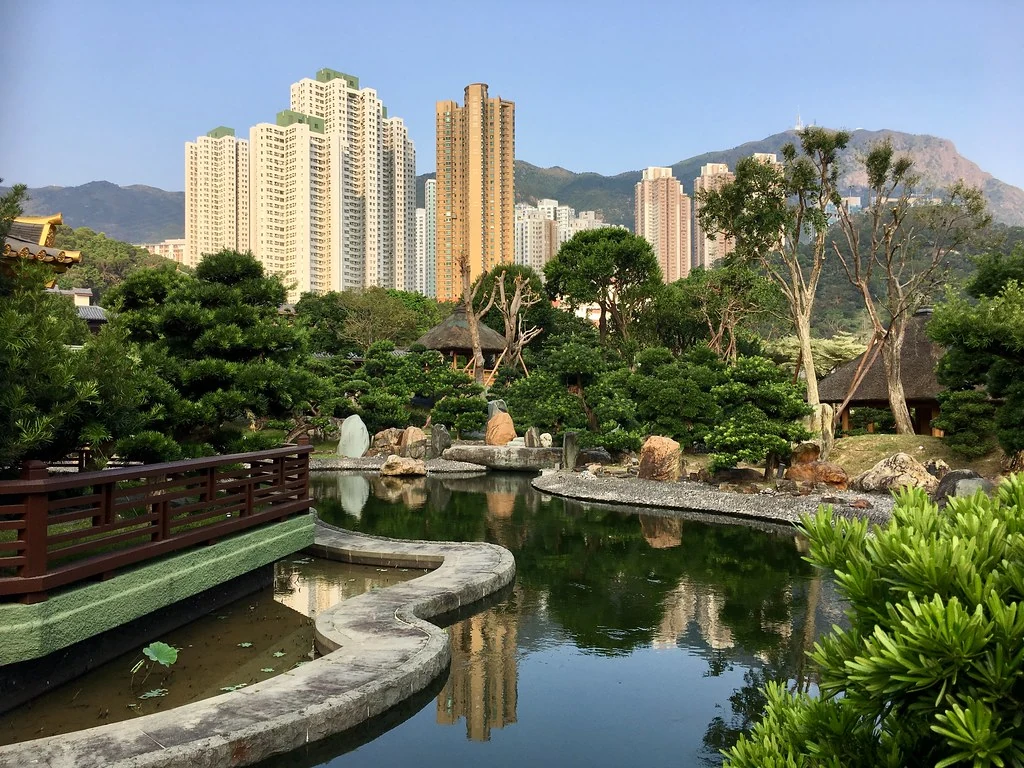
The garden’s wood structures, rocks and trees do not stand as isolated ornaments. They make a sequence of frames along the visitor’s route. A pavilion can direct the view across water; a rock can anchor a corner; a tree can soften the line of a path. The named rocks and plants reward close looking, while the paths and ponds make the garden’s design easy to experience. The effect comes from proportion and placement: carefully composed spaces that feel sheltered despite the surrounding density of the city.
Quiet within the city
Nan Lian Garden sits in a district where high-rise housing, transport and daily commerce are close at hand. The garden’s quiet character therefore depends on designed boundaries and a particular pace of movement. It is not an escape from the city’s history; it is a contemporary public landscape that uses a historical style to offer another way of occupying urban space. Its relation to Chi Lin Nunnery deepens that setting: one is a religious complex, the other a public garden, yet their shared design language makes them read as neighbours in a larger composition.