From the journal

Herbal Tea and the Neighbourhood

Macao’s herbal-tea shops offered bitter or sweet brews behind steamed glass, with family recipes and a long place in street life.

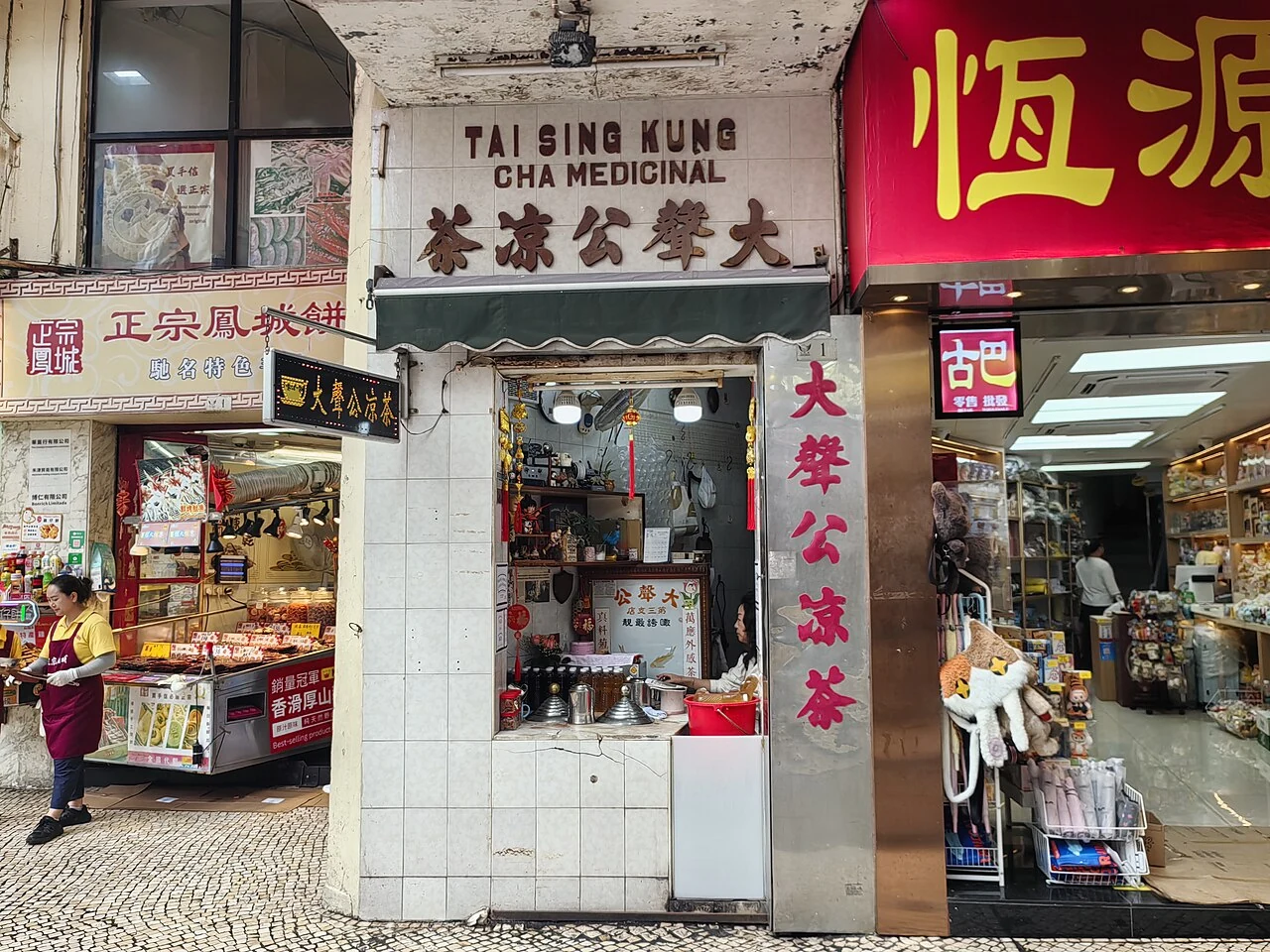
The Tai Sing Kung herbal-tea shop in Macao.

A Pot on the Counter

A glass cover over a pot of herbal tea lets customers see condensation gather on the inside. Macao’s government magazine explains that those beads of steam show the tea is freshly hot. It is a small shop detail that joins appearance to service: the pot stays covered, and the customer can read its warmth before ordering.

The drink itself has no single taste. Some brews are dark and bitter; others are clear and sweet. The range lets each shop offer a distinct balance, from a strong multi-herb blend to a gentler single-ingredient tea. The counter presents the pots as a choice of flavour, a familiar stop in the neighbourhood rather than a fixed formula shared by every shop.
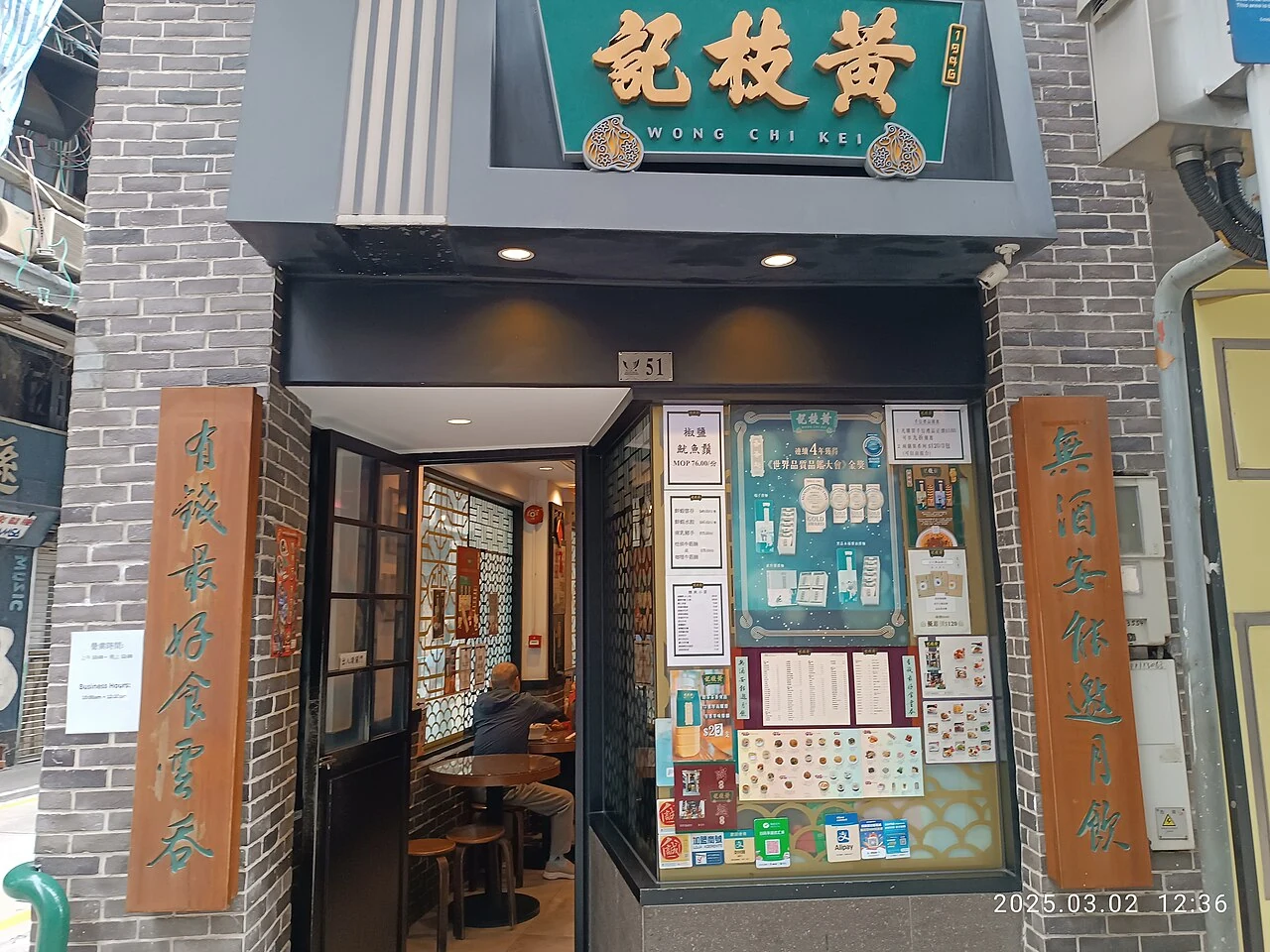
Shopfronts on Rua de Cinco de Outubro in Macao.

Why “Twenty-Four Flavours” Can Vary

The name 24-flavour tea does not guarantee exactly twenty-four ingredients. The government feature notes that recipes vary from shop to shop, and some owners adjust a blend into an eighteen- or twenty-eight-flavour version. Commonly used plants include chicken-bone grass, honeysuckle vine and other local herbal ingredients. Each shop’s recipe reflects its own tradition and house style.

That variation is part of the craft. A proprietor measures, steeps and boils ingredients according to a recipe learned through practice. Some shops have passed their blends through families over generations. Their knowledge is expressed in the pot: colour, aroma, bitterness, sweetness and the way the mixture is prepared.

A Drink Woven Into Street Life

In the 1950s and 1960s, Macao had more than a hundred herbal-tea shops and pushcarts. The trade later declined, then began to revive in the late 1990s with newer kinds of shops. Herbal tea preparation is also part of Macao’s intangible cultural heritage. Its street history can be read through the move from cart to counter and the many shop recipes that give each brew its own colour and taste.

Continue exploring · Macao ↗
Photo credits and rights
  1. Yumeto / CC BY-SA 4.0 · CC BY-SA 4.0 Photo source ↗ Rights information ↗
  2. Shopfronts on Rua de Cinco de Outubro in Macao.Mama AXunLong08 / CC0 · CC0 Photo source ↗ Rights information ↗