From the journal

Three Circuits, Three Scales of Lhasa

Nangkhor, Barkhor and Lingkhor describe devotional routes at the scale of an inner shrine, a temple and the wider historic city.

In the same city · Lhasa ↗
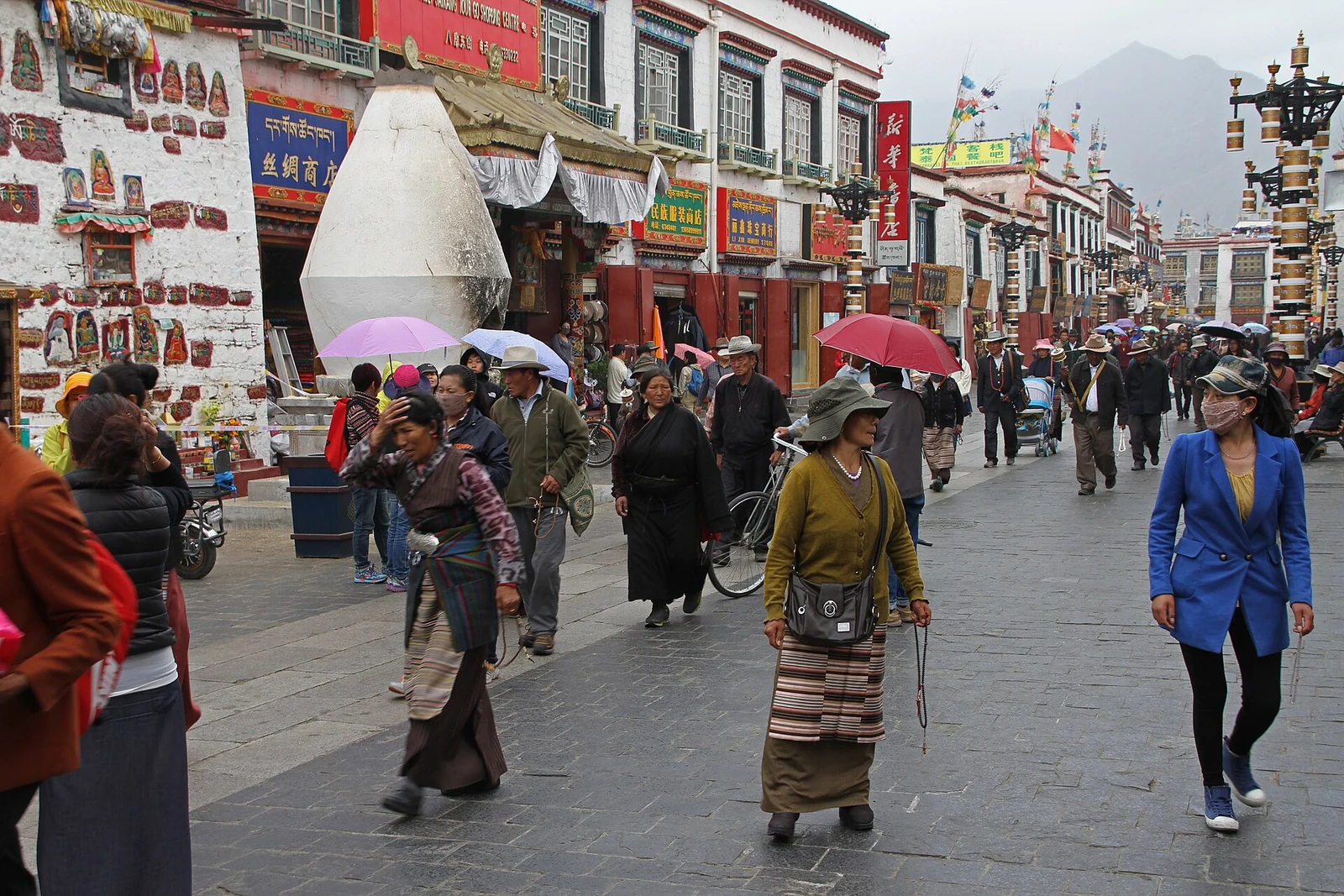
People move along a street in the Barkhor area.
Barkhor gives the middle circuit an urban setting around Jokhang.

The first circle is inside

Lhasa’s three named circuits begin with a small scale. Nangkhor surrounds the central shrine of Shakyamuni within Jokhang. Its relationship is to an image and the religious spaces immediately around it. A circuit here is a way of moving through a sacred interior, with an identifiable centre that gives the movement its meaning.

The names are also a way of understanding space. Rather than treating every route around Jokhang as the same walk, they distinguish an inner passage from the streets outside. The centre remains important as the circle expands, but the setting and the people’s relationship to it change.
Barkhor belongs to the streets

Barkhor is the middle circuit around Jokhang’s exterior. The streets radiating from this temple-centred route are commonly called Barkhor Street as well. Shops, houses and courtyards give the circuit an urban setting, where religious movement and other daily activities occupy neighbouring spaces.

A 2024 report describes more than thirty streets and lanes extending around the temple. That network helps explain why Barkhor is both a named circuit and the centre of a larger old-city district. A person can follow a route around the temple, then turn into a lane whose buildings belong to another history of residence, work and trade.

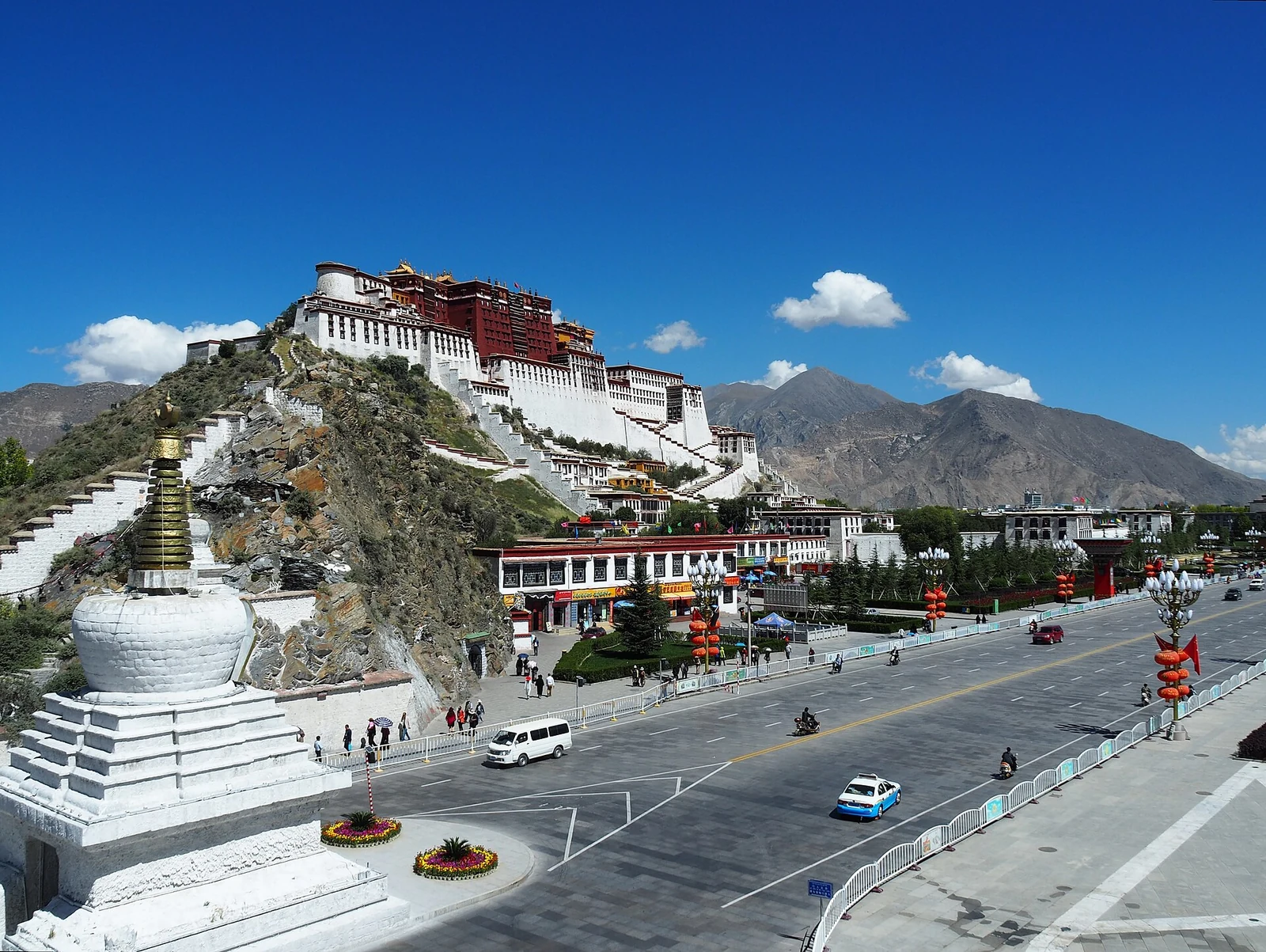
The Potala rises above the lower ground of Lhasa.
The wider Lingkhor circuit includes the Potala among the city’s religious landmarks.

Lingkhor gathers the wider city

Lingkhor expands the frame to include the Potala, Chakpori and Ramoche as well as the Jokhang-centred old city. The Chengguan district’s description presents these as three circles moving outward. Their different sizes connect a shrine, a temple precinct and a city of related religious places.

This vocabulary offers a useful alternative to seeing Lhasa as a list of isolated monuments. A route connects things through movement, while a circuit maintains a relationship with a centre. Together the three names describe a city understood through successive scales, from a closely enclosed sacred space to the open distances between major landmarks.

Continue exploring · Historic Lhasa ↗
Photo credits and rights
  1. Barkhor gives the middle circuit an urban setting around Jokhang.Gerd Eichmann · CC BY-SA 4.0 Photo source ↗ Rights information ↗
  2. The wider Lingkhor circuit includes the Potala among the city’s religious landmarks.Laika ac from UK · CC BY-SA 2.0 Photo source ↗ Rights information ↗