In March 2022, a CNR reporter approached the protected ruins of the old No. 5 oil base from Lenghu. Two motionless oil pumps stood on the Gobi beside a sign marking the Lenghu Oil Industrial Heritage Protection Area and a short site introduction. The sign and machines set the scale of the place: this was once a production landscape, but the surviving town is now read through the equipment and fragments that remain.
From the journal
The Ruins of Lenghu’s Oil Town
A 2022 field report follows the remains of the old No. 5 oil base near Lenghu, where pumps, a site marker, sand-filled rooms and former civic buildings preserve the outline of an oil town.
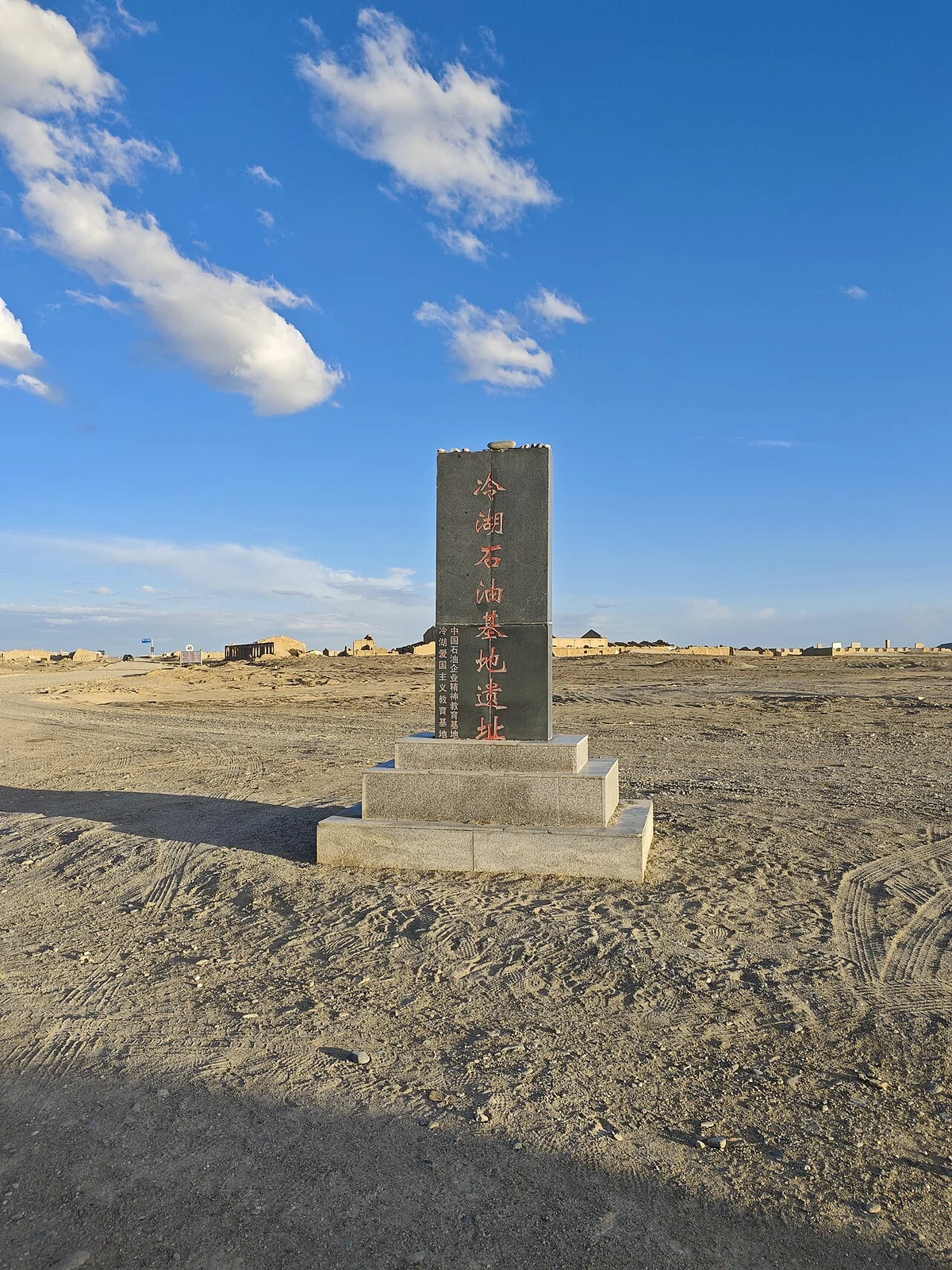
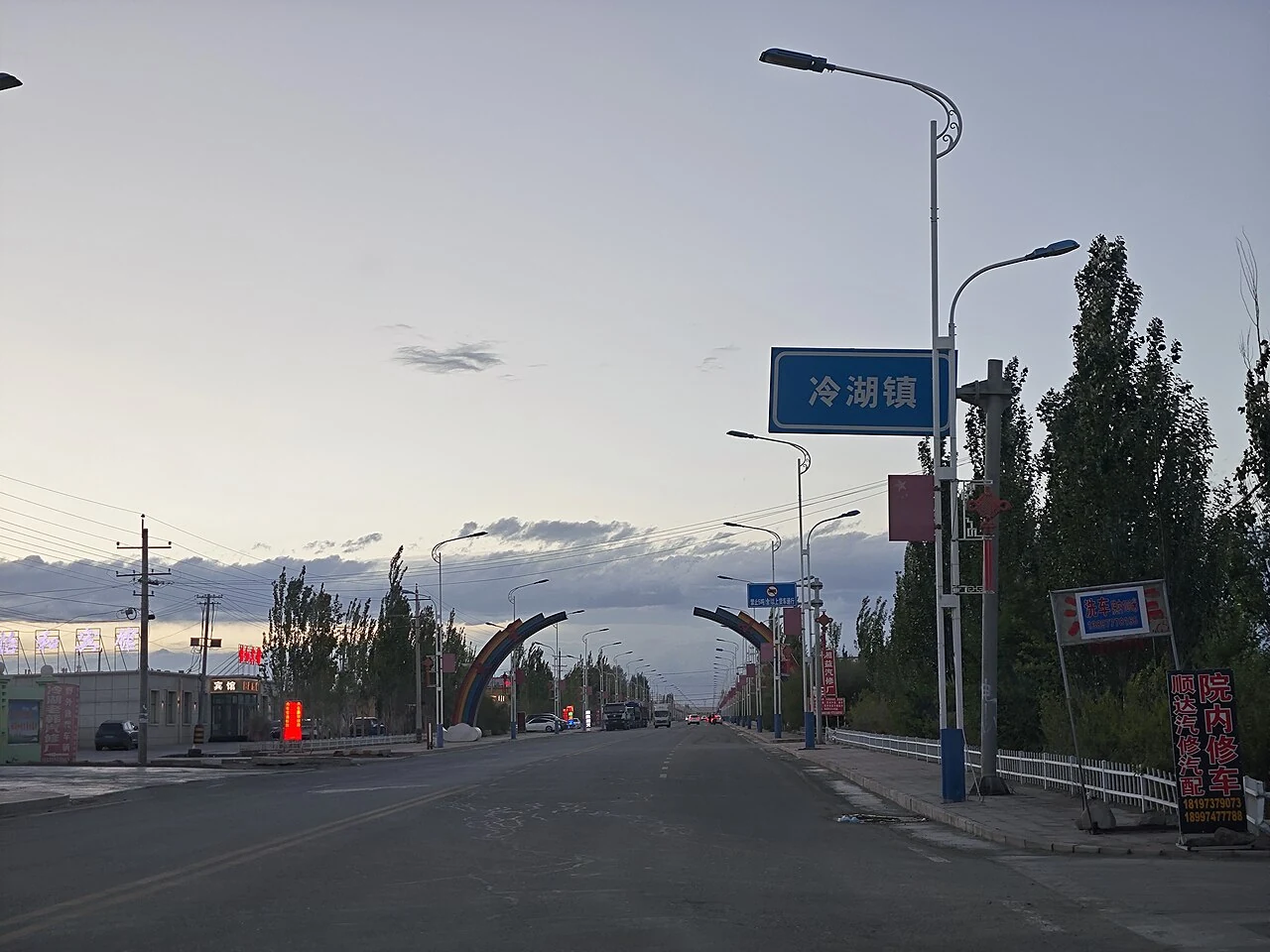
Two pumps at the entrance
A town recognizable by its rooms
Beyond the entrance, the reporter described asphalt cracked along the old mining road and low buildings with roofs and windows gone. Some had been partly buried by sand. Along the broken walls, signs still identified the oil mine, a water and power plant and a bank; other structures could be recognized as a hall, school or canteen. Those names restore the outline of a working settlement from scattered walls. Lenghu’s industrial past survives not only in the well and pump, but in the public rooms that made a town around extraction.